Key Points
- Austria denied Mohammad Eslami entry after Washington opposed a sanctions waiver permitting his travel to Vienna.
- The IAEA says monitoring gaps have left it blind to parts of Iran’s nuclear programme since June 2025.
- The exclusion sharpens a dispute increasingly centred on inspectors’ access and confidence in global nuclear safeguards.
The latest
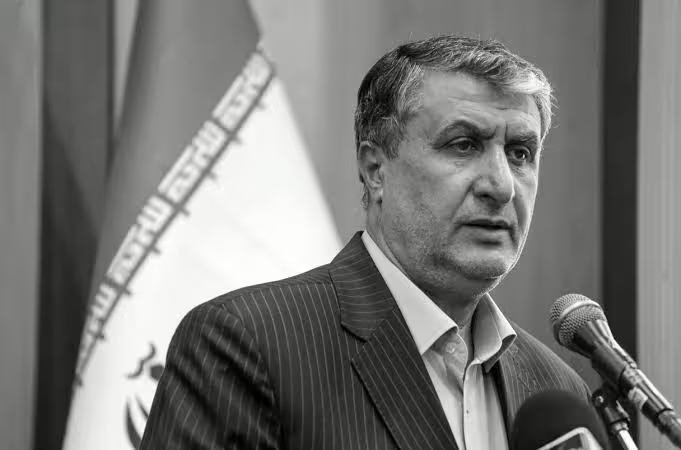
Iran’s vice president for nuclear affairs, Mohammad Eslami, was prevented from attending the International Atomic Energy Agency’s annual General Conference in Vienna after Austria denied him entry. Eslami, who also leads the Atomic Energy Organization of Iran, had been expected at this week’s gathering and had reportedly already left Tehran. A US official familiar with the matter said Austria acted after Washington opposed a sanctions waiver that would have enabled his travel.
Details
- Monitoring gap: IAEA Director-General Rafael Grossi said the agency had been “completely blind” to parts of Iran’s nuclear programme since at least June 2025. The warning reflects severe disruption to monitoring and concern about activity at locations inspectors cannot currently access.
- Mountain construction: Satellite imagery has shown construction activity at Pickaxe Mountain, renewing attention on whether Iran could rebuild or expand sensitive nuclear infrastructure. President Donald Trump has specifically highlighted activity around the site as the United States presses Tehran to restore full cooperation with inspectors.
- US conference push: Energy Secretary Chris Wright is expected to use the Vienna gathering to call on Iran to meet its safeguards obligations and grant the access needed to verify its nuclear activities. He is also expected to argue that the agency should remain focused on safeguards, nuclear security and peaceful nuclear technology.
- Security Council referral: The dispute has intensified after the IAEA Board of Governors referred Iran’s nuclear non-compliance to the UN Security Council. Washington’s stated objective is to prevent Iran from reaching nuclear-weapons capability while maintaining the credibility of the global non-proliferation system.
- Tehran’s position: Iran continues to assert its right to peaceful nuclear technology and rejects what it regards as excessive international pressure. Eslami’s exclusion adds a diplomatic confrontation to the wider standoff over transparency, access and the conditions for Iran’s participation in international nuclear forums.
- Political signal: Keeping one of Iran’s most senior nuclear officials from the agency’s principal annual gathering turns a travel and sanctions decision into a broader signal about the consequences Washington associates with continued restrictions on transparency and inspections.
Background
International diplomacy previously focused mainly on uranium enrichment levels and limits on Iran’s nuclear activities. The dispute now increasingly turns on verification: whether inspectors can determine what activity is occurring, where it is taking place and whether declared facilities remain consistent with Tehran’s commitments.
What’s next
Wright’s address to the General Conference will be the next concrete indicator, particularly his demands on safeguards and inspector access. Subsequent action at the UN Security Council following the IAEA board’s referral will shape the next formal stage of pressure on Tehran.