Key Points
- Oman and Hyundai will test hydrogen public transport, ultra-fast EV charging and smart-city technologies under Vision 2040.
- A 24-seat fuel-cell bus will enter passenger service in Muscat from the third quarter of 2026.
- Operational data will guide infrastructure decisions as Gulf economies build new industries around cleaner transport and energy.
The latest
Oman is moving its clean-mobility strategy into real-world trials through agreements with Hyundai Motor Group covering hydrogen buses, ultra-fast charging and smart-city development. Signed in Dubai on September 9 during the Gulf Green Mobility Forum, the arrangements connect future transport projects with Vision 2040’s drive to diversify the hydrocarbon-dependent economy. The first initiatives focus on Muscat and will generate operational and commercial data before any broader rollout.
Details
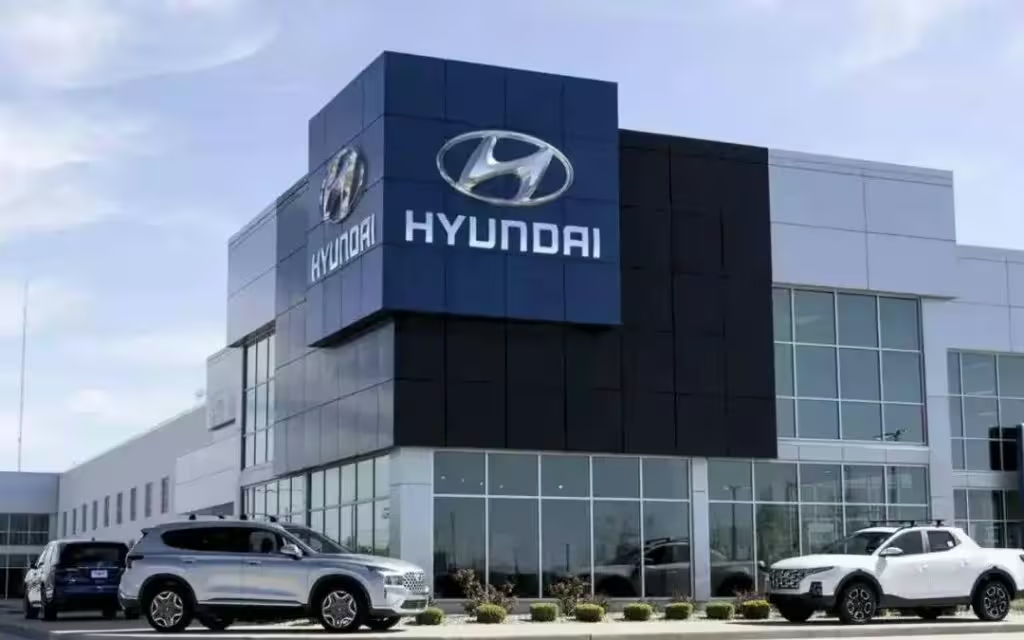
- Agreement framework: Hyundai signed a memorandum of understanding with the Ministry of Transport, Communications and Information Technology covering sustainable mobility and smart cities. Cooperation includes electric vehicles and hydrogen fuel-cell vehicles. The initial one-year term renews automatically, creating a framework for future projects without committing the government to immediate large-scale deployment.
- Muscat bus pilot: Mwasalat will operate Hyundai’s ELEC CITY Fuel Cell as Oman’s first hydrogen-powered city bus. The 24-seat vehicle is scheduled to carry passengers from the third quarter of 2026 through the third quarter of 2027, allowing comparisons of reliability, operating efficiency and environmental performance with conventional diesel buses.
- Ultra-fast charging: Oman Oil Marketing Company, an OQ subsidiary, and charging brand EVO will work with Hyundai on a 240-kilowatt DC ultra-fast charger at a fuel station in Halban, near Muscat. The project will adapt existing fuel infrastructure to accommodate electric mobility as part of a mixed transport-energy network.
- Performance testing: Hyundai Kefico, the group’s vehicle-electronics and powertrain affiliate, will separately cooperate with EVO on EV charging tests. The pilots will measure charging performance, consumer demand and commercial feasibility, with results informing decisions on wider deployment across Oman.
- Gulf competition: Hydrogen offers Gulf states a potential route to decarbonize hard-to-electrify sectors, supported by solar resources and established energy infrastructure, although vehicle costs and limited refueling facilities remain obstacles. Oman is pursuing staged trials as Saudi Arabia, the UAE and Qatar advance electric mobility, renewable energy and hydrogen initiatives.
- Hyundai position: Hyundai Executive Vice President Hokeun Chung said the group is committed to contributing to Oman’s Vision 2040 through collaboration on smart cities and future mobility. The projects allow the company to demonstrate technologies across several parts of its expanding mobility ecosystem.
Background
Oman is developing renewable-energy and green-hydrogen projects in Duqm and Dhofar as it pursues low-carbon energy exports and domestic markets. Transport could become one such market. Hyundai has expanded beyond conventional vehicle manufacturing into fuel cells, electric vehicles, energy systems, logistics, software and smart-city infrastructure, making the Omani pilots a test across multiple operations.
What’s next
Mwasalat’s passenger-service trial is scheduled to begin in the third quarter of 2026 and continue through the third quarter of 2027. The partners will assess bus reliability, efficiency and environmental performance, while charger tests will track performance, demand and commercial feasibility before decisions on wider deployment.