Key Points
- Jordan shot down 18 of 20 Iranian missiles, while two landed in uninhabited areas without casualties.
- The IRGC said it targeted a US-used military base near Al Azraq in northeastern Jordan.
- The strike brings Jordan directly into an expanding conflict spanning military, shipping and energy assets.
The latest
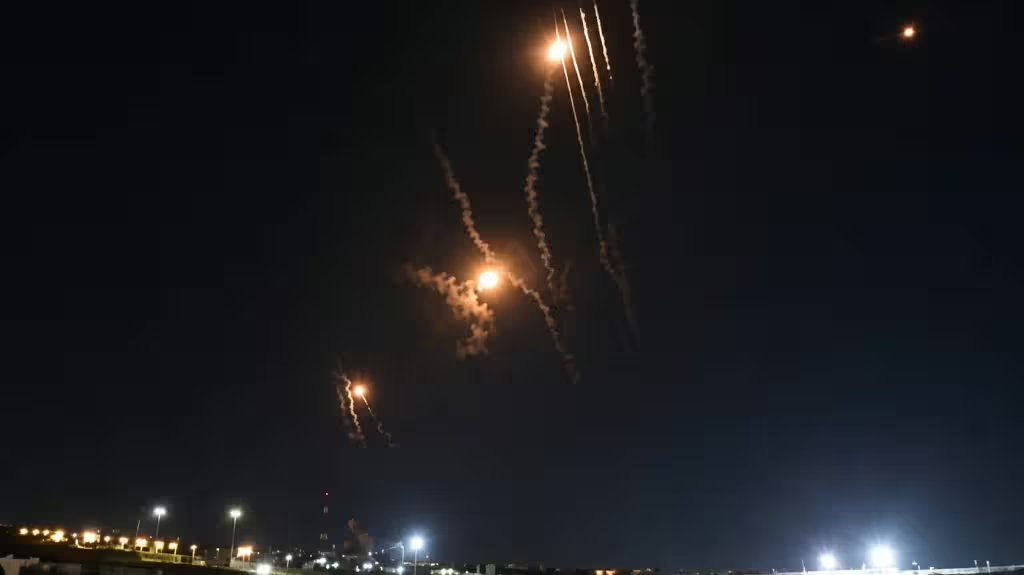
Jordan’s air defenses intercepted 18 of 20 Iranian missiles launched toward the kingdom on Wednesday, authorities said, after the Islamic Revolutionary Guard Corps announced an attack on a military base near Al Azraq used by US forces. The two missiles that evaded interception fell in uninhabited areas and caused no casualties. A US official called the attack ineffective and said all American personnel stationed at the facility were safe.
Details
- Conflicting accounts: Iranian state media quoted the IRGC as claiming significant damage at the facility. Jordan’s account said its defenses defeated most of the barrage, while the US assessment said the attack failed to harm personnel.
- Jordan’s exposure: The strike places Amman more directly inside a confrontation involving its principal security partner and Iran. Jordan is a close US ally, hosts American military forces and now faces missile activity on its own territory. Amman has increasingly found itself balancing that security relationship against the effects of the wider regional confrontation.
- Immediate trigger: The Iranian launch followed a US announcement that it had destroyed five Iranian oil tankers. Washington described that operation as retaliation for repeated missile attacks on US naval assets and released video it said showed the tanker strikes.
- US response: Washington said the tanker operation came after two Iranian ballistic-missile attacks against a US Navy warship over the previous two days. No American personnel were injured. During a visit to Colombia, Secretary of State Marco Rubio told reporters: “Iran continues to attempt to strike American warships, and every time they do or attempt to do so, they will lose tankers.”
- Gulf escalation: The IRGC also said it attacked 10 vessels trying to transit the Strait of Hormuz, including two US vessels and eight oil tankers. It said they were crossing an area designated “forbidden and dangerous” and linked the action to the US tanker strikes.
- Energy stakes: Shipping through Hormuz, a major corridor for global oil and gas cargoes, has fallen sharply amid Iranian attacks and security concerns. The renewed military activity has contributed to rising oil prices and broadened pressure on regional US allies and international supply chains. Any sustained disruption could add upward pressure to oil prices and threaten supply chains beyond the Middle East.
Background
The six-month conflict had entered a period of relative calm before the latest exchanges. Its active fronts now encompass military installations in Jordan, commercial shipping in the Gulf and oil infrastructure targeted by the United States.
What’s next
The next concrete indicators are Jordan’s official assessment of the Al Azraq-area facility, any change to its air-defense posture, and further US or Iranian announcements on military operations or passage through the Strait of Hormuz.