

Key Points
- Apple unveiled the iPhone Duo, its first foldable iPhone, starting at $1,999 with a 7.6-inch inner display.
- Foldable shipments fell 15% in the first half of 2026, according to IDC data cited by The Wall Street Journal.
- Counterpoint and IDC expect Apple to seize a quarter to a third of the segment within its first year.
The latest:
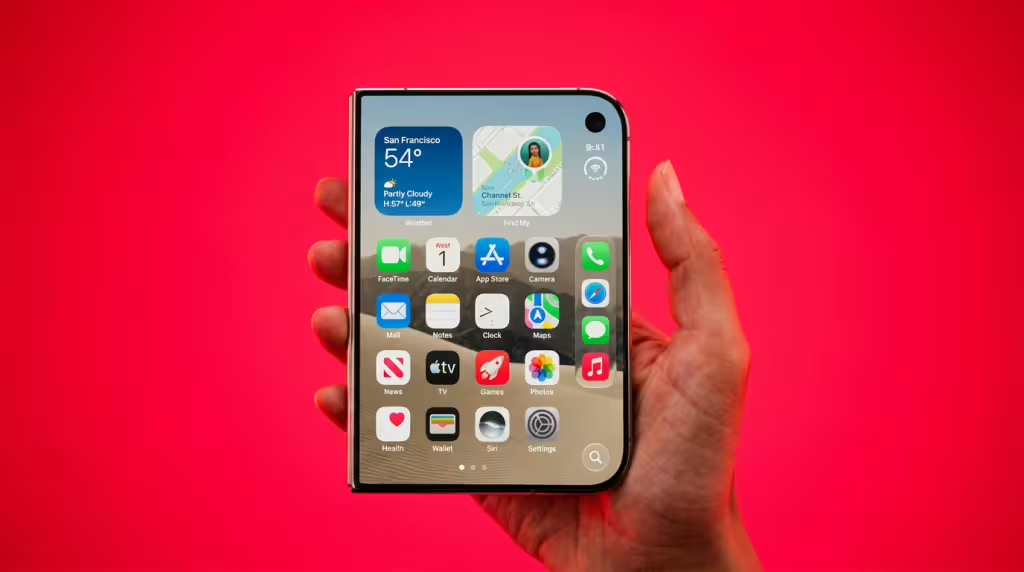
Apple moved into the foldable market on Wednesday with the iPhone Duo, a book-style handset pairing a 5.4-inch outer screen with a 7.6-inch inner display that the company says is 50% larger than the iPhone 18 Pro Max panel. The Verge reported pricing starts at $1,999 for 256GB, with preorders from October 16 and sales from October 23.
Details:
- Two devices in one: Closed, the Duo operates as a conventional iPhone; opened, its 7.6-inch panel approaches small-tablet size and becomes the largest display Apple has fitted to an iPhone. The dual-screen layout is the core of Apple’s pitch that buyers no longer need to carry a separate tablet.
- Software rework: Apple redesigned parts of iOS 27 for the wider canvas, allowing two apps side by side, repositioned controls for one-handed reach, and use of the device while partially folded. Layouts adjust automatically as the phone changes orientation, addressing a long-standing complaint about foldable software.
- Apple Pencil support: The Duo brings Apple Pencil to the iPhone line for the first time, positioning the device closer to an iPad-style productivity tool for note-taking, drawing and document work.
- Durability build: Apple says the phone uses a titanium structure reinforced with ceramic fibers, Ceramic Shield protection and an IP68 dust-and-water rating. Durability has been one of the category’s persistent weak points, and Apple is presenting the materials package as its answer.
- The crease question: Analysts and supply-chain reports said Apple spent years on hinge materials and stress distribution to reduce the visible fold line found on rival devices. The Wall Street Journal identified an “effectively invisible crease” as one of the features expected to set Apple’s entry apart.
- Biometrics shift: Instead of conventional Face ID, the Duo places Touch ID in a side button, and uses an under-display camera on the inner screen to keep the larger panel visually uninterrupted.
- Silicon: The device runs Apple’s A20 Pro processor with a C2 modem. Apple says the 2-nanometer chip pairs high-performance CPU cores with a seven-core GPU and expanded neural-processing hardware for on-device AI workloads.
- Analyst view: Counterpoint Research analyst David Naranjo said Apple’s late arrival lets it learn from years of problems earlier foldables encountered, particularly hinges, display durability and overall user experience.
- Market forecasts: Counterpoint projects Apple could take about 25% of foldable shipments in 2026, behind Samsung’s projected 38%, even with constrained early supply, and expects the market to accelerate in 2027. Reuters cited IDC forecasting Apple at nearly a third this year and roughly 40% in 2027.
- Segment under strain: The Wall Street Journal reported IDC data showing foldable shipments fell 15% in the first half of 2026. The firm still expects Apple alone to capture a disproportionately large share of foldable revenue this year.
Between the lines:
The two forecasts point the same direction but differ in scale, and both rest on an assumption Apple has not yet proven: that the titanium-and-ceramic build and the reworked hinge actually resolve the durability and crease complaints. Reuters framed the appeal as a large screen without a second device, aimed at older, wealthier buyers as much as power users.
What’s next
October 23 is the first real test: whether the durability and crease claims hold up in customers’ hands, and whether buyers accept a $1,999 entry price for a device sitting between an iPhone Pro and an iPad mini.


