Key Points
- U.S. forces hit multiple Iranian tankers Tuesday after a failed missile attack on a Navy warship, an official said.
- Iran fired at an aircraft carrier and a destroyer over the weekend, then at another warship Monday, U.S. officials said.
- The exchange pushes Washington and Tehran back toward open fighting after more than six months of war.
The latest:
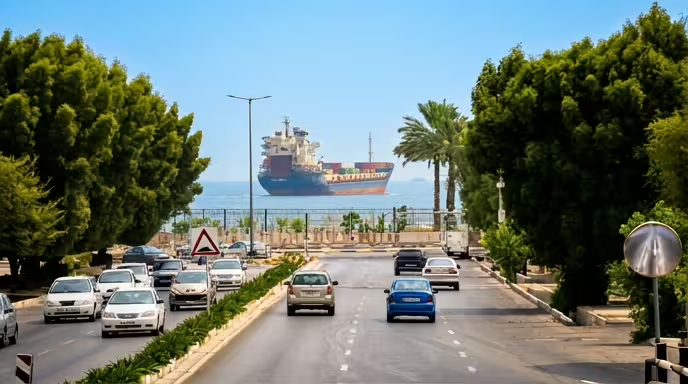
U.S. forces struck multiple Iranian tankers near Kharg Island and Jask on Tuesday, hours after Iran fired at least one ballistic missile at a Navy warship, a U.S. official told the Associated Press and Fox News. No American ship was hit. Iran’s Revolutionary Guard responded by warning tanker crews in Kuwaiti and Bahraini ports to abandon their vessels immediately.
Details:
- The strikes: U.S. Central Command struck near Kharg Island and Jask, a U.S. official told Fox News, saying operations were ongoing and that the targets included Iranian crude tankers American forces sought to sink or disable. The official tied the tankers to the IRGC.
- The stated aim: The official called the strikes part of a wider effort to squeeze an Iranian economy heavily dependent on crude exports. Saturday’s strikes on three tankers came with a U.S. warning it would, if necessary, destroy Iran’s limited and exposed oil fleet.
- The undisclosed wave: Iran attacked U.S. Navy ships Monday in an incident the U.S. military has yet to acknowledge, according to U.S. officials, following weekend missile fire at an aircraft carrier and a guided-missile destroyer. Central Command did not respond to a request for comment.
- Iran’s threat: The IRGC Navy warned that all oil tanker crews in the Kuwait and Bahrain dock areas must leave their vessels, at anchorage or at the docks, as they “will be targeted.” The statement, carried by Iranian state television, accused both countries of assisting the attacks.
- Escalation warning: Ali Abdollahi, chief of staff of Iran’s armed forces, said any hostile action against ships would also prompt Iranian attacks on U.S. military bases across the region, according to a statement shared on X by the Islamic Republic News Agency.
- On the ground: Explosions were heard around Kharg Island, Reuters reported citing Iran’s Mehr News Agency, and in Jask, citing Fars. Iranian state media initially said the origin of the blasts and any damage were unknown. A ballistic missile was also reportedly launched from Jask.
- The exposure: More than 20 Iranian tankers were near Kharg Island earlier Tuesday, TankerTrackers’ Sam Madani told Fox News. The U.S. has 19 warships supporting operations in the Middle East, according to a Navy official.
- The capability question: Iranian officials have claimed they are using new missiles with advanced features against American warships, according to Iranian state media. Weapons analysts say such missiles could carry electro-optical seekers, which maneuver toward a moving target using imagery.
- The technology: Iran last year unveiled a medium-range ballistic missile known as the Qassem Bassir that uses seeker technology, said John Caves of the Wisconsin Project on Nuclear Arms Control, who added that other Iranian missiles, such as the Khalij Fars, also have it.
- Outside help suspected: U.S. officials said Iran would still need the approximate location of American warships when its attacks began, raising concerns China or Russia could be helping Tehran track them. Retired Vice Adm. John Miller, a former regional naval commander, said Iran lacks the radar capacity to find a ship in the Arabian Sea.
Background:
The strikes follow more than six months of war between Washington and Tehran. A U.S. blockade of Iranian ports and sanctions are weighing on the Iranian economy, and after the weekend attempt on an aircraft carrier, the U.S. hit three Iranian tankers it said were funding Iran’s military and proxy groups.
Between the lines:
Two facts sit uneasily together: Iran no longer has the radar reach to locate ships at sea, per Miller, yet it has fired at three separate U.S. vessels in days. That gap is why U.S. officials are looking at Chinese or Russian tracking assistance rather than at Iranian sensors alone. Tehran’s threat to tankers in Kuwait and Bahrain widens the target set from warships to Gulf commercial shipping.
What’s next
Watch whether Iran declares the exclusion zone it said it planned near the Strait of Hormuz, whether Central Command acknowledges Monday’s attempted attack, and whether any tanker in Kuwaiti or Bahraini waters is actually struck.