The latest:
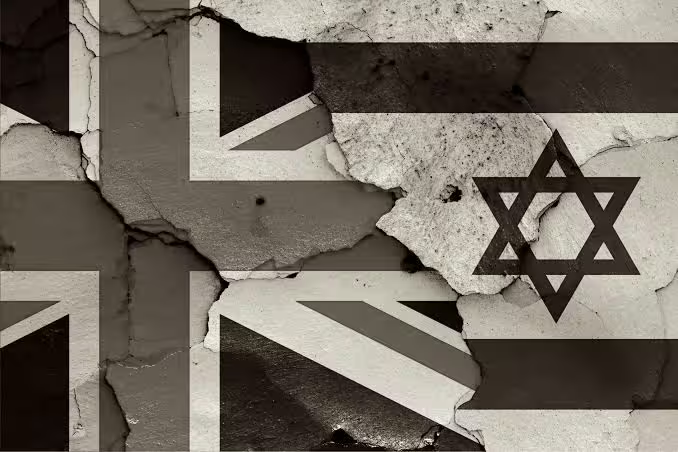
Britain will bar imports from West Bank settlements and sanction firms providing construction, finance and real-estate services to them, Foreign Secretary Ed Miliband announced Tuesday, with implementation set over six to nine months. France’s Jean-Noël Barrot said Paris would open a parallel process. Miliband said securing a two-state solution is the guiding principle of the government’s policy.
Details:
- The measures: Miliband said Britain will refuse arms export licences that contribute to the occupation and keep in place 30 already-suspended licences tied to Israeli operations in Gaza, describing it as a double ban on weapons sales. Anyone financing or assisting unlawful settlements, he said, faces full British sanctions.
- The accusation: Miliband said the British government accepts that ethnic cleansing is taking place in Palestinian areas of the West Bank carried out by Jewish terrorists, and that the Israeli government looks away while ministers make statements supporting the forced displacement of Palestinians.
- The French position: Barrot wrote on X that France will end trade with Israeli settlements alongside 11 other countries, citing frenzied settlement expansion and rising settler violence. A French diplomatic source said the mechanisms are not finalised and no implementation date was set, adding this is not a boycott of Israel.
- The 12-country bloc: Foreign ministers of Canada, Denmark, Finland, France, Iceland, Ireland, Norway, Poland, Portugal, Spain, Sweden and the UK said Israeli actions in the West Bank undermine the two-state solution, demanding an immediate halt to settlement expansion and accountability for settler violence.
- Israel’s reaction: Itamar Ben Gvir urged Netanyahu to shut the British consulate in East Jerusalem, which operates openly on behalf of the Palestinian Authority. Finance Minister Bezalel Smotrich called for expelling the British ambassador, and Jerusalem deputy mayor Arieh King demanded the closure of Britain’s diplomatic presence in the city.
- Herzog’s warning: President Isaac Herzog called the step a grave miscalculation and blatant interference in a sovereign state’s democratic elections. He said it would directly harm Palestinians by stripping them of businesses and jobs, and told foreign governments: “Sanctions are not a solution, dialogue is.”
- The two-state framing: Work and Pensions Secretary Pat McFadden told the Times the statement targets settlement expansion deemed illegal under international law, not all Israeli goods, and that Britain does not want facts on the ground to erase the possibility of a two-state outcome.
- E1 at the centre: Prime Minister Andy Burnham has voiced concern that the Israeli-approved E1 highway project would effectively split the West Bank in two. Palestinians and human rights organisations say the project could end hopes of a future Palestinian state.
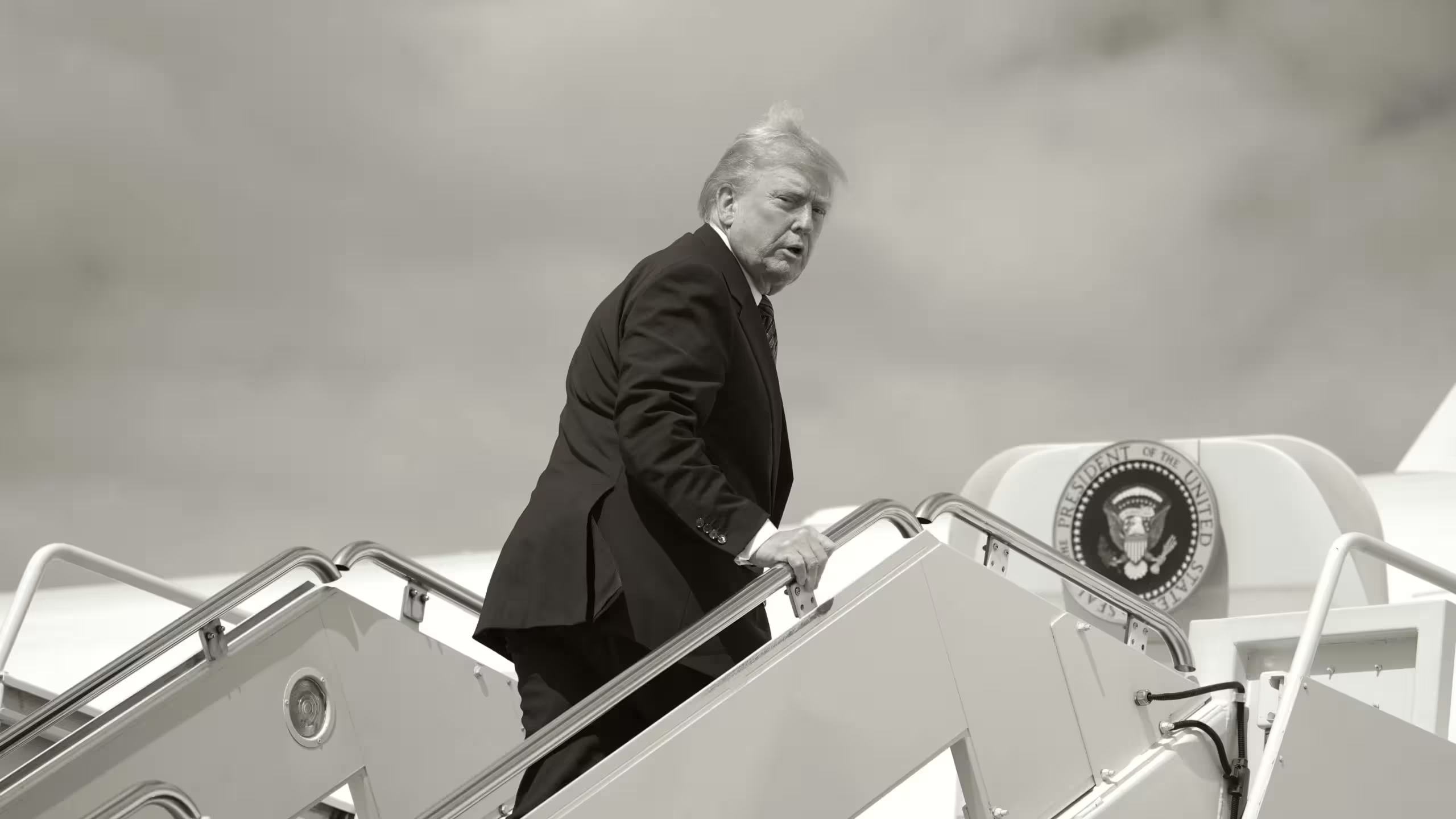
- The American angle: US Ambassador to Israel Mike Huckabee told the BBC there would undoubtedly be an American response, diplomatic and federal, that could severely affect Britain’s economy. Burnham spoke with President Donald Trump on Monday to inform him of the imminent decision.
- British Jewish objections: The Board of Deputies of British Jews and the Jewish Leadership Council warned the sanctions could further damage UK-Israel relations. Chief Rabbi Ephraim Mirvis said they would be counterproductive, endanger the vision of peace and disproportionately affect British Jews.
Background:
Labour had already sanctioned individual settlers and illegal outposts over violence against Palestinians and unlawful construction. Tuesday’s announcement widens that to trade in goods, and possibly some services, across all West Bank settlements.
Between the lines:
A former senior Israeli diplomat assessed the British move could trigger a political collapse in Europe: the EU avoided sanctions pending Israel’s elections, but if France breaks from the bloc’s line, Spain, Belgium, Portugal and Ireland may follow. He argued London acted on domestic political calculations and warned the timing, weeks before Israel’s October vote, invites a harsh response. Bloomberg reported British diplomats told Washington the measures are primarily symbolic.
What’s next
Watch whether Washington issues its promised condemnation and any retaliation, whether Canada joins after France, how Israel’s formal response lands, and whether the six-to-nine-month timetable survives the October Israeli elections.