Key Points
- Gulf states are building national capabilities and overlapping partnerships as reliance on American protection is questioned.
- Qatar says the US alliance is good but insufficient; Riyadh, Ankara and Islamabad signed a joint defense pact.
- The shift points to a post-monopoly order, not a post-American one, with Washington still central.
The latest:
The war with Iran is pushing Gulf governments toward a more diversified security architecture, built on stronger national forces and layered partnerships rather than a single outside guarantor. Officials across the region say Washington remains their most important external partner, but no longer a sufficient one. Saudi Arabia has moved toward a trilateral defense structure with Türkiye and Pakistan.
Details:
- Qatar’s position: A Qatari Foreign Ministry spokesperson said a strategic alliance with the United States is good for Gulf countries but not enough, arguing that greater self-sufficiency in security is the only sustainable path. Gulf states need partners and allies but “cannot depend on them alone for our security.”
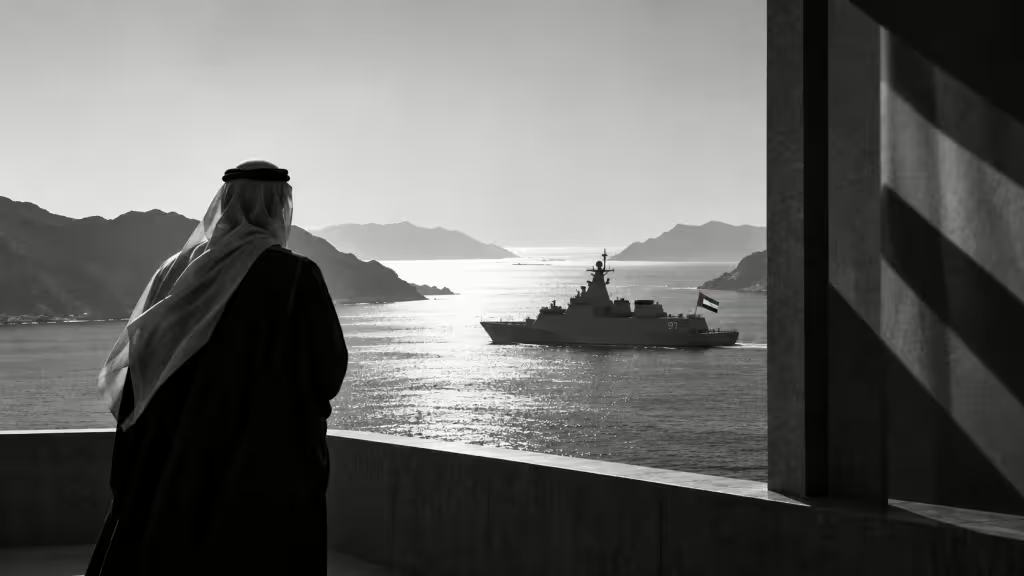
- The trigger: Gulf governments have watched missiles and drones cross borders, shipping routes come under pressure, and confrontation with Iran expose the vulnerability of states that rely on outside powers for their ultimate security guarantees. That experience is driving the reassessment now under way.
- The UAE calculation: Presidential adviser Anwar Gargash said rebuilding trust with Iran may take decades, describing Iran as a central issue for the UAE and other Gulf states. His remarks point to the scale of political damage and the difficulty of quickly restoring the pragmatic engagement that once marked parts of Gulf-Iran ties.
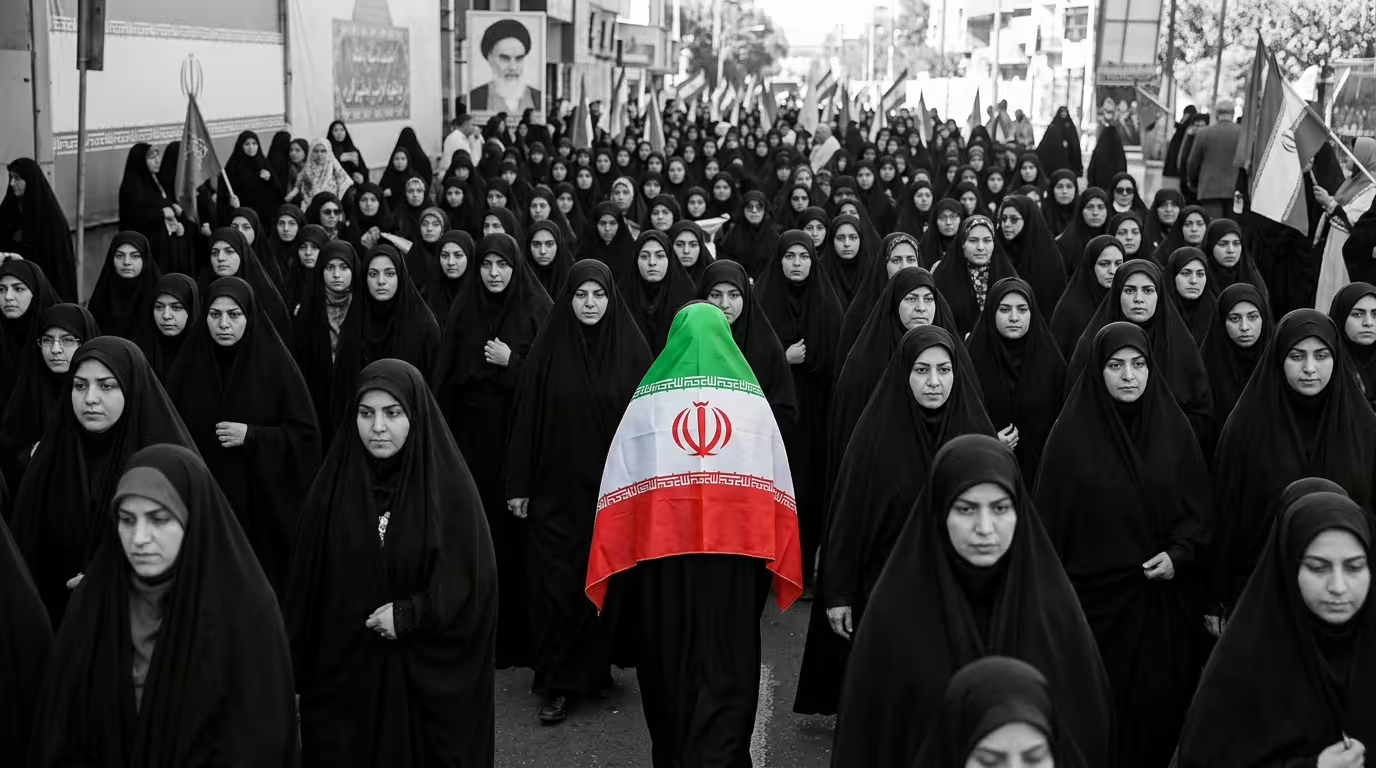
- Iran’s warning: Iranian Foreign Ministry spokesman Ismail Baqaei said any foreign military presence or participation in operations in the Gulf or the Strait of Hormuz would amount to direct support for those responsible for aggression against Iran, and would carry serious consequences. He was responding to reports that South Korea could send non-combat equipment.
- The dilemma: Gulf states need external military partnerships to protect critical infrastructure, shipping and energy exports. But deeper involvement by foreign powers also exposes them to Iranian pressure or retaliation, a tension now feeding interest in arrangements beyond the traditional Gulf-US framework.
- The Mecca pact: Saudi Arabia, Türkiye and Pakistan have moved toward a trilateral security structure through the Mecca Joint Defence Agreement, which treats an attack on one member as an attack on all three. The precise military commitments of the arrangement remain unclear.
- What each brings: Türkiye contributes one of NATO’s largest militaries and an expanding defense industry. Pakistan adds a large military establishment and nuclear deterrence. Saudi Arabia brings financial power, strategic geography and influence across the Arab and Muslim worlds.
- Wider consultations: Earlier talks involving Egypt, Pakistan, Saudi Arabia and Türkiye pointed toward broader interest in coordinating regional interests independently of Washington, suggesting a system defined less by fixed blocs than by overlapping alliances.
- Different routes: For Saudi Arabia, the approach means keeping the Washington relationship while deepening ties with Ankara and Islamabad. For the UAE, it means combining military capability, diplomacy and economic resilience. Qatar’s self-sufficiency argument reflects the same calculation from another direction.
Between the lines:
The pattern described here is not a break with the United States. Qatar’s spokesperson framed the alliance as good but insufficient, and the Mecca pact adds a layer rather than a replacement. A more accurate reading is a post-monopoly order: Washington stays indispensable, but Gulf states want the capacity to act without assuming American intervention, ensuring no single partner becomes irreplaceable.
What’s next
Watch whether the Mecca Joint Defence Agreement’s military commitments are spelled out, whether South Korea proceeds with sending equipment after Iran’s warning, and whether the Egypt-Pakistan-Saudi-Türkiye consultations produce a formal framework.