Key Points
- Scott’s post-apocalyptic adaptation makes trust, rather than plague, the central struggle for survival.
- Jacob Elordi and Josh Brolin play survivors divided over whether outsiders offer hope or danger.
- Critics praise its tenderness and visuals but question its pacing, action and familiar genre machinery.
The latest
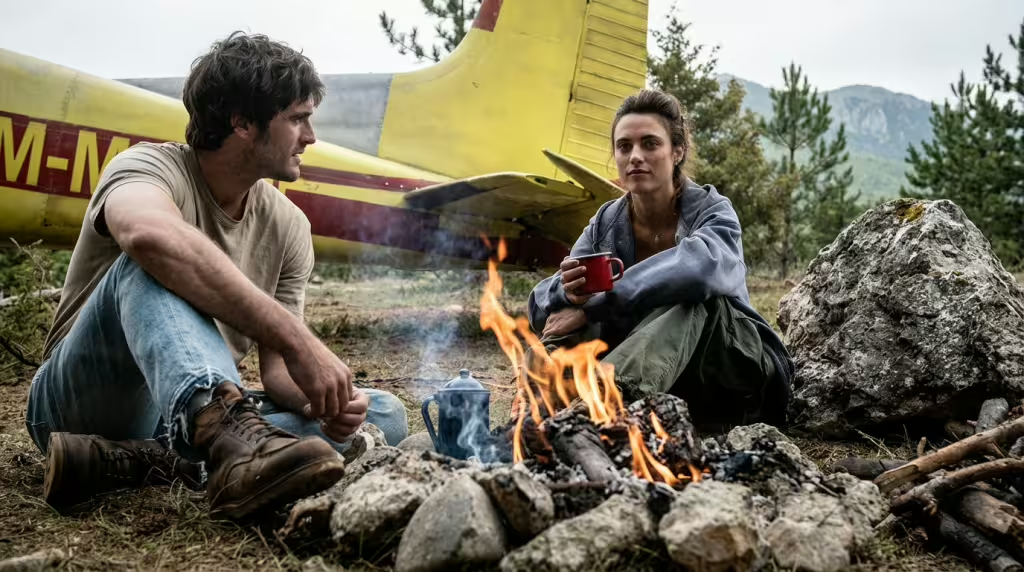
Set in 2035, after a viral plague has killed most of humanity, “The Dog Stars” follows Hig, a widower played by Jacob Elordi, and Bangley, Josh Brolin’s heavily armed former Marine. The men share an abandoned Colorado airfield and possess food, weapons, electricity and shelter, yet disagree over the danger beyond their perimeter. At 88, Ridley Scott adapts Peter Heller’s 2012 novel into a conflict over whether survival requires continued isolation or renewed faith in other people.
Details
- Trust divide: Hig periodically flies his Cessna over the empty landscape and hears a mysterious radio transmission. He treats it as evidence that survivors or communities may remain; Bangley regards it as a trap. Their opposing responses turn the apocalypse into a contest between connection and self-protection.
- Action imbalance: Kyle Smith identifies the philosophical divide as the film’s “ruminative foundation,” but says large fights feel commercially necessary and detached from its concerns. Amy Nicholson argues that newly created action sequences overpower the second half, pushing Heller’s poetic pandemic story toward louder, less balanced territory.
- Harsh verdicts: Robert Daniels calls it the most tedious film of Scott’s career, despite occasional set pieces and desolate imagery. Benjamin Lee describes a lethargic misfire built from familiar survival scenarios. Rotten Tomatoes records a 39% critics score from 181 reviews, with a consensus praising the visuals but finding the narrative listless.
- Gentler readings: Tim Grierson sees one of Scott’s most muted and tender films, arguing that grief, conversation and tentative reconnection matter more than combat. Simon Crook calls it hopeful but bumpy, while Donald Clarke finds an almost “agreeable apocalypse” where violence coexists with companionship. Jeannette Catsoulis considers it more romantic than frightening.
- Society rebuilt: Hig’s encounter with Cima, played by Margaret Qualley, and her father Pops, played by Guy Pearce, restores his ability to imagine a shared future. A surviving Mennonite community sharpens that possibility: its limited dependence on modern technology leaves it unusually prepared, and its children, including some born after the plague, show the difference between preserving two men and preserving a society.
Background
Heller’s novel preceded Covid-19, while Scott’s film follows it. Smith reads the story through the pandemic’s social aftershocks: suspicion, ideological sorting and declining trust. The plague has already passed, leaving the surviving camps to decide whether fear will organize whatever civilization remains.
What’s next
The next measurable indicator is Rotten Tomatoes’ critics score as reviews move beyond the current 181, testing whether the initial 39% assessment shifts.