Key Points
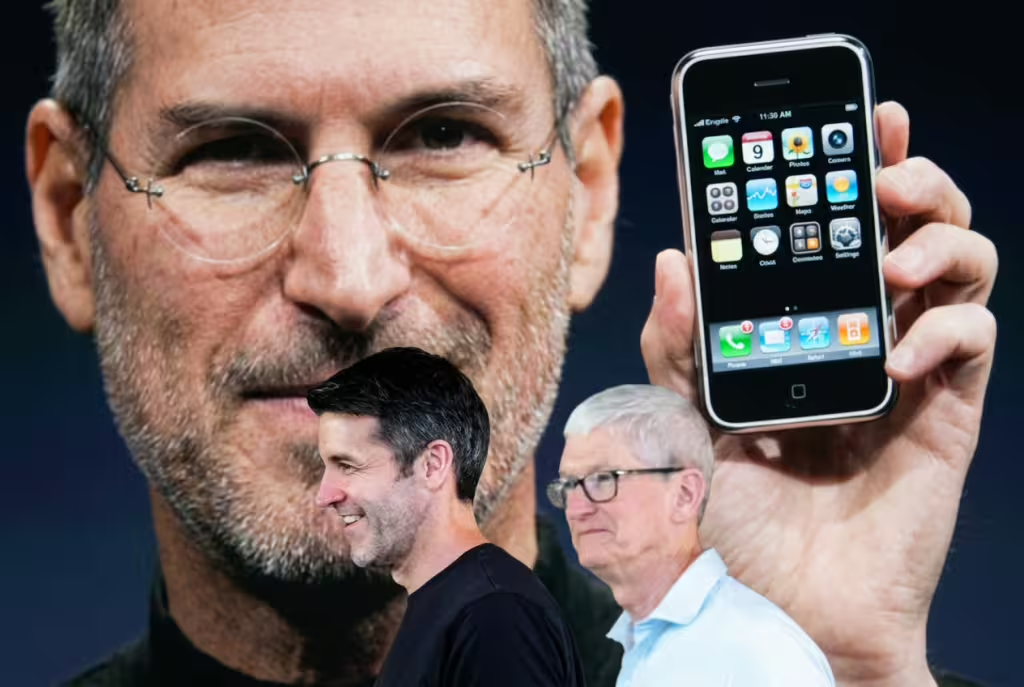
- Tim Cook ends his Apple tenure with its shares up more than 2,000% and John Ternus succeeding him.
- Cook expanded the iPhone into a broader ecosystem of services and accessories embedded in customers’ daily lives.
- Ternus inherits pressure from artificial intelligence, China exposure, European regulators and rising memory-chip costs.
The latest
John Ternus will become Apple’s chief executive on September 1, succeeding Tim Cook after a 15-year tenure that transformed the iPhone maker into one of the world’s most valuable companies. Apple’s shares rose more than 2,000% under Cook, while its market capitalization briefly reached $5 trillion in July, making it the second company to cross that threshold. His expansion of services and accessories made the iPhone central to activities ranging from payments and music to exercise.
Details
- iPhone at scale: David Yoffie, a Harvard Business School professor who wrote a case study on Apple and Cook, said the outgoing chief executive scaled the iPhone beyond levels previously considered likely or possible. Cook entered the role in August 2011 with deep experience in operations and supply-chain management, rather than the product-design reputation associated with predecessor Steve Jobs.
- Leadership approach: Ron Johnson, who led Apple’s retail operations from 2000 to 2011, described Cook as intelligent, strategic and among the executive team’s most thoughtful members. During weekly meetings with Jobs, Cook listened before speaking and contributed when he had something to add. His measured style, quick decisions and negotiating ability helped Apple manage geopolitical pressures.
- Washington ties: Apple avoided the Trump administration’s steep tariffs after facing pressure to manufacture its phones in the United States. Instead, the company pledged to invest $600 billion in expanding its US operations, including domestic production of critical iPhone components. During his first term, Donald Trump said Cook was among the few corporate leaders who called him personally.
- China balance: Cook pushed Apple to diversify part of its production away from China while maintaining its appeal to Chinese consumers and the country’s leadership. Gene Munster, managing partner at Deepwater Asset Management, called that balance rare and described Cook as a statesman as much as a chief executive. The pandemic and US tariffs exposed risks from Apple’s reliance on China.
- Mounting pressures: Apple has been forced to change how it operates the App Store in Europe, its second-largest market, amid tensions with regulators. Its revamped Siri will not launch there because of European Union rules. The company is also under pressure to catch up in artificial intelligence after the Vision Pro failed to meet expectations, while an AI-driven memory-chip shortage has pushed product prices higher.
Background
Cook succeeded Jobs, widely regarded as one of the world’s leading innovators, and built a different legacy around operational scale. Apple broadened its business through web services and accessories, including the Apple Watch.
What’s next
Ternus takes control on September 1. During one of his final earnings calls as chief executive in April, Cook advised him to focus decisions on products that “enrich” customers’ lives, saying that approach would produce a strong business and support further products.