Key Points
- PKK dissolution and SDF integration are recasting Kurdish political power across Turkey and Syria.
- Rights, representation and state institutions are replacing armed leverage at the centre of Kurdish debate.
- Uncertainty over US Peshmerga support adds pressure for stronger, unified Kurdish institutions in Iraq.
The latest
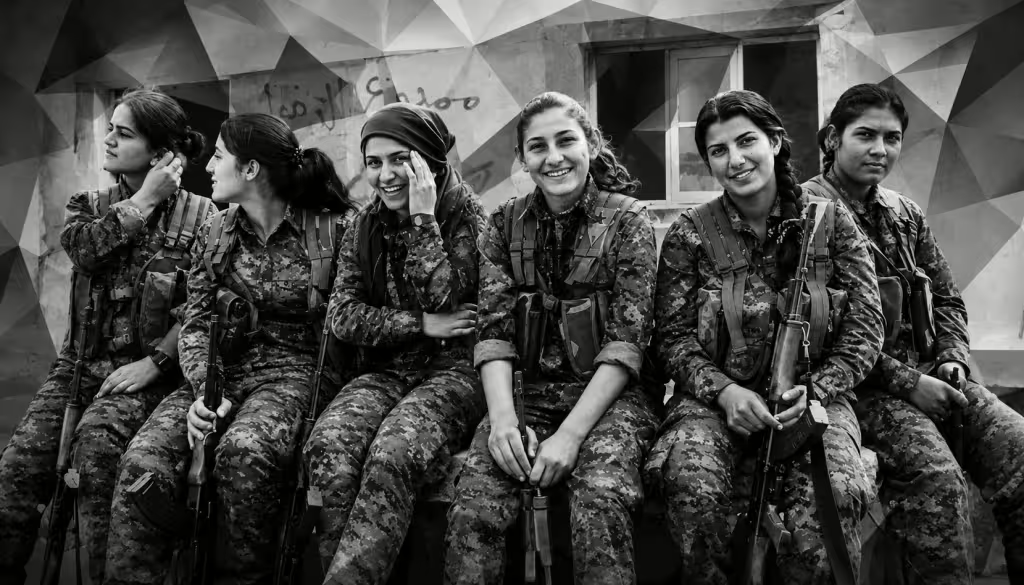
Kurdish politics is entering a profound transition as the PKK ends more than four decades of armed struggle, the Syrian Democratic Forces dissolves into Syrian state structures, and a US support agreement for Iraq’s Peshmerga nears expiry. The parallel developments do not erase the Kurdish question. They move citizenship, constitutional recognition, language rights, political participation, local government and institutional strength to the centre of struggles long shaped by weapons and foreign protection.
Details
- Turkey’s transition: On February 27, 2025, imprisoned PKK founder Abdullah Ocalan called for the organization to disarm and dissolve. Following its 12th congress in May, the PKK announced the end of its organizational structure and armed campaign. The Turkey-PKK conflict has killed more than 40,000 people since the 1980s. In July, 30 fighters symbolically burned their weapons near Sulaimani in Iraq’s Kurdistan Region.
- Legal pathway: A multiparty commission examined the legal basis for disarmament and reintegration. Turkish lawmakers approved a reform roadmap in February 2026, then passed the Law on Strengthening National Solidarity and Social Integration in August by 468 votes to 88, with six abstentions. It created procedures for disarmed PKK members to return to civilian life and mechanisms to suspend some prosecutions and sentences.
- Syria integration: SDF commander Mazloum Abdi announced on August 25 that the Kurdish-led force had ended its mission as an independent military organization after integration into state institutions. The YPG entered the state military framework, while commander Sipan Hamo became deputy defence minister for eastern territories. President Ahmed al-Sharaa appointed Abdi a presidential adviser on August 28.
- Constitutional stakes: More than 20,000 employees from the Kurdish-led northeastern administration transferred into Syrian state structures. Before dissolution, SDF officials said about 99% of outstanding issues with Damascus had been resolved. Abdi called for Kurdish rights in the new constitution. Syrian authorities recognized Kurdish as an official language, made Nowruz a national holiday and restored citizenship to previously deprived Kurds.
- Iraq’s umbrella: American, British, French and German forces withdrew hundreds of personnel and important air-defence assets from Erbil International Airport in a 72-hour pullout. The US support memorandum for the Peshmerga expires September 30. Ministry officials had received no formal notice of either extension or termination and expected talks with American commanders before the deadline. Expiry would require a new arrangement.
- Peshmerga reform: US support has also been tied to unifying formations historically aligned with the Kurdistan Democratic Party and Patriotic Union of Kurdistan. The memorandum set September 2026 as the deadline for placing forces under the Ministry of Peshmerga Affairs. Unlike the PKK and SDF processes, Iraq’s trajectory is from party-based forces toward a unified, constitutionally recognized institution.
What’s next
Talks with American commanders before September 30 will determine the next Peshmerga support arrangement, followed by the September 2026 deadline for unifying forces under the ministry.