Key Points
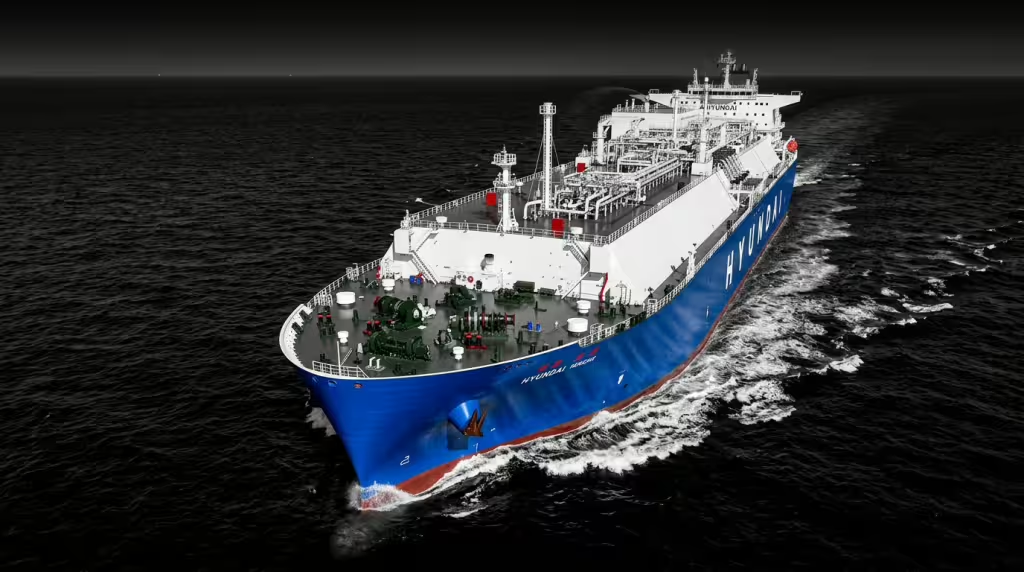
- Adnoc L&S ordered two LNG carriers for $444 million, lifting its vessel spending this year to $2.7 billion.
- The 2029 deliveries will expand a fleet set to comprise 24 LNG carriers, including 14 under construction.
- Fleet ownership supports planned energy-export growth as the Iran war drives up freight rates and disrupts the Strait of Hormuz.
The latest
Adnoc’s shipping arm has spent $2.7 billion on vessels this year after ordering two new liquefied natural gas carriers for $444 million. Scheduled for delivery in 2029, the ships extend a buying campaign intended to increase the United Arab Emirates’ ability to transport energy exports in the coming years. The spending by Adnoc Logistics & Services covers commitments for newly built ships as well as acquisitions of vessels already operating on the water.
Details
- Deal scope: The two newbuilds will join Adnoc Logistics & Services, the shipping division of Abu Dhabi National Oil Co., the UAE’s largest oil and gas producer. Their combined $444 million price is part of the division’s $2.7 billion in vessel expenditure during the year. The order is the latest addition to a recent series of purchases supporting future export growth.
- Fleet size: After the latest ships are delivered, Adnoc L&S will own 24 LNG carriers. Fourteen of those vessels are currently under construction. This year’s spending also includes ships already on the water, adding operating tonnage alongside capacity due from shipyards. Construction of the 14 carriers forms a central part of the fleet expansion already under way.
- Conflict impact: The Iran war has intensified attention on owning ships capable of carrying energy supplies worldwide. Freight rates have surged across a range of markets since the conflict began, increasing the strategic value of fleets controlled directly by producers and exporters. Vessel availability has consequently become more important for companies seeking to keep cargoes moving.
- Hormuz passage: Companies with their own fleets, including Adnoc, have had greater success moving barrels through the Strait of Hormuz. The route was choked off at the start of the conflict, making access to company-owned shipping an important factor in maintaining energy movements through the waterway. Adnoc’s experience illustrates why direct fleet ownership has attracted greater attention during the disruption.
- Growth plans: The purchases reflect the UAE’s plans to increase energy output, a shift that will require additional transport capacity as more supplies become available for export. The country also plans to expand natural gas production capacity, strengthening the operational case for a larger LNG carrier fleet. The shipping expansion connects planned production growth with the capacity needed to serve overseas markets.
Background
Earlier this year, the UAE announced it would leave the Organization of the Petroleum Exporting Countries. Over the longer term, that decision means it will likely raise output and need more ships to carry it, linking the fleet program to a broader change in national production policy.
What’s next
The next fixed milestone is 2029, when the two newly ordered LNG carriers are due for delivery. Before then, the key indicator will be completion and delivery progress across the 14 LNG vessels currently under construction.