Key Points
- A senior armed-faction figure warned Prime Minister Ali al-Zaidi and rejected disarmament unless three conditions are met.
- Abu Mujahid al-Assaf demanded U.S. and Turkish troop withdrawals and the dissolution of the Kurdish Peshmerga.
- The message tests Baghdad’s September deadline for placing weapons exclusively under state authority.
The latest
Abu Mujahid al-Assaf, who identifies himself as the “security official of the Islamic Resistance,” tied any discussion of factional weapons to three political and security conditions in an August 18, 2026 statement. He addressed Prime Minister Ali al-Zaidi in warning language as the government pursues its plan to bring armed force under state control.
Details
- Three conditions: Al-Assaf demanded the withdrawal of U.S. forces from Iraq, the removal of Turkish troops from the north and the dissolution of the Peshmerga. He argued that these issues must be resolved before armed factions can be asked to relinquish their weapons or discuss their regulation.
- Direct warning: Al-Assaf said 100 days should have been enough for al-Zaidi to understand what he described as Iraq’s realities and urged him to correct unspecified security failures. He also warned the prime minister against listening to unnamed figures whom he accused of hostility toward Iraq’s Shiites.
- Personal language: The statement reminded al-Zaidi that he had previously conducted business safely while the factions possessed what al-Assaf described as “billions” in resources, before warning him against testing them. The supplied material provides no independently verified figure for those resources and includes no government response to the message.
- Government process: Al-Zaidi formed a committee to devise mechanisms for placing weapons under state authority and set September 30 as the deadline, coinciding with the scheduled completion of the U.S. military withdrawal. The government says it has received categories of weapons from participating factions, with later stages intended to dismantle organizational command links and integrate fighters into state institutions. Al-Zaidi has repeatedly said he will not accept a “state within the state” and has kept enforcement of the law as an option.
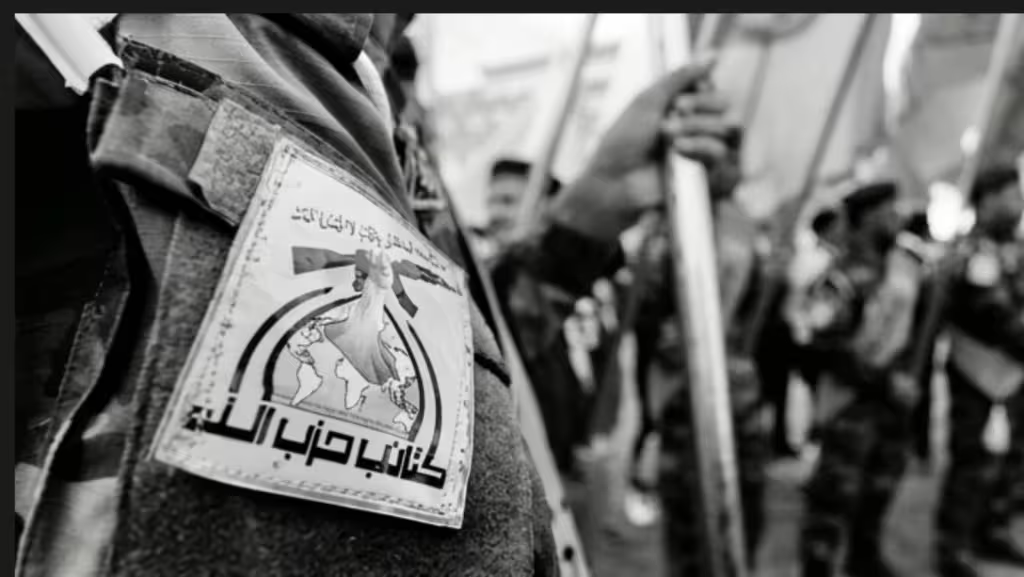
- Faction divide: Saraya al-Salam has begun surrendering part of its arsenal, while Asaib Ahl al-Haq and Kataib al-Imam Ali announced steps involving organizational disengagement, weapons transfers and integration. Kataib Hezbollah, Harakat al-Nujaba and Kataib Sayyid al-Shuhada remain resistant, linking their weapons to foreign forces. In June, al-Assaf said leading “Islamic Resistance” factions would not disarm before sovereignty-related issues were resolved.
Between the lines
Adding the Peshmerga broadens the confrontation beyond factional missiles, drones and heavy weapons to Baghdad’s relationship with the Kurdistan Region. The Iraqi government does not treat the Peshmerga as legally equivalent to armed factions. Al-Assaf’s formulation nevertheless places both within the same argument over sovereignty and legitimate armed power.
What’s next
September 30 is the concrete test: the government’s weapons deadline coincides with the scheduled completion of the U.S. withdrawal. Attention will focus on whether resistant factions change their position, how much weaponry is transferred and whether Baghdad moves from negotiations toward legal enforcement.