The latest:
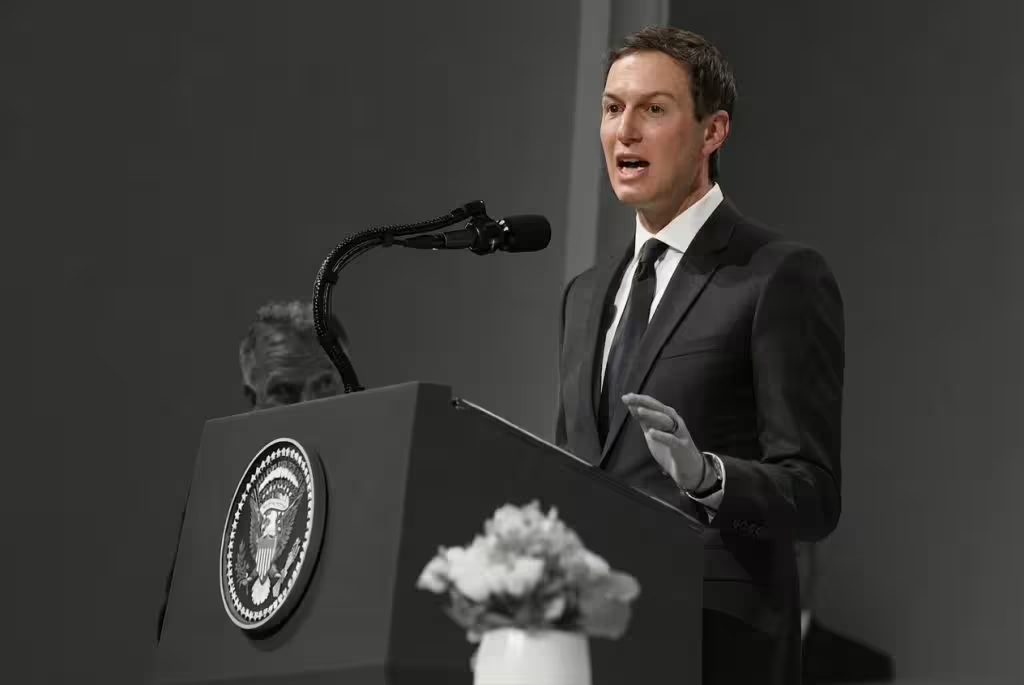
Israel will not pull back from the so-called yellow line until Hamas surrenders its weapons in full, Netanyahu’s government said after hours of talks in Jerusalem with Jared Kushner and Board of Peace representatives. Netanyahu’s office described the discussions as deep and constructive, and said both sides agreed to form working groups on disarming Gaza’s armed factions and on water and public health.
Details:
- The disarmament mechanism: Under an Israeli-American understanding reported by The Jerusalem Post, weapons handed over by Hamas in the initial phase would be transferred to the proposed technocratic committee governing Gaza, the International Stabilization Force and Israeli security forces, with US Major General Jasper Jeffers overseeing the transfer.
- The Israeli conditions: Officials briefed on the talks said Netanyahu made clear that targeted Israeli operations against Hamas will continue, that no decision was taken to withdraw from the yellow line, and that troop levels will not be reduced under the current understandings.
- Reconstruction frozen: Netanyahu’s office said Israel and the Board of Peace are determined that disarmament and demilitarization precede any reconstruction of Gaza, where towns remain destroyed and large numbers of residents are living in deteriorating tents.
- The Hebrew briefing: A separate Hebrew-language statement to Israeli media, attributed to an unnamed diplomatic official, was sharper. It said the first step would be Hamas handing over all its weapons for destruction under Jeffers’ supervision, and that Israel would accept no limits on thwarting attacks or on targeted killings tied to October 7, 2023.
- The candid split: Another portion of the Israeli statement, attributed to an Israeli official, acknowledged a substantive disagreement: “Deep down, Israel does not officially believe Hamas will disarm. The Americans say they believe it is possible.”
- The Board of Peace account: An official on the board, speaking anonymously, said it agreed Israeli forces would not redeploy before disarmament, that Israel retains the right to self-defense if Hamas turns to violence or rearms, and that Netanyahu was told Hamas had pledged to disarm and halt all military activity.
- The Hamas side: Kushner and board members met Hamas representatives, including political leader Khalil al-Hayya, in Egypt’s El Alamein a day earlier. A Hamas official and two people familiar with the talks said Hamas handed over a list of alleged Israeli ceasefire violations and Kushner promised to raise Israel’s obligations with Netanyahu.
- Hamas conditions: The two people said Kushner urged Hamas to move ahead on disarmament, but Hamas insisted Israel first honor its ceasefire commitments and warned the roadmap agreed last month is not open to amendment. Israel had failed to allow in specified quantities of fuel and other necessities under the October 2025 ceasefire.
- The shifting sequence: Nickolay Mladenov, a senior board official, said in late July that Israeli withdrawal must be fully synchronized with Palestinian disarmament. Days later, the board announced the pullback from the yellow line would follow completion of disarmament instead.
- Who was in the room: Attendees included Shin Bet chief David Zini, military intelligence head Shlomi Binder, minister Yossi Fuchs and national security council director Shmuel Ben Ezra. The visiting delegation included Kushner, Tony Blair, Ambassador Mike Huckabee and Mladenov. President Isaac Herzog met Kushner and Mladenov later that day.
- Immediate test: Officials said the talks produced an understanding that Hamas must begin demonstrating commitment now by handing over weapons rather than waiting for other elements of the framework. Hamas had earlier rejected a disarmament proposal based on balancing forces and sought changes to the plan.
Background:
Trump’s plan stalled for months over Hamas resistance to disarmament and continued Israeli airstrikes and ground operations. Trump announced last month that the Board of Peace had secured Hamas consent to disarm, briefly raising expectations of progress.
Between the lines:
Both sides face election clocks that penalize concessions. Netanyahu trails in polls before the October 27 vote, and any visible softening on Gaza exposes him to attack from coalition allies he needs. For the Board of Peace and the White House, failure before November congressional midterms and the ceasefire anniversary in early October carries its own political cost. Israel’s own briefing concedes it does not expect Hamas to disarm.
What’s next
Watch whether Hamas begins handing over weapons immediately, as Israel demands, and whether the new working groups on disarmament and public health produce anything before Israel’s October 27 election.