
Key Points
- An informed source says Zaidi plans no move into Jurf al-Sakhar before or after the coalition deadline.
- Baghdad may instead negotiate permanent military-zone status while tightening controls around militia strongholds.
- The decision will test federal authority and the rights of families displaced since 2014.
The latest
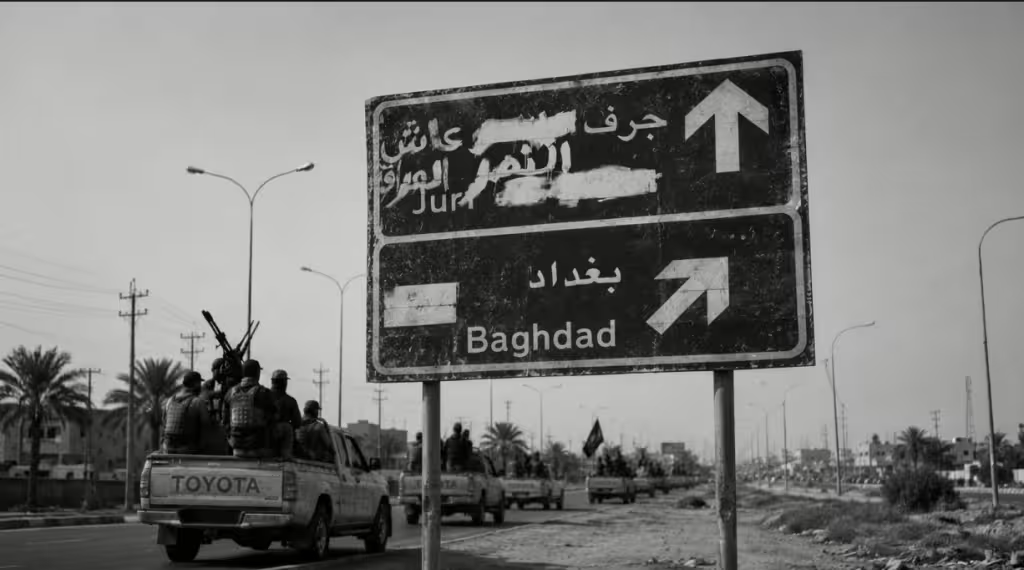
Prime Minister Ali al-Zaidi is not preparing to enter Jurf al-Sakhar, officially Jurf al-Nasr, around the US-led coalition’s September 30, 2026 departure deadline, an informed source told +ontime. The source said negotiations over the area’s legal and administrative status were more likely, potentially designating it a permanent military zone for Popular Mobilization Forces headquarters. +ontime could not independently verify the account, and no published government order identifies an operation, assigned forces or timetable for restoring civilian administration.
Details
- Sovereignty deadline: Zaidi has said Iraq will be free of foreign military forces from October 1 and has linked the coalition’s departure to bringing weapons under state authority. Reports of planned checkpoints and elite-force deployments around faction strongholds remain based largely on unidentified sources rather than published directives.
- State process: Iraq’s Security Media Cell announced in June that a senior committee would oversee the surrender of medium and heavy weapons, restructuring and redeployment. It includes the prime minister’s office, security ministries, Joint Operations Command, PMF and government legal departments. Authorities said implementation began with Saraya al-Salam.
- Faction resistance: Kata’ib Hezbollah, the faction most closely associated with Jurf al-Sakhar, has publicly rejected demands to surrender its weapons. The position challenges Baghdad’s consensual approach because several factions are legally incorporated into the state-funded PMF while reportedly retaining independent weapons and command structures.
- Displacement legacy: Iraqi forces and PMF factions recaptured the area from Islamic State in October 2014, but an announced eight-month closure became a prohibition lasting more than a decade. Earlier Migration Ministry estimates put the displaced population at about 7,500 families, although no definitive current register is public. A 2024 IOM study classified parts of Babil, particularly Jurf al-Sakhar, as “areas of no return” and identified Kata’ib Hezbollah as the armed group holding it.
- Military tradeoff: Open sources confirm PMF bases and a prominent Kata’ib Hezbollah presence, while military reporting has described strike targets as missile stores and drone-related facilities. Permanent military-zone status could formalise those sites without guaranteeing federal inspections, judicial access, civilian property rights or displaced residents’ safe return.
Between the lines
Ending the coalition mission would not automatically close every foreign security arrangement. NATO Mission Iraq is organisationally separate and provides non-combat assistance at Baghdad’s invitation. The government has not publicly clarified whether its pledge covers NATO personnel, bilateral advisers or diplomatic security contingents.
What’s next
The coalition timetable ends September 30, 2026. The concrete indicators after October 1 will be published orders covering checkpoints and weapons inventories, or formal negotiations on Jurf al-Sakhar’s military status, federal access and the return of displaced residents.