The latest:
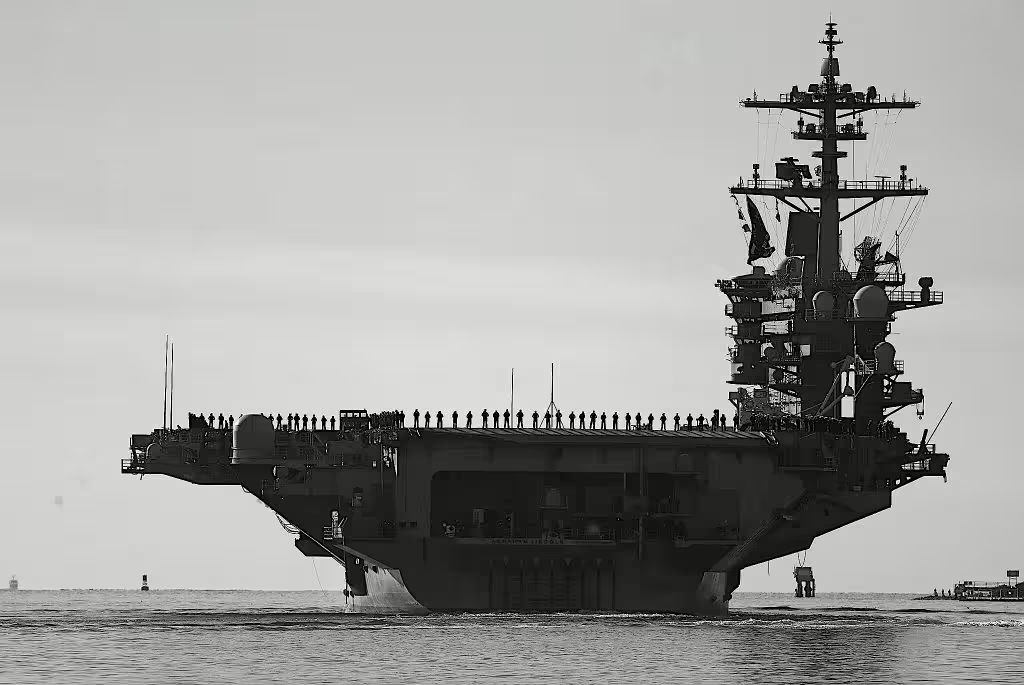
Reports of deaths and worsening mental health aboard the aircraft carrier USS Abraham Lincoln are false, US Central Command said Thursday, rejecting what it called pervasive and misleading coverage of the ship’s deployment. War Secretary Pete Hegseth, speaking to reporters in Panama, said the accounts had been entirely distorted. Democratic senators are separately demanding answers about supplies, water and crew rest.
Details:
- The denial: CENTCOM said multiple outlets published false claims over the previous 48 hours, including that seven sailors died in a fight aboard the carrier. It said no service member has died aboard, and the one sailor who fell overboard on 3 August was rescued quickly and safely. The statement did not name the outlets it faulted.
- The numbers: CENTCOM cited a crew retention rate of 84.4%, which it described as among the highest of any US Navy carrier, alongside more than 260 days at sea, 10,000 flights and 1.5 million pounds of munitions expended. It did not release comparative figures for other carriers.
- The Senate pressure: Senator Richard Blumenthal, a Connecticut Democrat, wrote to Hegseth and acting Navy Secretary Hung Cao listing reported shortages of basic supplies, water contamination, plumbing failures, deteriorating mental health, flight-deck safety concerns and mail disruptions. He said the administration has kept carriers at sea far longer than usual. The letter’s response has not been disclosed.
- The partisan edge: Senator Ruben Gallego, an Arizona Democrat and former Marine combat veteran, said Wednesday he requested an overnight bipartisan congressional visit to the Lincoln and called the treatment of troops during what he termed an illegitimate war both disgusting and dangerous. No date for such a visit has been announced.
- Hegseth’s response: The war secretary said every ship, crew and captain receives everything the Pentagon can provide, adding that some deployments run longer than others and praising sailors operating with few port calls. He did not address the specific supply, water or mail problems raised by senators.
- The relief plan: A US official, speaking anonymously because they were not authorized to discuss ship schedules, said the carrier George Washington will head to the Middle East to relieve the Lincoln. A second official said it recently passed westward through the Strait of Malacca. No arrival date was given.
- The deployment record: The USS Gerald R. Ford deployed 326 days before returning home in May, the longest carrier deployment since the Vietnam War. During it the ship suffered a fire, food and mail shortages and mechanical problems. A second carrier, the USS George H.W. Bush, deployed 31 March and is already operating in the region.
- Combat record: Hegseth said on 8 April that Iran fired hundreds of missiles and one-way attack drones at the carrier and that all were shot down far from the ship. The Lincoln, homeported in San Diego with about 5,000 sailors, also helped enforce the US blockade of Iranian ports.
- Blockade figures: CENTCOM said the first blockade phase, from 13 April until a mid-June ceasefire, disrupted nine non-compliant vessels and redirected 135. After the blockade resumed 15 July, its 9 August update reported 55 vessels redirected, two disrupted and two boarded. No update has been issued since.
- The readiness warning: Retired Vice Admiral Mike Franken said extended operations outside normal schedules damage readiness and maintenance, warning: “It will take years.” He said routine multi-month deployment delays will limit future carrier availability for combat operations.
Background:
Extended deployments strain crews and equipment, with parts failing when spares are unavailable, and they disrupt shipyard maintenance schedules set years in advance as well as strategic ship positioning.
Between the lines:
Two separate disputes are being fought as one. CENTCOM’s denial addresses specific claims about deaths and suicidal ideation; the senators’ letter addresses supplies, water and rest, which Hegseth did not answer point by point. Franken’s assessment that recovery will take years frames the argument as readiness, while Gallego’s language ties it directly to Trump’s Iran campaign — the same facts serving two arguments.
What’s next
Watch whether the George Washington’s arrival is announced, whether the requested bipartisan congressional visit is approved, whether Hegseth and Cao answer Blumenthal’s letter, and the next CENTCOM blockade update after 9 August.