Key Points
- Pakistan's defense minister said Washington and Tehran are close to some arrangement over the Strait of Hormuz.
- Iran closed the waterway after US and Israeli attacks on Feb. 28; a fifth of traded oil once passed through.
- Oil erased gains on the comments, but Trump's reparations demand makes any quick deal unlikely.
The latest:
Talks over reopening the Strait of Hormuz are close to some sort of arrangement, Pakistani Defense Minister Khawaja Asif told reporters in Islamabad on Tuesday, saying things are shaping up in favor of peace. He gave no details of a breakthrough. Bloomberg reported oil prices erased gains after his remarks, the latest in a run of conflicting statements about the waterway’s status.
Details:
- The mediation: Pakistan has been mediating in the conflict alongside Qatar, and Interior Minister Mohsin Naqvi will shortly arrive in Tehran for talks with his Iranian counterpart, the semi-official Fars agency reported. Neither Asif nor Fars specified what Naqvi would put on the table, or when the talks would conclude.
- The Oman track: Al Jazeera reported, citing a Qatari Foreign Ministry spokesperson, that Iran-Oman talks on reopening Hormuz to some maritime shipping had reached an advanced stage. The spokesperson was not named, and no timetable, tonnage limits or categories of permitted shipping were disclosed.
- Trump’s terms: Trump said on Monday that Tehran should pay reparations for those killed in attacks linked to the Islamic Republic and in domestic protests, and that the demand would be included firmly in all future negotiations. The White House has not detailed how such compensation would be calculated or enforced.
- Iran’s conditions: Tehran has refused to soften demands that Washington end its blockade of Iranian ports, lift sanctions and meet other conditions before it considers reopening Hormuz. Iran also sought compensation for US violations of a lapsed interim deal agreed in June; the terms of that deal were not disclosed.
- Tehran’s framing: Foreign Minister Abbas Araghchi told reporters on Tuesday that Iran had astonished the whole world and defeated what was ostensibly the largest army in the world, calling itself a resilient and invincible power. He named no foreign officials who told him so, and cited no battlefield figures.
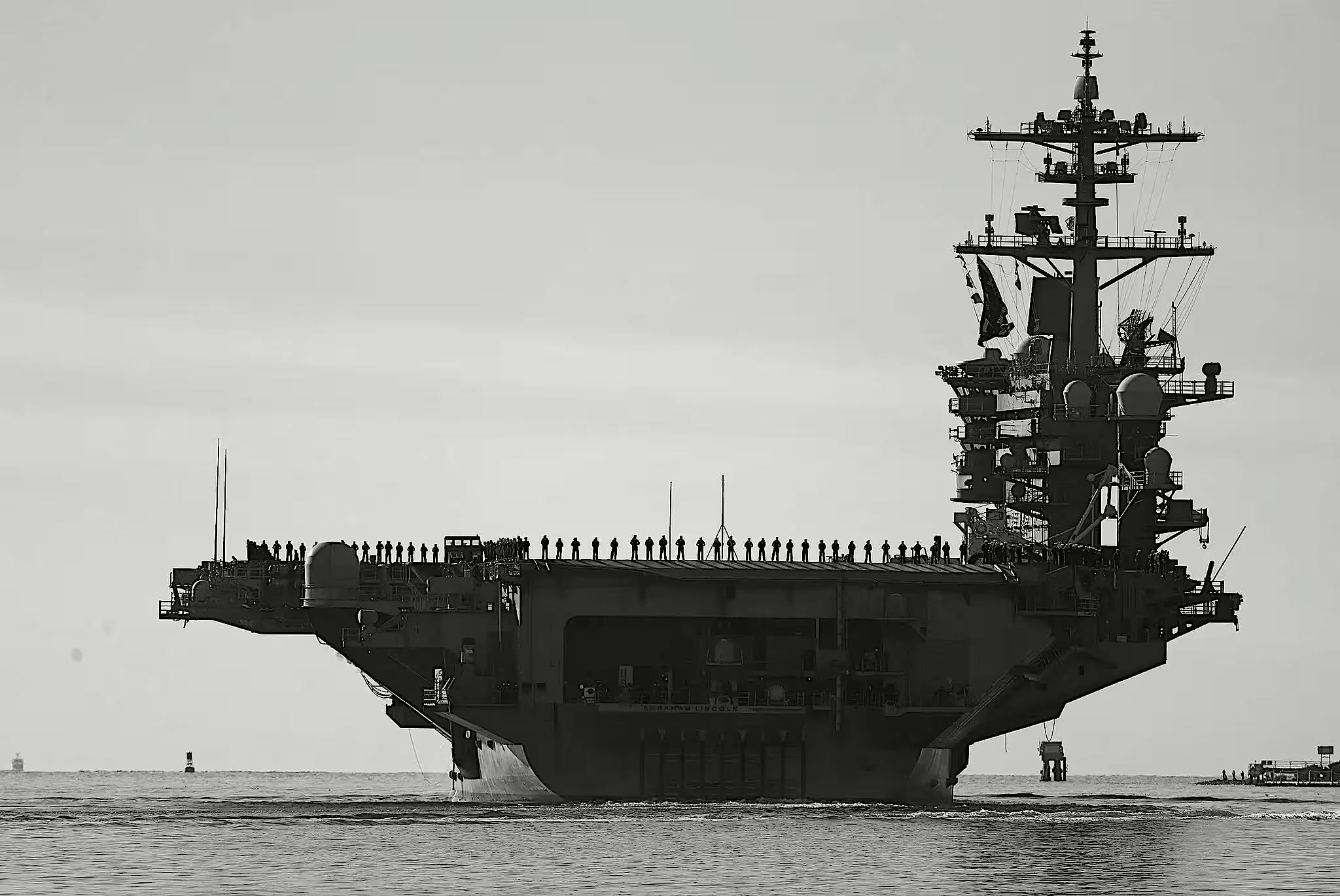
- The incident: US forces fired on a Panama-flagged ship that tried to run the American blockade of Iranian ports early Tuesday, the Wall Street Journal reported, citing an unnamed US official. Vanguard Tech said earlier the container ship was hit by a missile and left without a command. Casualties were not reported.
- Naval reports: The UK navy said it received a report of an incident involving a container ship and military forces in the Gulf of Oman, without further details. It was also informed of a cargo vessel hit by an unknown projectile off Yemen’s Red Sea coast, with casualties. It did not identify the vessels or attackers.
- The markets: Brent crude traded slightly lower in London afternoon trade at just over $87 a barrel. European diesel futures surged more than 10% as refineries in Libya and Russia came under attack. Saudi Arabia extinguished a fire at its Jazan refinery early Sunday; Houthi militants claimed an attack there hours later.
- Iran’s economy: Central bank data shows year-on-year inflation recently reached 77%, with much of Iran’s industrial capacity destroyed and crude exports curtailed by the US blockade. Trump signaled over the weekend he was prepared to let economic pressure build rather than order fresh strikes. No sanctions-relief offer was described.
- The assessments: Ali Vaez of the International Crisis Group said mediators are trying to put things back on track but that it is easier said than done. Anwar Gargash, senior diplomatic adviser to the UAE president, wrote on X that the region cannot remain indefinitely in a state of neither war nor peace.
Background:
Israel and the US attacked Iran on Feb. 28, after which Tehran effectively closed Hormuz. Roughly a fifth of the world’s traded oil and liquefied natural gas passed through the strait before the war, keeping energy prices central to US politics ahead of November’s midterm elections.
Between the lines:
Two tracks are moving in opposite directions at once. Mediators in Islamabad and Doha describe an arrangement within reach, while Trump’s reparations demand and Iran’s insistence on ending the blockade first leave no overlap on paper. Bloomberg noted the exchange appeared to reduce the odds of any immediate pact, and the oil market’s reaction — gains erased on mediation talk, pressure from the Libya and Russia refinery attacks — suggests traders are pricing the diplomacy, not the outcome.
What’s next
Watch Naqvi’s arrival in Tehran and any Iranian response to Trump’s reparations demand, the outcome of the Iran-Oman track on partial shipping, and whether further blockade-running incidents are reported in the Gulf of Oman.