
Key Points
- Trump says Washington is “semi-negotiating” over Hormuz while relying on Iran’s inflation and financial strain.
- Tehran conditions full reopening on sanctions relief, a US withdrawal, unfrozen assets and wider regional restraints.
- Hormuz carried one-fifth of global oil and LNG flows before the war, raising the stakes for energy markets.
The latest
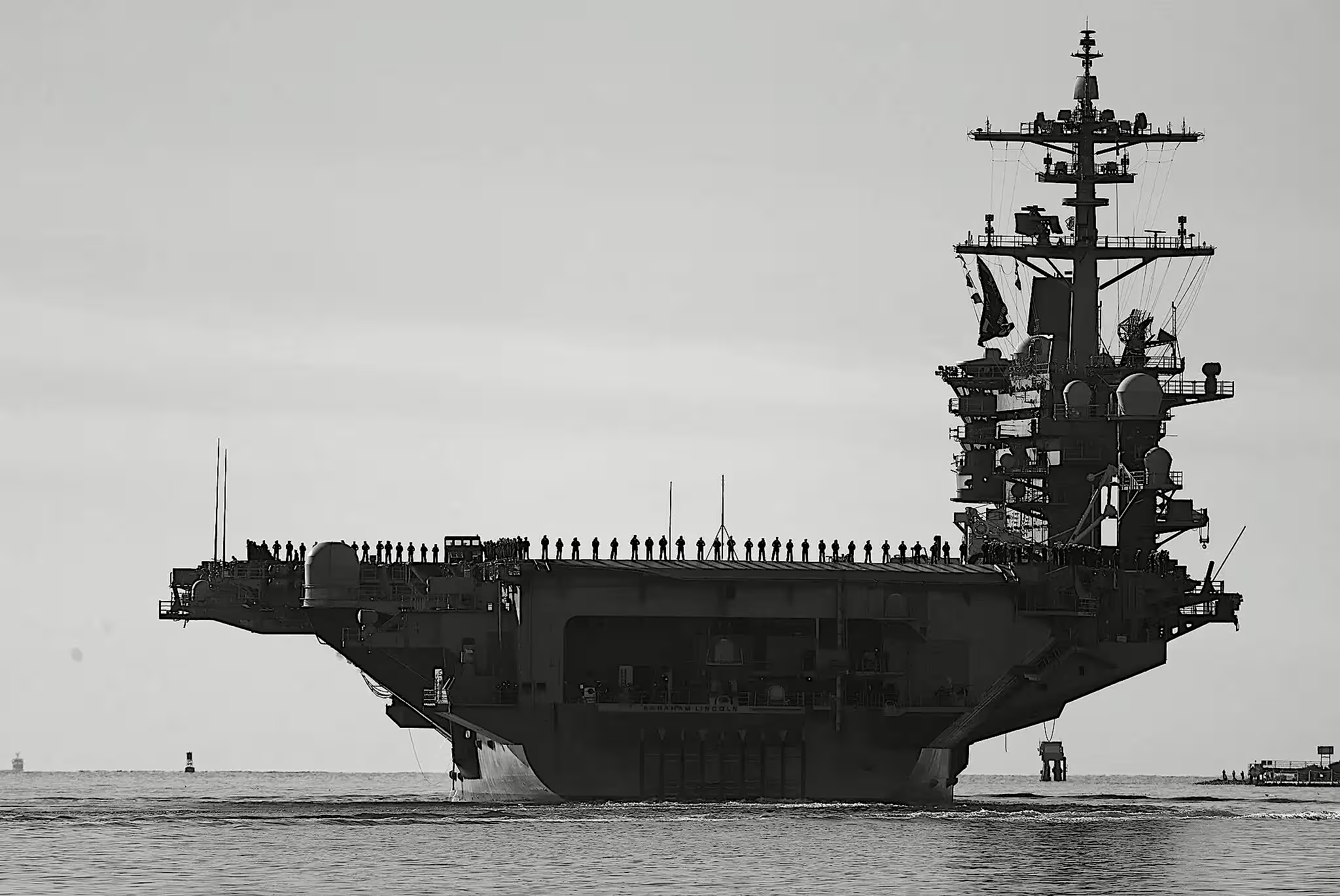
President Donald Trump signaled he is prepared to let economic pressure build on Iran rather than order fresh military strikes, telling Axios that Washington was “semi-negotiating” with Tehran over the Strait of Hormuz. He said the United States was “low keying it” while watching Iran’s inflation and lack of money, and argued that the US naval blockade was worsening its financial position.
Details
- Oman channel: Foreign Minister Abbas Araghchi said an agreement with Oman to create a shipping route through the strait was “very close,” but gave no substantive details. He ruled out direct US talks for now, alleging repeated violations of a short-lived interim peace accord signed in June. He said messages were still passing through intermediaries.
- Iranian conditions: Tehran said full reopening requires the United States to lift its blockade of Iranian ports, withdraw nearby forces, remove sanctions, release frozen assets and compensate war damage. It also demanded a permanent end to attacks on Iran-backed groups in Lebanon, Iraq, Yemen and Gaza. The breadth of those conditions indicates that a limited shipping arrangement would not necessarily restore unrestricted navigation.
- Security reshuffle: State-run IRNA reported that Supreme Leader Mojtaba Khamenei appointed military adviser Mohsen Rezaee to lead the Supreme National Security Council, replacing Mohammad Bagher Zolghadr, who became Khamenei’s political adviser. Rezaee, a former Revolutionary Guard commander, has advocated full Iranian control over Hormuz. The council coordinates Iran’s decisions on the war and negotiations.
- Energy exposure: Before the US-Israel war with Iran began on Feb. 28, one-fifth of global oil and liquefied natural gas passed through Hormuz. Brent crude was little changed Monday at $83.61 a barrel after gaining more than 5% over the previous three sessions. Trump has demanded open navigation for months.
- Gaza obstacle: Some Iranian demands cannot be met by Washington alone. Israeli Prime Minister Benjamin Netanyahu rejected a US-backed mediators’ proposal to disarm Hamas and withdraw Israeli forces from Gaza, while Iranian terms include ending attacks on allied groups. Axios cited a White House official saying Trump understood Netanyahu’s political constraints and that Israel had restrained attacks over the previous week.
- Jazan claim: Iran-backed Houthis said they struck Saudi Aramco’s Jazan refinery on Sunday. Saudi authorities reported a fire that was quickly extinguished without injuries, but did not confirm the Houthi account. The incident would be at least the second blaze in a month at the 400,000-barrel-a-day complex; satellite images showed a tank fire after an earlier claimed attack.
What’s next
Watch for Oman or Iran to publish terms for the proposed corridor, and for vessels to begin transiting it. Washington’s formal response to Tehran’s conditions will indicate whether talks can progress beyond the current intermediary channel.