Key Points
- Ali Abdollahi must merge Iran’s policy-setting General Staff with its top joint operational headquarters.
- Ahmad Vahidi, Mostafa Izadi, Kioumars Heydari, Ali Azmaei and Hossein Taeb received senior commands.
- The choices consolidate wartime authority but leave key intelligence and cabinet posts without permanent chiefs.
The latest
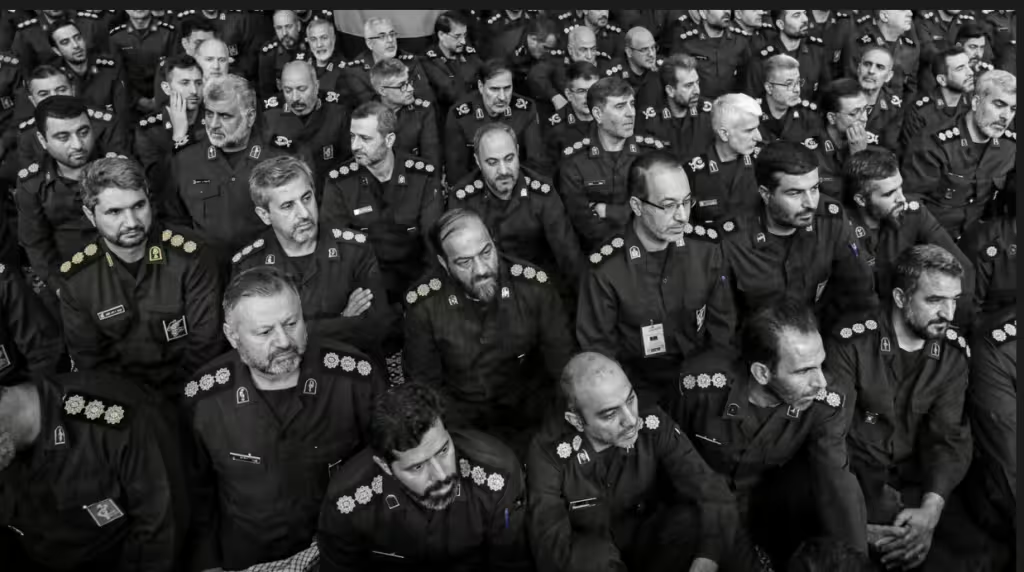
Supreme Leader Mojtaba Khamenei appointed six senior commanders on Monday, centering the reshuffle on Ali Abdollahi, whom he named Armed Forces chief of staff and tasked with completing the integration of the General Staff and Khatam al-Anbiya Central Headquarters, Iran International reported. The decrees formalize parts of a wartime leadership structure after US-Israeli strikes killed several commanders, while prioritizing force readiness and rapid responses to conventional, cognitive and hybrid threats.
Details
- Abdollahi’s mandate: Abdollahi has commanded Khatam al-Anbiya, Iran’s joint wartime command, since 2025 and emerged as a prominent operational figure during the current conflict. In May, he briefed Khamenei on the readiness of the Army, IRGC and other forces. His move to the General Staff could place strategic planning, service coordination and battlefield command within a more unified structure. He replaces Abdolrahim Mousavi, reportedly killed on the war’s opening day.
- Heydari’s role: Kioumars Heydari, formerly commander of the regular Army’s Ground Forces, becomes deputy chief of staff. His appointment brings experience overseeing a major conventional force into the rebuilt command team and places an army officer directly beneath Abdollahi as the leadership seeks closer coordination among Iran’s armed services.
- Guards leadership: Ahmad Vahidi was formally named IRGC commander-in-chief and promoted to major general after previously appearing in the role following Mohammad Pakpour’s reported death. Mostafa Izadi becomes his deputy. Izadi formerly led Khatam al-Anbiya’s Cyber and New Threats Headquarters, giving the Guards’ command team experience relevant to the nonconventional threats cited in Khamenei’s decree.
- Taeb returns: Hossein Taeb’s appointment as Basij commander is the most politically notable choice. He previously led both the Basij and the IRGC Intelligence Organization, but left the intelligence post in 2022 after security breaches and operations attributed to Israel. His return places a veteran security figure over the paramilitary force associated with suppressing domestic protests.
- Naval command: Rear Admiral Ali Azmaei was formally appointed commander of the IRGC Navy after already appearing publicly in that role following Alireza Tangsiri’s reported killing. The decree confirms his authority over a force central to Iran’s Gulf posture. Several intelligence commands, however, still lack publicly announced permanent leaders.
Background
The merger partly reverses Ali Khamenei’s 2016 reorganization, which separated the General Staff’s policy and coordination functions from Khatam al-Anbiya’s wartime operational authority. Mohammad Bagheri then led the General Staff, while Gholamali Rashid commanded Khatam al-Anbiya and held precedence during war. Hassan Firouzabadi had previously headed both structures.
What’s next
The next indicators will be publication of the integration plan and a revised command structure. Separate presidential nominations and parliamentary confidence votes are required to fill the defense and intelligence ministries permanently under Article 133 of Iran’s constitution.