Key Points
- The UAE transformed a failed ports deal into a sustained campaign for influence across Washington.
- Lobbying, technology investment and the Abraham Accords helped recast Abu Dhabi as a capable US ally.
- Chip access and Trump-linked cryptocurrency deals now intensify concerns over security and conflicts of interest.
The latest
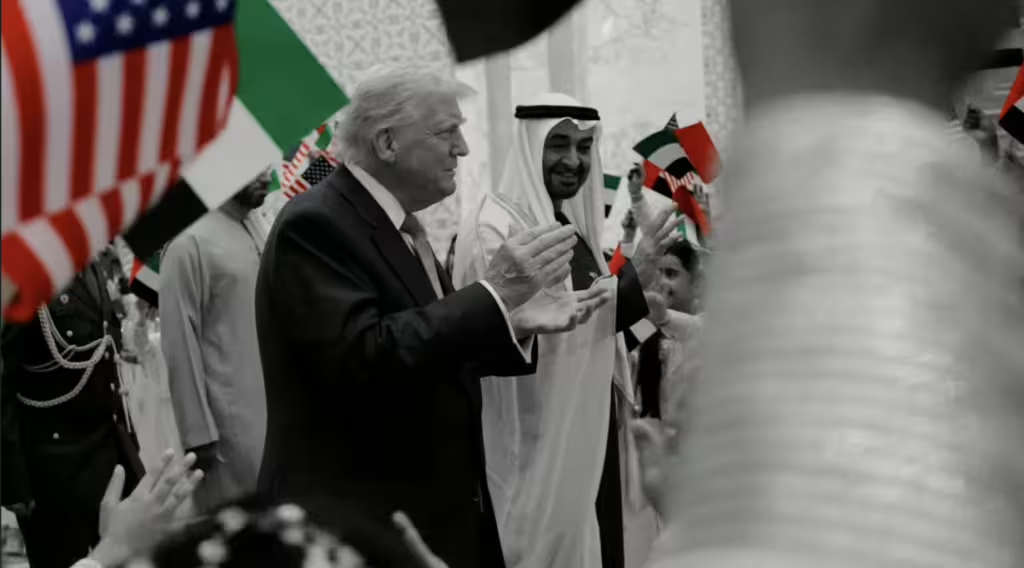
Two decades after congressional opposition forced DP World to abandon its purchase of six major US seaports, the UAE has become one of Washington’s most closely connected Middle Eastern partners, the Financial Times reports. Abu Dhabi combined bipartisan relationship-building, lobbying, sovereign investment, military co-operation and its 2020 normalisation agreement with Israel to reshape perceptions that had hardened after the September 11 attacks.
Details
- Strategic reset: The ports backlash prompted Sheikh Mohamed bin Zayed, then Abu Dhabi’s crown prince and now UAE president, to order a campaign addressing American perceptions of the country. Opposition had persisted despite Bush administration support for the transaction and the UAE’s military contribution in Afghanistan.
- Ambassador’s role: Yousef al-Otaiba, ambassador since 2008, expanded outreach to Congress, administrations, think-tanks, universities and media organisations. Current and former officials cited by the newspaper credit his relationships across both parties with helping reposition the UAE as modern, commercially open and strategically useful.
- Financial reach: The UAE spent more than $270mn in Washington over the past decade, according to OpenSecrets data cited by the newspaper. It also funded prominent policy institutes and deployed assets managed through sovereign funds and state-backed businesses, collectively valued by the report at $1.7tn.
- Technology leverage: State-backed Mubadala and MGX established investments or partnerships involving OpenAI, xAI, GlobalFoundries, Cerebras Systems and Aligned Data Centers. MGX also struck a deal with the US government for a 15 per cent stake in TikTok US, extending Emirati exposure to another politically sensitive technology platform. The US also authorised advanced chip sales to the UAE, while its military announced work with Emirati counterparts to accelerate development of military artificial intelligence.
- Contested transactions: Democrats linked the chips decision to MGX’s investment in the Trump family’s World Liberty Financial and its use of the company’s stablecoin for a $2bn Binance transaction. Emirati representatives said the investments were private commercial decisions; World Liberty rejected characterising the transaction as a cash handout.
- Persistent criticism: US critics continue to cite Emirati technology ties with China, alleged support for Sudan’s Rapid Support Forces and the country’s role in Iranian financial networks. The UAE denies supporting the Sudanese force and says safeguards protect advanced US technology. Lawmakers have repeatedly declined to block Emirati arms sales.
Between the lines
The campaign delivered access but not decisive control over US policy. According to the report, Abu Dhabi could not prevent the US-Israeli war with Iran, which exposed the UAE to substantial retaliatory attacks despite its influence in Washington.
What’s next
The November midterm elections cited in the report will determine whether Democrats regain congressional control and can open investigations into the cryptocurrency investments, chip agreement and broader US-UAE relationship.