The latest
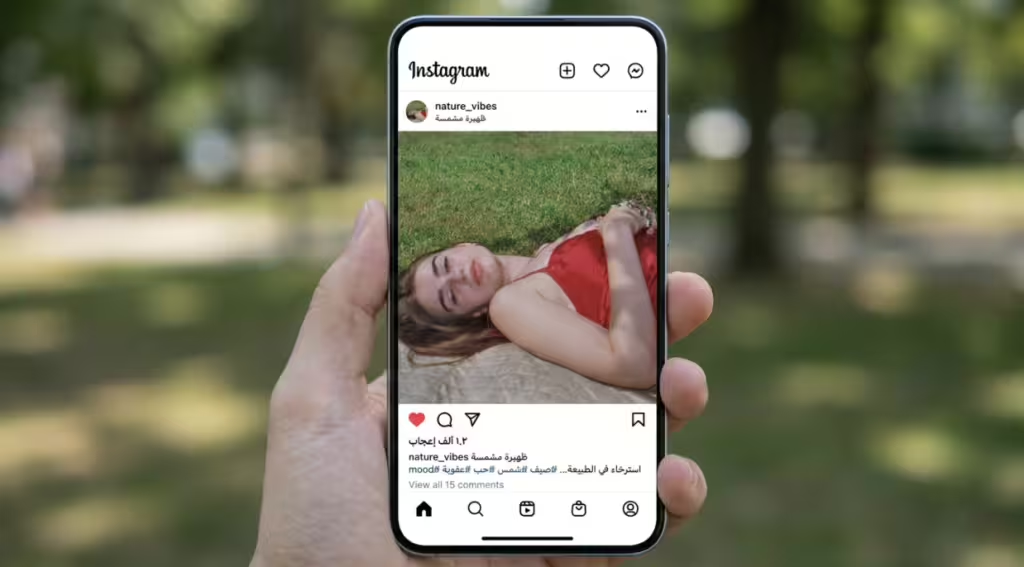
Social media can intensify episodes of profound romantic infatuation by giving users continuous access to a love interest’s images, contacts and activity, while leaving online signals open to interpretation, psychologists and a neuroscientist told The Washington Post. The pattern, known as limerence, can make mood dependent on another person’s actions and turn checking likes, story views and follows into a disruptive routine. Their accounts describe platforms as infrastructure for fixation, not as its sole cause.
Details
- Meaning and history: Dorothy Tennov coined the term in the 1970s for intense infatuation involving frequent thoughts, vivid fantasy and emotional dependence on a person’s responses. University of Chichester psychologist Lynn Marshall said it resembles a crush at “enormous intensity” and can overwhelm daily life.
- Rapid online rise: Google Trends showed searches for “limerence” increasing 500 percent over five years, the Post reported. TikTok carried 43,000 videos under #limerence, while Instagram had 46,000 posts. Marshall said the combination of abundant information and uncertain meaning encourages users to decode small digital gestures for hours.
- Paid viewing data: Meta launched Instagram Plus in June at $3.99 per month, according to the report. The service lets subscribers see how often and when someone viewed a story and search viewer lists for a specific account. Former Meta engineer Matt Hannan said the tools sell users better social intelligence; Meta did not answer the Post’s comment request.
- Reward-seeking account: Neuroscientist Tom Bellamy said readily available photos and updates can provide repeated reinforcement, strengthening contact-seeking while executive control weakens. He linked the process to dopamine, norepinephrine, oxytocin and endorphins. A survey he conducted among 1,500 adults led him to estimate that more than half had experienced limerence.
- One woman’s record: Bulgarian artist Anna Ivanova recognized her own pattern in unanswered 1947 love letters found at a Sofia flea market. Reviewing five years of diaries, she found recurring obsession despite changing partners; one episode lasted three years. Ivanova said her latest episode began four months into dating, after shared plans fell through. After ending contact, removing accounts and stopping searches, she said intrusive thoughts continued for months.
Background
Historical letters suggest obsessive infatuation predates social media, but Marshall said digital access can lengthen episodes by supplying relatives, friends and activities as material for fantasy. She said triggers can be ordinary—a smile, eye contact or canceled plan—and the target may be unsuitable or unexpected. Bellamy recommends minimizing contact to stop reinforcing the cycle, while warning of withdrawal distress.
What’s next
The next concrete indicator is the rollout and uptake of Instagram Plus viewing tools, alongside future Google Trends readings and counts of #limerence posts on TikTok and Instagram.