
The latest
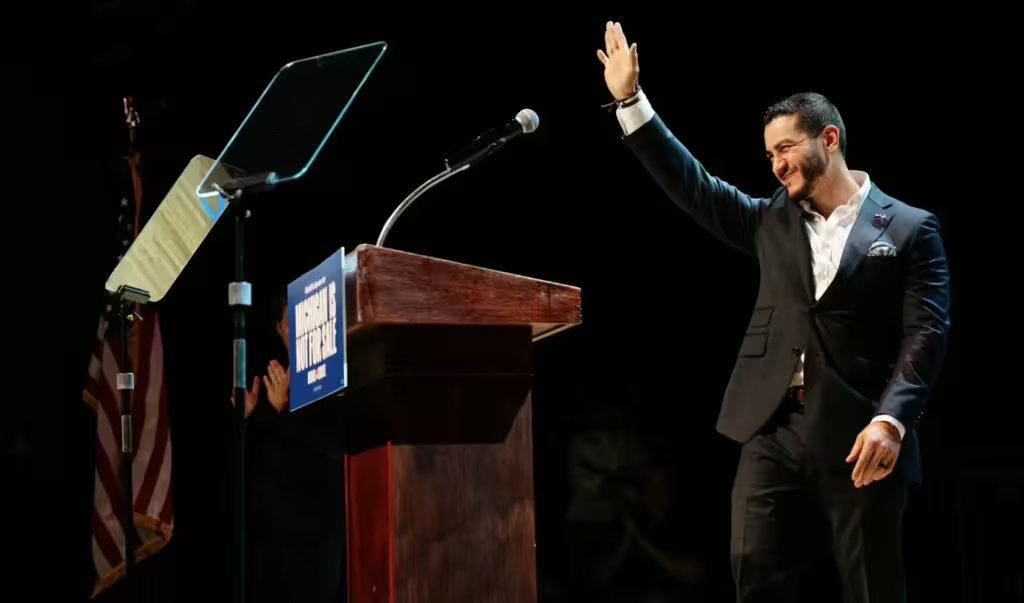
Abdul El-Sayed secured a slim plurality in Michigan’s Democratic Senate primary, overcoming the party establishment’s support for centrist Representative Haley Stevens and heavy outside spending against him. The former public health official will face Republican former Representative Mike Rogers in November, in a race Democrats view as essential to any path toward retaking the Senate. Donald Trump called the result “great news” for Republicans while attacking El-Sayed as a communist who hates Jews and Israel, allegations for which his Truth Social post offered no evidence.
Details
- Limited primary mandate: More than half of Democratic primary voters supported other candidates. El-Sayed performed strongest in wealthier, younger areas with more college-educated voters, while Stevens led in places with larger Black and working-class populations. He said after the vote that Democrats must unite to prevent Rogers from entering the Senate.
- Progressive policy agenda: El-Sayed campaigned on lowering costs, establishing universal healthcare, taxing billionaires and banning corporate money in politics. He supports Medicare for All and abolishing Immigration and Customs Enforcement. He has also called Israel’s government “evil” and described its conduct in Gaza as “genocide.” If elected, El-Sayed would become the first Muslim to serve in the Senate.
- Contentious campaign ties: El-Sayed appeared with streamer Hasan Piker, whom critics accuse of promoting antisemitic sentiment, a charge Piker denies. Republicans highlighted El-Sayed’s refusal to disavow Piker’s past statement that “America deserved 9/11.” Piker subsequently described that remark as “inappropriate.”
- Record spending gap: Spending exceeded $98 million, making the contest the most expensive Democratic Senate primary in US history. A super PAC affiliated with the American Israel Public Affairs Committee spent more than $30 million seeking El-Sayed’s defeat. Stevens held an approximately nine-to-one spending advantage, according to AdImpact.
- Senate control stakes: Republicans hold 53 Senate seats, requiring Democrats to flip four Republican seats while defending all their own to secure a majority. Michigan is considered their most vulnerable seat. The Senate Leadership Fund pledged $45 million for Rogers, while another conservative group committed $15 million. Rogers narrowly lost Michigan’s Senate race two years ago. No Republican has won a Michigan Senate race in more than three decades.
Between the lines
El-Sayed’s victory demonstrated that a progressive campaign could survive overwhelming financial opposition, but not yet that it can assemble a statewide majority. A November win would bolster progressives’ case that their candidates can compete beyond safely Democratic territory and potentially shape the party’s 2028 presidential debate.
What’s next
El-Sayed and Rogers will meet in November’s general election. The decisive measure will be whether El-Sayed can add Stevens supporters, moderates and independents to his younger liberal base while Republicans deploy their promised spending against his policies, statements and political associations.
Source