The latest
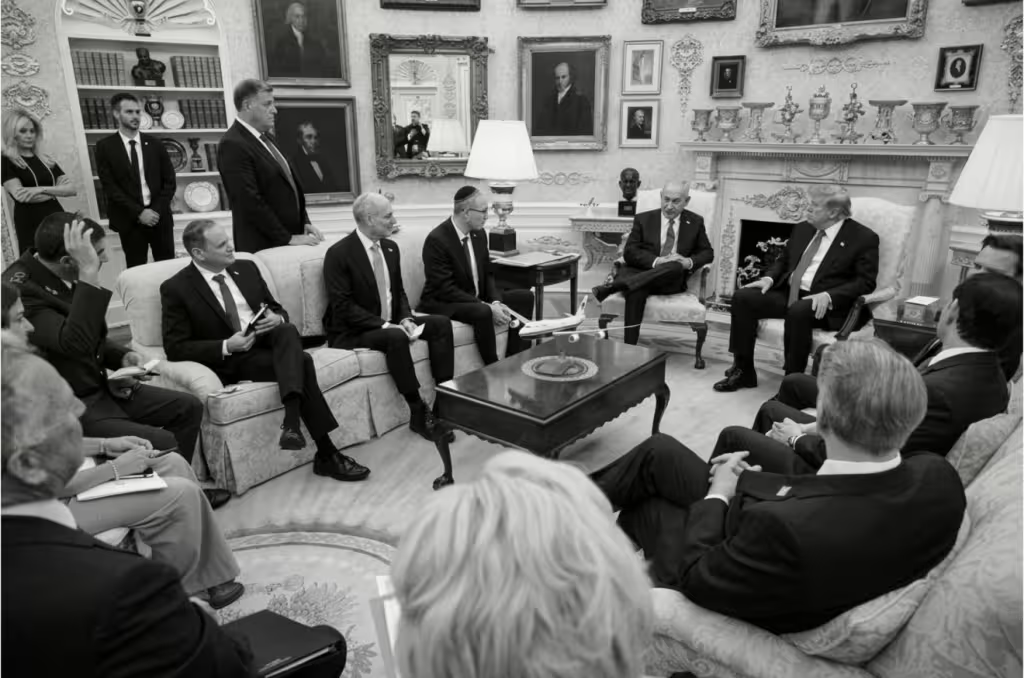
President Donald Trump and Israeli Prime Minister Benjamin Netanyahu concluded their White House meeting without announcing a decision on Iran. An Israeli official described the talks as “very positive,” but the meeting came amid an unspoken disagreement over the next step: Israel wants stronger military pressure, while Trump has so far resisted expanding the war before testing diplomacy.
Netanyahu was expected to present intelligence alleging that Iran is increasing activity at the Pickaxe Mountain nuclear site and is not negotiating in good faith. Trump said discussions were continuing and a breakthrough remained possible, but threatened “strong military action” against bridges, power plants and the nuclear site if no agreement emerged.
Iran, however, says the current calm is not a ceasefire and denies holding direct negotiations with Washington. Tehran says its contacts are focused on talks with Oman over management of the Strait of Hormuz, showing that the strategic waterway, not only the nuclear program, has become central to the bargaining.
Details
- Meeting agenda: A White House official said Trump and Netanyahu were expected to discuss the Iran war, negotiations with Lebanon and efforts to expand the Abraham Accords.
- Israeli pressure: Israel is seeking to persuade Washington that Tehran is using the pause to expand nuclear activity and rebuild its military capabilities.
- Trump’s position: The US president played down pressure to escalate and maintained that diplomacy could still succeed, while keeping military action available if talks failed quickly.
- Iranian denial: Foreign Ministry spokesman Esmail Baghaei denied that negotiations with the US were taking place and said the existing situation could not be described as a ceasefire.
- Tehran’s calculation: Iranian officials believe their country can withstand military and economic pain longer than Trump can absorb higher energy prices and domestic political pressure.
- Hormuz leverage: Iran is seeking recognition of its role in managing the strait after disrupting traffic following the US-Israeli attacks that began in February.
- Internal divide: Iranian hard-liners oppose renewed negotiations and have criticized the elected government for pursuing diplomatic contacts aimed at stabilizing the pause.
- Missile uncertainty: One military expert estimates that Iran produced between 700 and 1,000 solid-fuel ballistic missiles between the June 2025 war and the current conflict, but its remaining stockpile is unknown.
- US constraints: Declining Pentagon inventories of air-defense interceptors have increased concerns about the cost of renewed war and the risk of wider attacks on Gulf allies.
- Market reaction: Brent crude fell another 2.9% early Tuesday after dropping 11.3% in the previous session as the pause reduced immediate supply fears.
Between the lines
The disagreement is less about whether force should be used than about its timing and purpose. Netanyahu wants military pressure to prevent Iran from recovering. Trump is using the threat of force to secure a rapid deal. Tehran believes Hormuz, oil prices and constrained US munitions will improve its bargaining position.
What to watch
The next phase depends on whether Oman can shape a maritime arrangement acceptable to Washington and Tehran. If Iran insists on controlling Hormuz or charging vessels, Trump may conclude that renewed strikes carry a lower political cost than an agreement portrayed as a strategic concession.