The latest
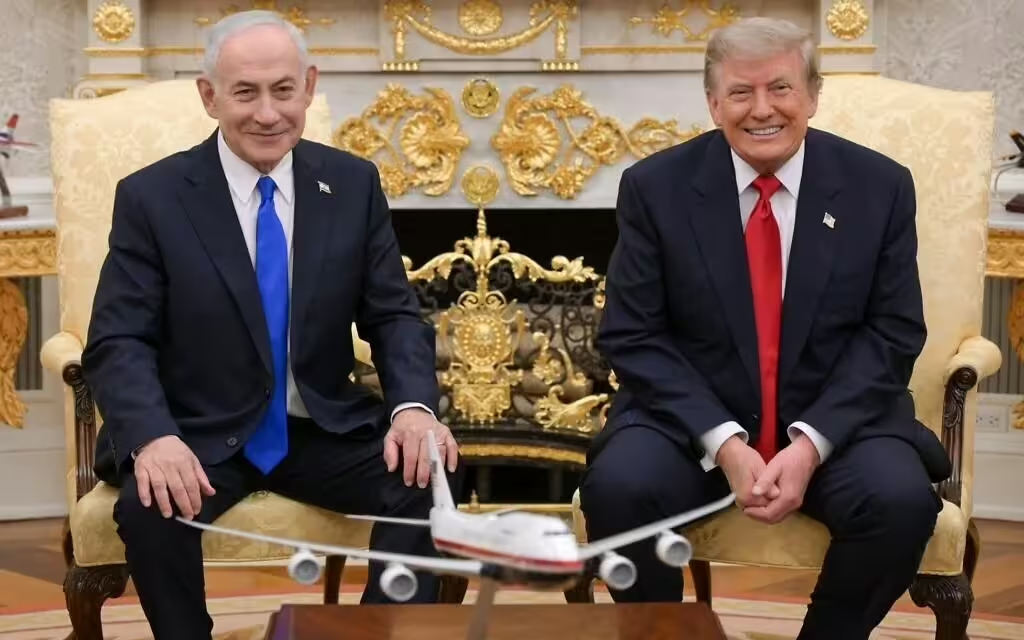
Israeli Prime Minister Benjamin Netanyahu emerged from his White House meeting with President Donald Trump describing it as “the best conversation” he has had with the U.S. president. Israeli National Public Diplomacy Director Tzipi Hotovely said the two leaders reached “complete understanding” on preventing Iran from obtaining a nuclear weapon, while several issues that had fueled speculation before the meeting were not discussed, according to Israel’s official account.
What the two leaders agreed on
- Iran first: Hotovely said both sides fully agreed that Iran must never acquire a nuclear weapon and reaffirmed close coordination on Tehran’s nuclear program.
- Abraham Accords: She said expanding the Abraham Accords was discussed but remained secondary to the meeting’s primary focus on Iran.
- Regional posture: According to Hotovely, Washington did not ask Israel to withdraw from Lebanon, Syria, or Gaza, while both sides agreed on preserving what she described as Israel’s military achievements.
- Security coordination: The meeting included senior U.S. and Israeli security officials, including Vice President JD Vance, Secretary of State Marco Rubio, and CIA Director John Ratcliffe, underscoring its strategic and security-focused nature.
What they did not agree on—or did not discuss
- Mount Pickaxe: Hotovely denied that Iran’s underground nuclear site, known as “Mount Pickaxe,” was discussed, despite pre-meeting Israeli reports suggesting Netanyahu would brief Trump on intelligence related to the facility.
- Conflicting accounts: Israel’s public broadcaster Kan, however, reported that Netanyahu did present intelligence on the site and Iran’s broader nuclear activities, highlighting conflicting Israeli accounts of what took place behind closed doors.
- Turkey and F-35s: Hotovely also said the meeting did not address the possible sale of F-35 fighter jets to Turkey, despite earlier reports that Netanyahu opposed such a move.
- Palestinian statehood: She added that the issue of a Palestinian state was not discussed and described the meeting as cordial and free of tension.
Trump downplays “Mount Pickaxe”
Ahead of the meeting, Trump dismissed concerns about the underground site during an interview with Fox News, saying “Mount Pickaxe is not a big problem.” He added that he did not need Netanyahu to brief him because the United States already knew “exactly what is happening there,” citing American intelligence capabilities.
Israeli security officials voice skepticism
At the same time, Israel’s public broadcaster reported that senior Israeli security officials believe public attention surrounding Mount Pickaxe has been overstated. According to those officials, there is no confirmed evidence that thousands of advanced centrifuges have been moved to the site.
The officials also argued that successfully striking the facility is far from certain—even with U.S. heavy bombers—because of its extensive fortifications, offering a more cautious assessment than earlier public speculation.
Background
The meeting comes after weeks of debate inside Israel over how to address Iran’s nuclear program, as Washington continues contacts with Tehran on nuclear and broader regional security issues. It also coincides with renewed discussion over U.S.-Turkey defense ties, including the possibility of Ankara rejoining the F-35 program—an issue closely watched by Israel. Analysts at the Washington Institute for Near East Policy and Israel’s Institute for National Security Studies (INSS) assess that Washington and Jerusalem remain aligned on the strategic objective of preventing Iran from obtaining a nuclear weapon, even if they may differ over the timing and methods.
Between the lines
The meeting suggests both governments sought to reinforce their shared strategic position on Iran while avoiding issues that could expose public disagreements, including U.S.-Turkey defense cooperation and military options against Iran’s nuclear infrastructure. The conflicting Israeli accounts regarding Mount Pickaxe also highlight the continued sensitivity surrounding intelligence matters.
What to watch
Attention will now turn to any follow-up statements from Washington or Jerusalem on Iran’s nuclear program, as well as potential U.S. decisions regarding Turkey’s F-35 ambitions and any new diplomatic steps involving Tehran.