The Latest
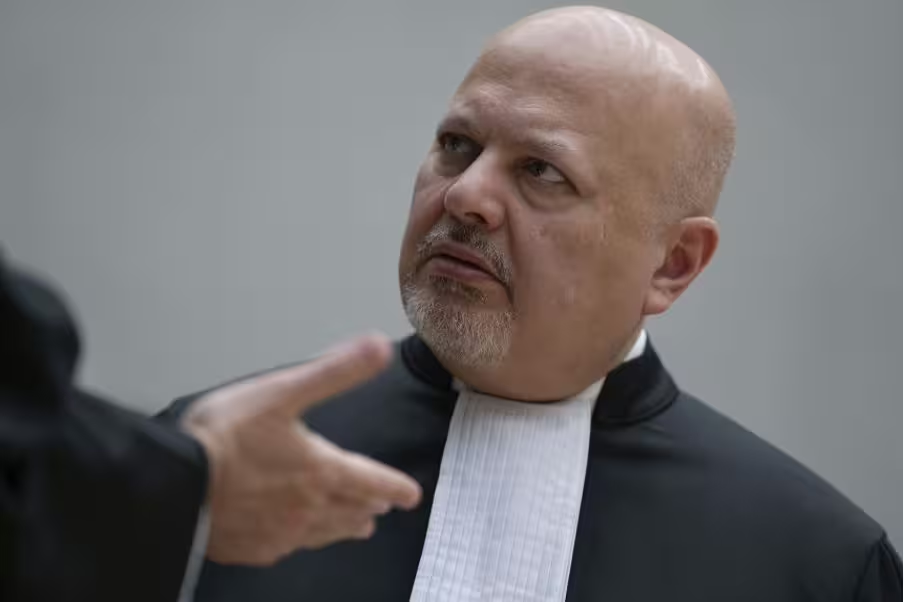
Member states of the International Criminal Court (ICC) voted on Friday to remove Chief Prosecutor Karim Khan after the court’s governing body concluded he had committed serious misconduct and a serious breach of duty following a disciplinary process into sexual misconduct allegations. Khan has repeatedly denied the allegations and said he will challenge the decision through legal channels. The dismissal marks an unprecedented leadership change for the world’s permanent war crimes court as it continues overseeing several high-profile international investigations.
Details
- The decision: 82 of the ICC’s 125 member states voted to dismiss Khan during a special session in New York. Another 13 voted against the motion, while 15 abstained, following recommendations from the court’s oversight process.
- Who is Karim Khan? The British barrister has served as the ICC’s chief prosecutor since 2021, overseeing investigations into genocide, war crimes and crimes against humanity. During his tenure, he sought high-profile arrest warrants for Russian President Vladimir Putin and later Israeli Prime Minister Benjamin Netanyahu and former Defence Minister Yoav Gallant, bringing the court into the centre of global attention.
- Why he was removed: The Assembly of States Parties concluded Khan committed “serious misconduct and a serious breach of duty” following an investigation into allegations made by a former ICC staff member. Khan has consistently denied wrongdoing, while his lawyers argue the disciplinary process was procedurally unfair and unsupported by the evidence.
- Khan’s response: Khan’s lawyer, Tayab Ali, said his client was not given a fair opportunity to respond during the disciplinary process and confirmed he would challenge the dismissal through all available legal mechanisms. His legal team also argued the proceedings unfolded while the court was under significant political pressure.
- Impact on the court: Khan’s removal does not affect existing ICC arrest warrants because they are issued by judges rather than the prosecutor. Ongoing investigations into alleged war crimes and crimes against humanity, including cases linked to Ukraine and Gaza, will continue under the Office of the Prosecutor.
- Political backdrop: The leadership change comes as the ICC faces renewed pressure from the Trump administration, which has imposed sanctions on ICC officials and criticised the court over investigations involving Israel and previous inquiries relating to the United States. Neither the United States nor Israel is a member of the ICC.
What Else
The ICC’s 125 member states will now begin the process of selecting a new chief prosecutor, although a permanent replacement is not expected before next year. Until then, Khan’s deputies will continue overseeing the Office of the Prosecutor and its investigations while ensuring existing cases move forward.
Khan’s legal challenge is expected to test the disciplinary process that led to his dismissal, but it will not affect ongoing prosecutions. Existing arrest warrants, including those issued for Putin, Netanyahu and Gallant, remain valid because only ICC judges have the authority to withdraw them.
The leadership transition also comes at a sensitive time for the court, which continues to face sanctions and political pressure from Washington while pursuing investigations into alleged genocide, war crimes and crimes against humanity in several conflicts. How quickly member states agree on a successor could shape the court’s direction and its ability to manage some of its highest-profile cases.