The latest
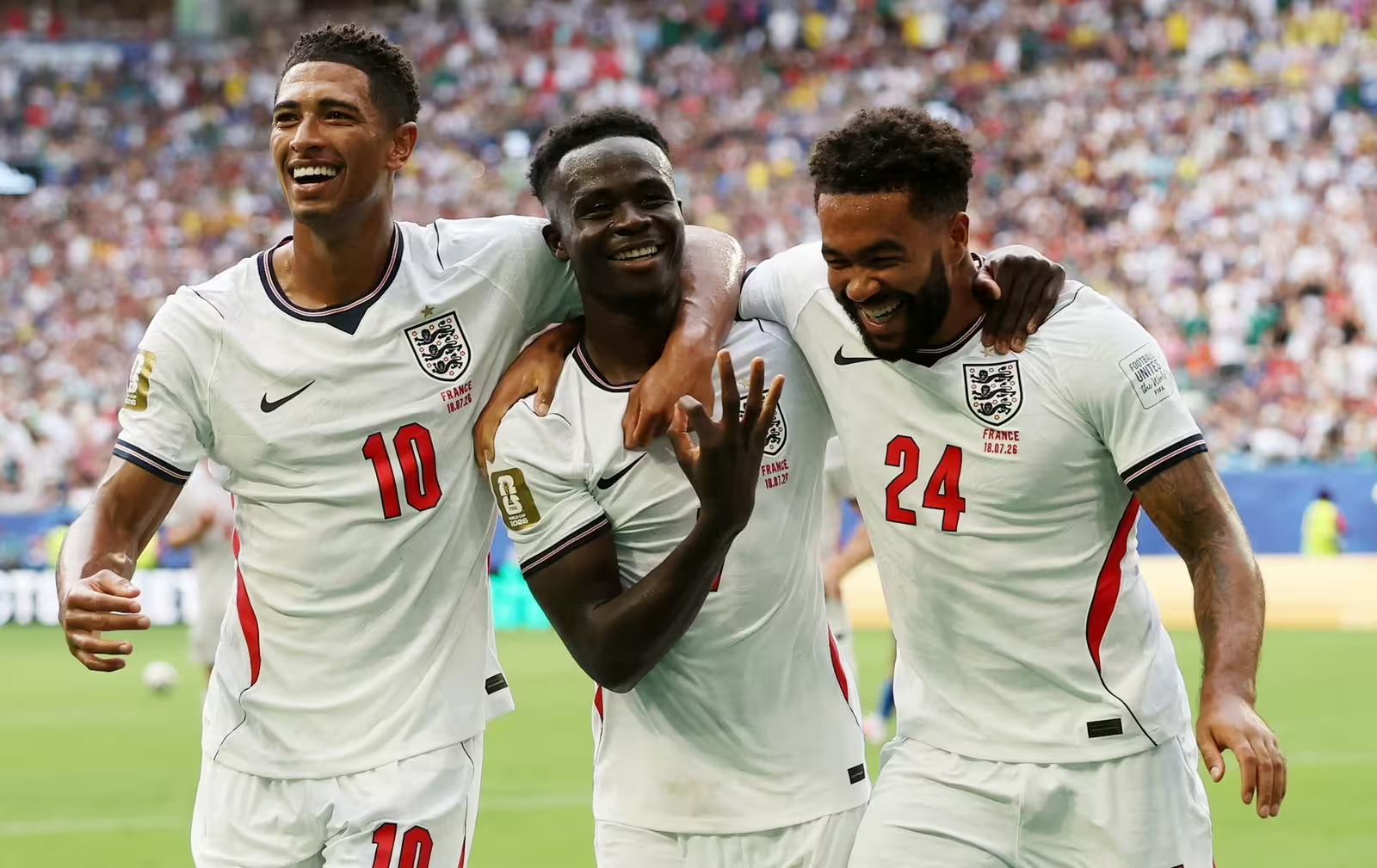
The author’s World Cup journey began behind the goal at England’s match against Norway in Miami, where a disputed English goal and a disallowed Norwegian strike quickly turned a victory into a debate about refereeing. Similar accusations soon surfaced around matches involving Argentina, Switzerland and Egypt, as players and supporters questioned whether decisions were favouring the tournament’s biggest teams and most famous stars.
Rachman links the spread of conspiracy theories to declining trust in institutions and the speed with which social media circulates clips that appear to prove a team was wronged. Trump’s intervention to have the American striker Folarin Balogun’s suspension lifted, together with his close relationship with Fifa president Gianni Infantino, further strengthened the impression that political influence and football power were becoming intertwined.
Yet the author, an England supporter attending his eighth World Cup, does not believe the tournament is rigged. Referees are human, he argues, and difficult calls do not always become clear even after a video review. Amid the suspicion, the high costs and the heat, the live experience still offers the excitement of seeing matches unfold in person and the chance to encounter countries outside their usual headlines.
Details
- Refereeing controversy: Decisions in matches involving England, Norway, Argentina, Switzerland and Egypt triggered a wave of allegations about the tournament’s fairness.
- Conspiracy culture: The author argues that societies with low trust in institutions are more likely to interpret mistakes as deliberate plots.
- Social media effect: Online platforms allow fans to circulate edited clips and instant analysis that purport to prove their teams were cheated.
- Trump’s intervention: The US president pressed Fifa to lift Balogun’s suspension, although the American team still lost its match.
- Infantino’s influence: The Fifa president’s close relationship with Trump has fuelled suspicions that political power may be affecting the tournament.
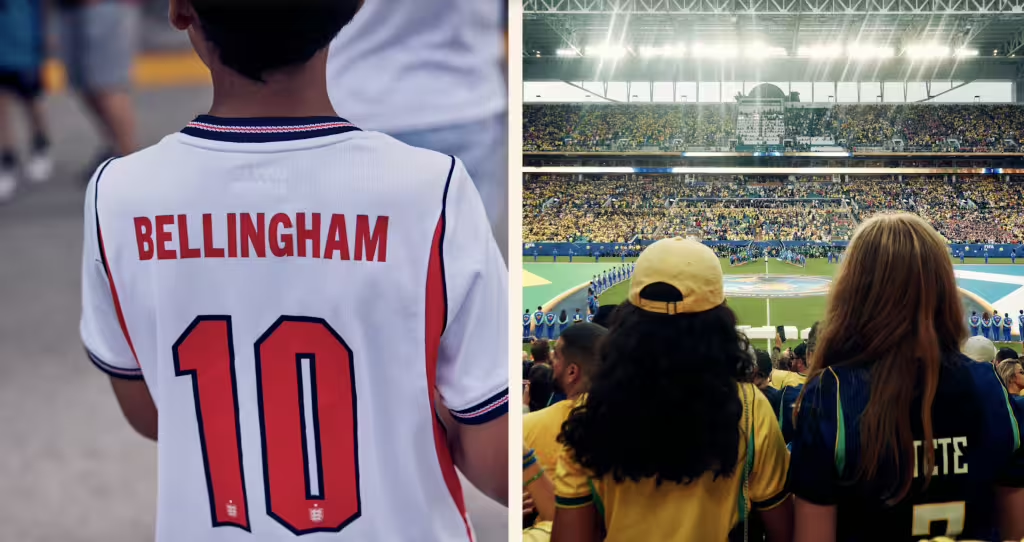
- England supporters: Rachman finds the fan base more diverse and less tied to the nationalist image associated with it in the past.
- Cost of attendance: Quarter-final tickets cost hundreds of dollars at face value and were more expensive on the resale market operated through Fifa’s platform.
- National image: The tournament gives countries such as Haiti and the Democratic Republic of Congo an opportunity to show aspects of themselves beyond war and crisis.
- Personal history: Rachman has attended eight World Cups and travelled to matches with his daughter after attending earlier tournaments with his sons.
- England’s setback: England beat Norway but lost 2-1 to Argentina in the semi-final after taking an early lead.
Between the lines
The conspiracy theories surrounding the tournament reflect more than a crisis of confidence in football. They show how sport has become a mirror of wider political and social distrust. In a digital environment, every contentious decision can be reframed as evidence of hidden influence, especially when the popularity of star players overlaps with the interests of federations and political leaders.
What to watch
Fifa’s ability to explain major refereeing decisions and protect the credibility of the competition will be central to restoring confidence. For supporters, the question is whether the World Cup can still be enjoyed on its own terms, or whether watching football has become inseparable from the search for a conspiracy.
Written by Gideon Rachman, the Financial Times’ chief foreign affairs columnist.