.
The latest
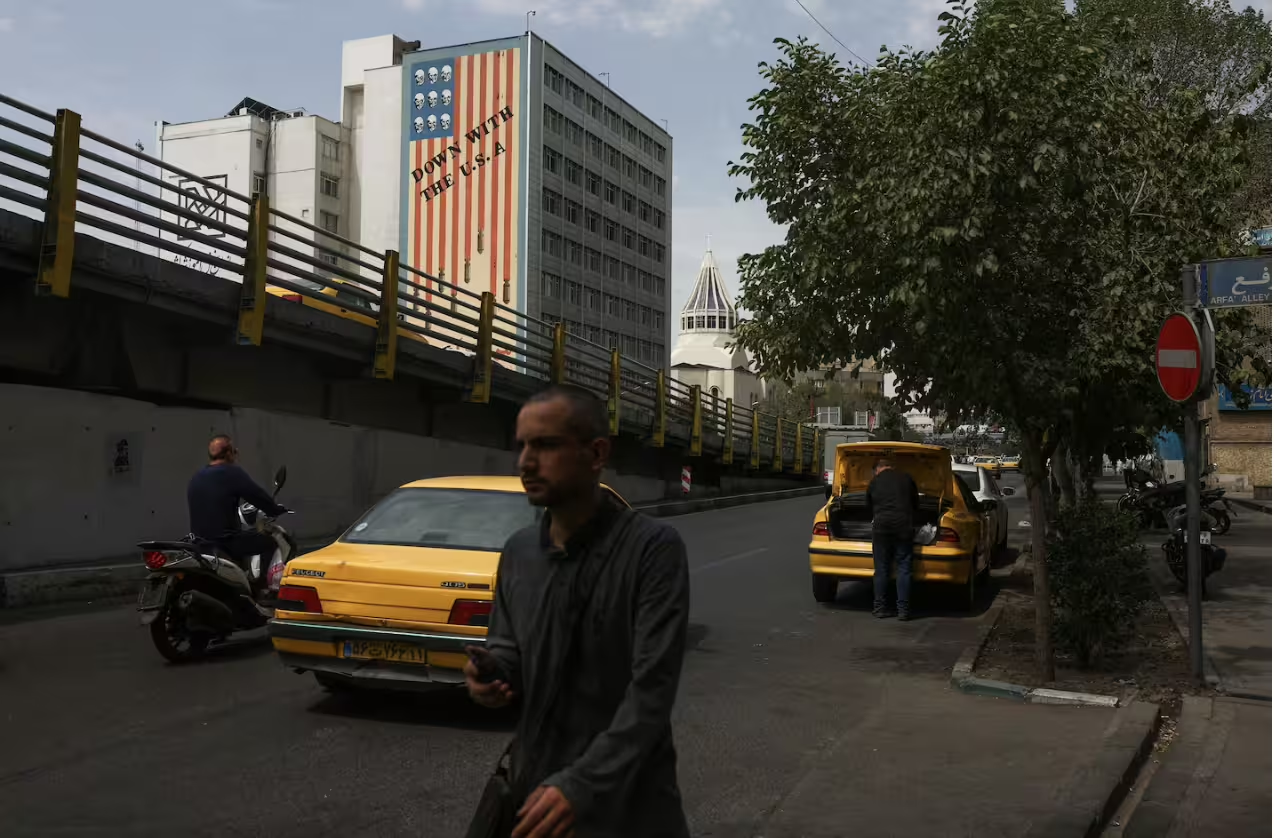
Washington’s ability to squeeze Iran’s economy is weakening as a Chinese financial network operating outside the dollar system expands. China has become the largest buyer of Iranian oil, while most payments are settled in yuan through intermediaries and smaller financial institutions that are difficult for the U.S. to monitor or disrupt.
The system gives Tehran a way to use its revenues without transferring them directly to Iran. Funds are deposited in China and used to pay contractors or purchase car parts, solar panels and dual-use materials. Front companies in Hong Kong and elsewhere support the network, alongside a shadow fleet that disguises the origin of Iranian crude.
The shift extends beyond Iran. Use of China’s cross-border payment system has doubled since the war in Ukraine, while the yuan’s share of global trade finance has climbed to 6%. Beijing is also expanding mBridge, a platform for direct digital payments between central banks that includes the UAE and Saudi Arabia.
Details
- Oil revenue: Iran earned up to $43 billion from oil sales in 2024 before discounts, despite U.S. sanctions.
- Chinese lifeline: By the end of 2022, China was buying more than 90% of Iran’s crude, according to estimates cited by U.S. lawmakers.
- Alternative system: Daily transactions through China’s cross-border payment network averaged about $115 billion during the three months after the war began.
- Dollar power: The currency still accounts for roughly 80% of international trade finance, but loses much of its enforcement value when transactions bypass U.S. banks.
- Hidden routes: The network uses shell companies, barter deals and smaller Chinese institutions to shield major banks from sanctions exposure.
Between the lines
China is not trying to build a universal replacement for the dollar. It is creating protected financial zones for trade with sanctioned countries, weakening U.S. leverage while preparing Beijing for possible Western penalties if tensions over Taiwan escalate.
What to watch
Washington’s next test will be whether it can target Chinese refiners, banks and companies linked to Iranian oil without triggering a broader economic confrontation with Beijing. The expansion of yuan settlement and state-backed digital payment platforms will also determine how much power U.S. sanctions retain in any future deal with Tehran.