
The Latest
Over the past two days, the United States has intensified strikes on infrastructure across Iran’s Hormozgan province, focusing on roads, bridges, railways, and communications networks leading to Bandar Abbas. Washington says the campaign is intended to reduce Iran’s ability to threaten shipping in the Strait of Hormuz, while Tehran says the attacks have also hit civilian infrastructure and caused casualties.
Details
- Targeted bridges: Iranian authorities reported strikes on several key bridges in Hormozgan, including Kahourstan, Griva, Lathidan, and Maro, disrupting major supply routes into Bandar Abbas.
- Rail and communications: Iranian reports said the attacks also hit Bandar Abbas’ railway network and communications facilities, affecting transportation and connectivity across the region.
- U.S. objective: U.S. Central Command says the strikes are aimed at degrading Iran’s ability to move forces and military equipment used to threaten commercial shipping through the Strait of Hormuz.
- Iranian response: Tehran accuses Washington of striking dual-use civilian infrastructure, saying the attacks disrupted essential services, harmed civilians, and would be met with retaliation if they continue.
- Ground operation?: There is no official indication that Washington has approved a ground operation. However, the pattern of attacks on supply routes has prompted speculation among analysts that the United States is attempting to isolate Bandar Abbas logistically ahead of any potential escalation, though this remains unconfirmed.
Background
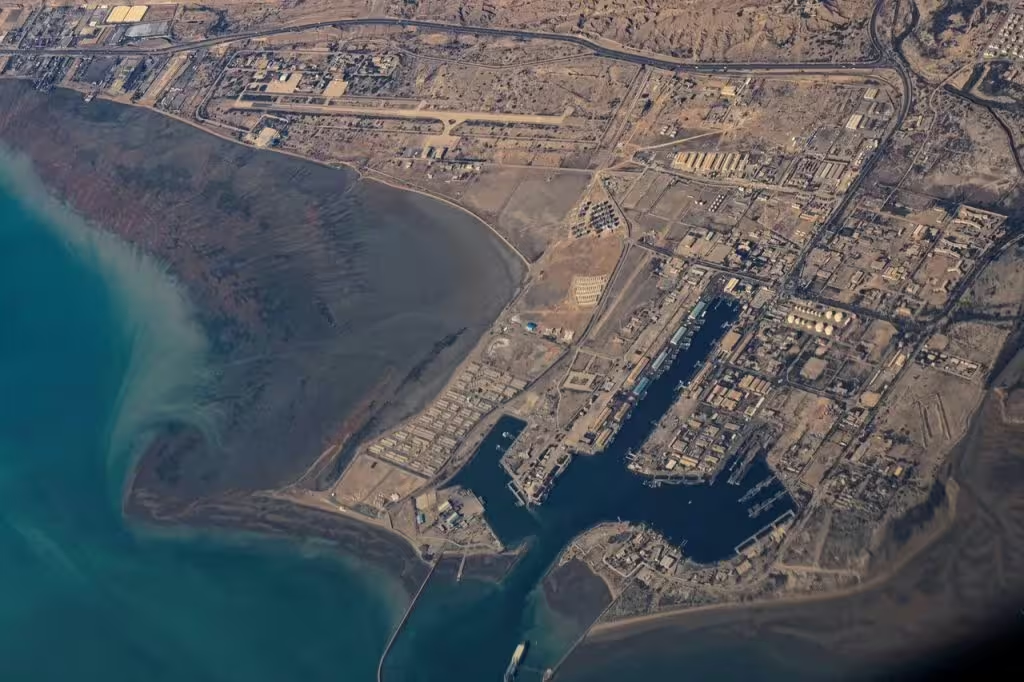
Bandar Abbas is Iran’s largest Gulf port and hosts the IRGC Navy’s principal headquarters. It serves as a critical hub for military logistics and commercial trade through the Strait of Hormuz, one of the world’s most important oil transit chokepoints. Any disruption to the transport network serving the city directly affects Iran’s logistical capabilities and regional maritime security.
Between the Lines
The shift from targeting missile and drone facilities to striking transportation and logistics networks suggests a broader effort to weaken Iran’s operational mobility around the Strait of Hormuz. Whether air power alone can fully isolate Bandar Abbas remains uncertain, given the availability of multiple supply routes.
What to Watch
Attention will focus on whether the United States expands its campaign against infrastructure around Bandar Abbas, how Iran responds—particularly against regional shipping or Gulf infrastructure—and whether any official signals emerge regarding negotiations or further military escalation.