The latest
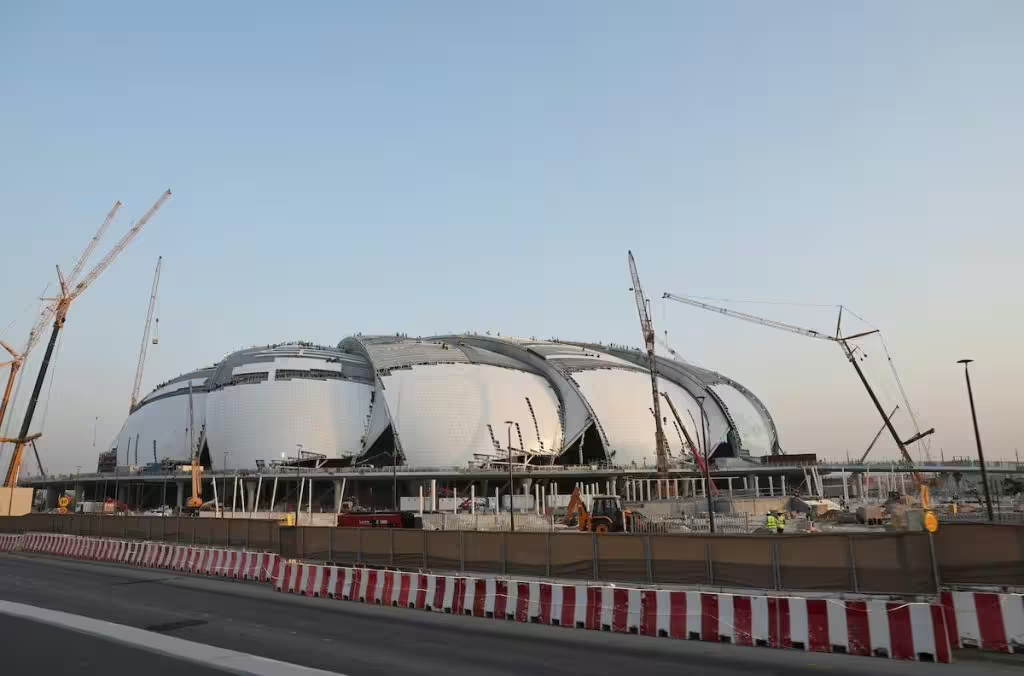
Saudi Arabia’s Roshn Group is seeking investors to finance Aramco Stadium in Al Khobar, according to three sources cited by Reuters, highlighting the kingdom’s expanding reliance on private capital to support Vision 2030 projects as lower-than-expected oil revenues and a widening fiscal deficit strain public finances.
Details
- Funding structure: Roshn has appointed JPMorgan to lead the fundraising process, while the Public Investment Fund (PIF) and Roshn are sounding out private-sector investors about the project, according to the sources.
- Deal model: The transaction is expected to use a sale-and-leaseback structure, allowing investors to provide upfront capital in exchange for long-term rental income from Aramco.
- Budget pressure: Saudi government entities are increasingly turning to private financing as fiscal deficits widen, seeking to ease pressure on state spending while keeping strategic projects moving.
- World Cup priority: Hosting the 2034 FIFA World Cup remains a cornerstone of Vision 2030, with Saudi Arabia planning to build or renovate 15 stadiums and develop 132 training sites.
- Project delays: Several flagship Vision 2030 developments, including Trojena within the NEOM mega-project, have faced delays linked to rising costs and financing constraints, prompting Riyadh to accelerate privatization efforts and attract outside investors.
Background
Saudi Arabia launched Vision 2030 to diversify its economy beyond oil through massive investments in tourism, entertainment, sports, and infrastructure. However, lower oil prices, heavy capital spending, and rising fiscal pressures have forced the government and the Public Investment Fund to reassess priorities, increasingly relying on private-sector financing and capital markets rather than direct state funding.
Between the lines
Roshn’s search for investors does not necessarily indicate that the stadium itself lacks funding. Instead, it reflects a broader shift in how Saudi Arabia finances Vision 2030. Rather than depending primarily on state resources and the Public Investment Fund, Riyadh is increasingly monetizing assets and bringing in private capital to preserve liquidity. The strategy also suggests that delivering all Vision 2030 commitments within the original timetable has become more difficult, making reprioritization, restructuring, and delays more likely for some large-scale projects.
What to watch
Attention will focus on whether Roshn succeeds in securing investors and whether Saudi Arabia expands this financing model to other Vision 2030 assets, while markets continue to monitor the kingdom’s fiscal deficit and oil price trends.