The latest
Yemen has returned to Saudi Arabia’s security agenda through Sanaa airport. According to Axios, Crown Prince Mohammed bin Salman informed President Donald Trump in advance and asked for his support before Saudi Arabia struck the Houthi-held airport. That made the operation more than a local strike. It became a test of an unofficial truce that had largely held since 2022.
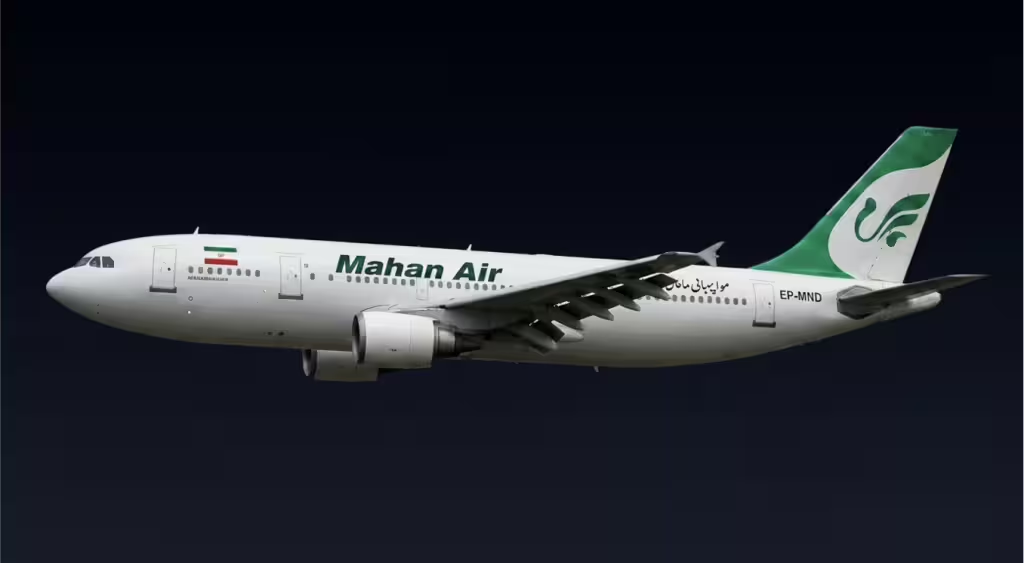
The trigger was a Mahan Air plane that landed in Sanaa and then carried a Houthi delegation to Iran. For Riyadh, the flight was not just a diplomatic gesture. It looked like the reopening of an Iranian air bridge into northern Yemen, with the potential to move weapons, advisers or political backing under civilian cover. When the plane returned, Saudi Arabia struck Sanaa airport, forcing it to divert to Hodeidah on the Red Sea coast.
The Houthis answered by firing missiles and drones at Abha airport and warning airlines against using Saudi airspace while they said Sanaa remained under blockade. That sequence matters because it shows how thin the Saudi-Houthi quiet really was: one Iranian flight, one Saudi strike and one Houthi response were enough to revive the old border-war logic.
Since the 2022 truce, Saudi Arabia has not silenced the Houthis through victory. It has managed them through a package of practical concessions and negotiations: limited access to Sanaa airport and Red Sea ports, prisoner exchanges, Omani-mediated talks and a long argument over salaries for public employees in Houthi-held areas. Those salaries were not a declared political payment to the Houthis. But in practice, they became part of the price of keeping missiles away from Saudi cities.
The deeper story is that Riyadh’s Yemen strategy changed because the war stopped serving its original purpose. The 2015 intervention was meant to prevent an Iran-aligned force from consolidating power on Saudi Arabia’s border. Years later, the more urgent Saudi goal became narrower: stop the attacks, protect the border, and keep Vision 2030 infrastructure and energy facilities out of the line of fire.
That shift also exposed the limits of Saudi Arabia’s partnership with the UAE. The two countries entered Yemen under one banner, but their endgames diverged. Saudi Arabia wanted a northern settlement that would remove the direct threat to its border while preserving a formal Yemeni state. The UAE focused on the south, ports, islands and local forces opposed to the Muslim Brotherhood. Once defeating the Houthis ceased to be the single organizing objective, the coalition’s internal split became much harder to hide.
Details
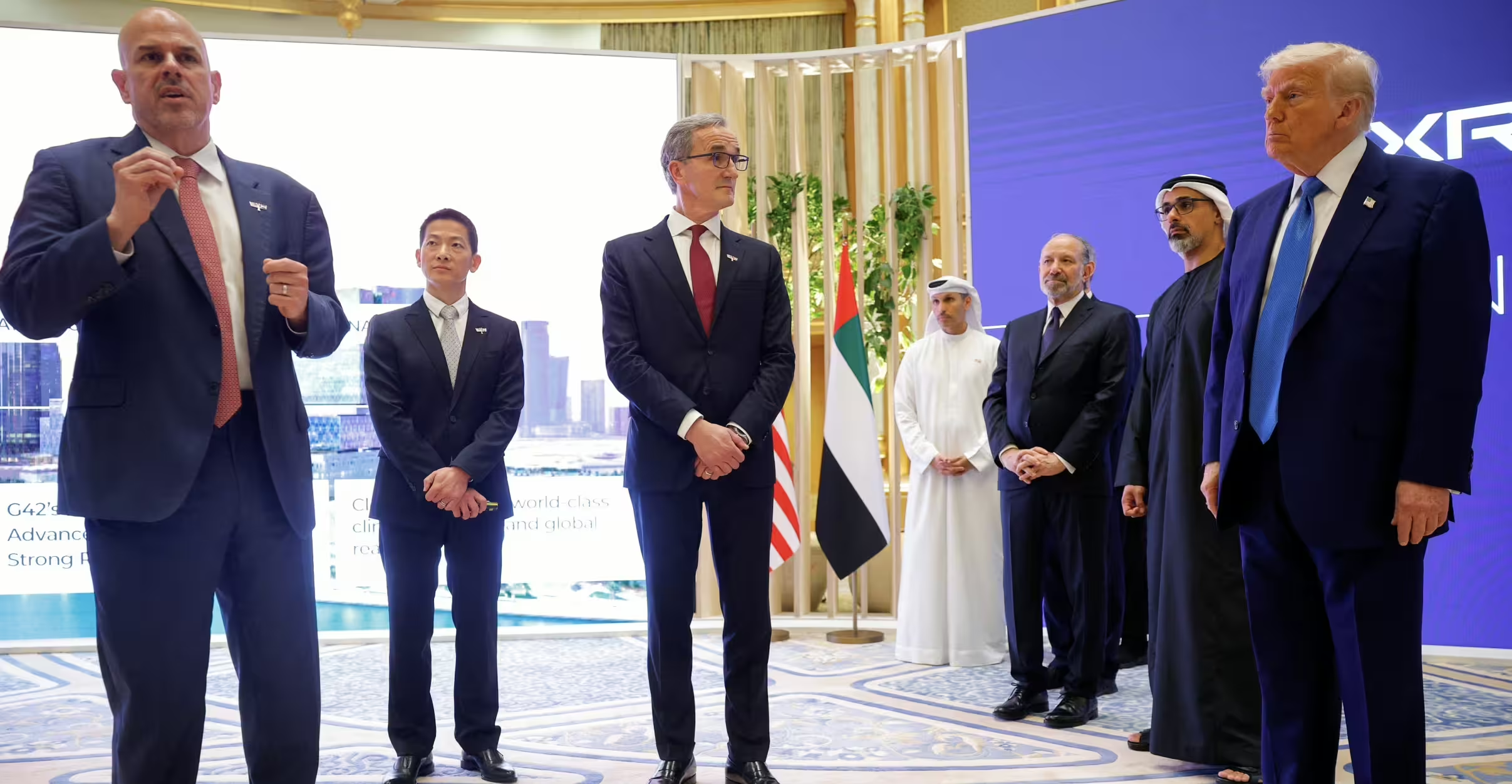
- Axios angle: Axios reported that Mohammed bin Salman sought and received Trump’s support before the Saudi strike on Houthi-held Sanaa airport.
- The trigger: A Mahan Air plane landed in Sanaa and carried a Houthi delegation to Iran, alarming Riyadh about a possible Iranian air corridor.
- Saudi strike: Saudi Arabia struck Sanaa airport as the plane returned, forcing it to divert to Hodeidah.
- Houthi response: The Houthis fired missiles and drones at Abha airport and warned airlines against using Saudi airspace.
- Old roots: The Saudi-Houthi conflict goes back to the Saada wars and the 2009 border fighting, before the wider 2015 Saudi-led intervention.
- Salary track: Public-sector salaries in Houthi-held areas became a central bargaining chip in the post-2022 truce structure.
- UAE split: Riyadh focused on border security and a formal Yemeni state, while Abu Dhabi built influence through southern forces, ports and anti-Islamist allies.
Between the lines
Axios puts the missing piece at the center of the story: Saudi Arabia did not move alone. Riyadh sought U.S. political cover because striking the Houthis is no longer a contained Yemen file. It risks pulling Iran, Saudi airports, Red Sea shipping and U.S. policy into one chain of escalation.
What Saudi Arabia built after 2022 was not peace. It was a suspension of war. Salaries, airport access, prisoner swaps and eased port restrictions created a working silence. They did not change the Houthis’ basic leverage model: escalate when the price needs to rise, pause when the concessions are useful.
The Iranian plane tested the real meaning of the truce. Was it a Saudi-Houthi understanding designed to keep the border quiet, or was it durable enough to survive Iran trying to reopen a direct route into Sanaa? The answer, at least for now, looks uncomfortable for Riyadh.
The Saudi-UAE split makes that discomfort sharper. Yemen is no longer one battlefield governed by one coalition map. It is a patchwork of border security, ports, southern autonomy, Iranian leverage and local militias. In that kind of Yemen, the Houthis do not need to win everything. They only need to keep raising the cost of everyone else’s plans.
What to watch
The first signal is whether Saudi Arabia keeps striking Sanaa airport and related supply routes, or quickly returns to Omani mediation and the economic files that kept the front quiet: salaries, airport access, ports and prisoners. The second is the level of U.S. support. If Trump’s backing remains political, Riyadh may still look for a way back to containment. If it expands into military or diplomatic cover for a broader campaign, the Houthis may widen attacks on Saudi targets and Red Sea traffic.