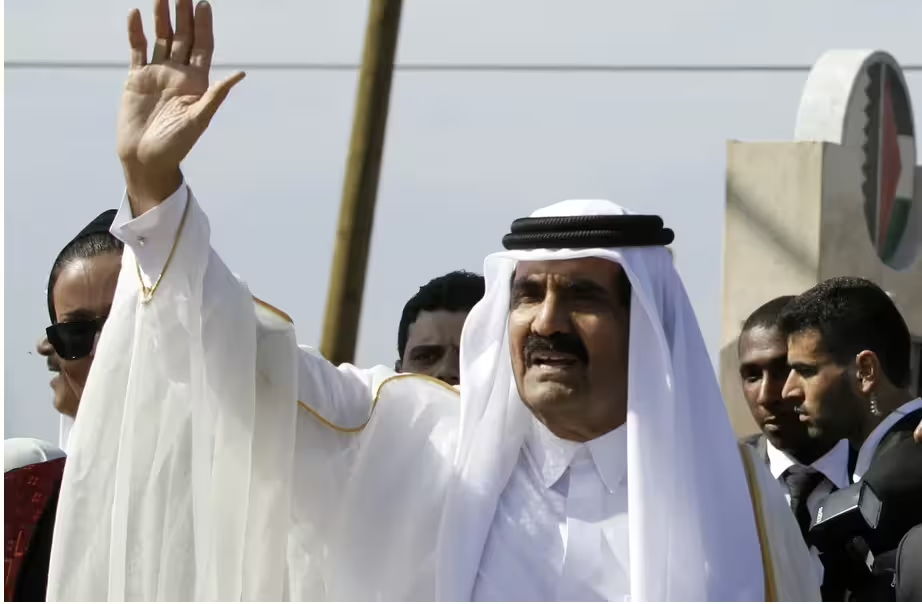
Qatar has announced the death of Sheikh Hamad bin Khalifa Al Thani, the father emir, on July 12, without disclosing a cause. He was the central figure in the modern remaking of the state, overseeing the shift that turned Qatar from a modest Gulf player into a country with financial, political and media influence far beyond its size.
Sheikh Hamad took power in 1995 and ruled for 18 years before handing it to his son, Sheikh Tamim bin Hamad Al Thani, in a rare and orderly succession for the region. During that period, Qatar’s rise accelerated with the expansion of liquefied natural gas exports, generating immense revenues that were used to build national wealth, deepen international reach and widen the country’s tools of influence, from investment to media to diplomacy.
His legacy, however, was not only economic. Under his rule, Al Jazeera was launched, sovereign investment expanded, and Doha developed into a more outward-looking centre for global education, sport and regional diplomacy. At the same time, Qatar pursued a foreign policy that often unsettled its neighbours and laid the groundwork for disputes that extended into the reign of his successor.
Details
- Announcement: The Amiri Diwan said Sheikh Hamad died on July 12, without giving a cause of death.
- Rule: He took power in 1995 and remained in office for 18 years before transferring power to Sheikh Tamim bin Hamad Al Thani.
- Gas: During his reign, Qatar moved from shipping its first LNG cargo in 1996 to becoming the world’s largest exporter of liquefied natural gas.
- Economy: Qatar’s economy expanded more than 20-fold, reaching $199 billion in 2013, according to World Bank data cited in the report.
- Investment: He established the Qatar Investment Authority in 2005 to channel gas wealth into investments at home and abroad, with major bets on global companies and assets.
- Influence: Support for Al Jazeera, the hosting of U.S. universities and the successful bid for the 2022 World Cup all strengthened Qatar’s global profile.
- Foreign policy: His policies combined hosting the region’s largest U.S. air base with maintaining ties to Iran and backing movements that triggered disputes with several Arab states.
Between the lines
Sheikh Hamad’s death reopens the chapter that defined modern Qatar: a small state that built power through gas, then converted that surplus into instruments of influence. This is not only the passing of a former ruler. It marks the departure of the generation that shaped the Qatari model still visible in Doha’s politics and posture today.
What’s next
The next question is how Sheikh Hamad’s legacy will be framed within Qatar’s official narrative, and which parts of his record will be most strongly emphasised: the gas-driven wealth story, the construction of influence, or the complex regional balancing that continued to shape Qatari policy long after he left office.