The latest
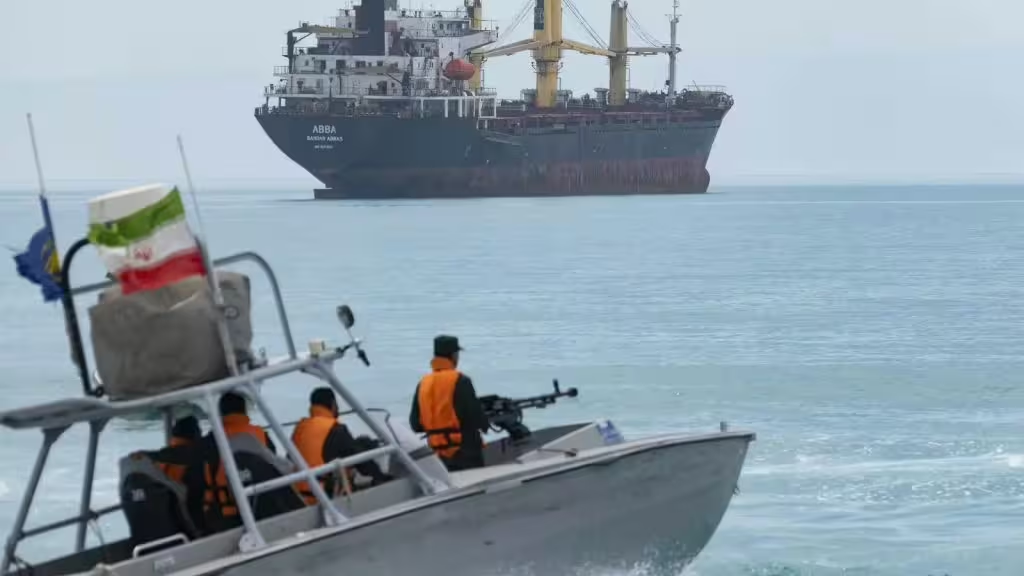
Iran tied the future of navigation through the Strait of Hormuz to the continuation of its confrontation with the United States, while expanding attacks against what it said were U.S.-linked targets across the Gulf after American forces struck 140 military sites inside Iran, according to Yedioth Ahronoth and U.S. Central Command.
Details
• Tehran’s message: Mohsen Rezaei, an adviser to Iran’s Supreme Leader, described the Strait of Hormuz as “more important than dozens of nuclear bombs,” calling it one of Iran’s key deterrence assets.
• Hormuz stance: Ebrahim Rezaei, spokesman for the Iranian parliament’s National Security Committee, said Iran controls the strait “by force” and that it will remain closed until U.S. intervention in the region ends.
• U.S. strikes: U.S. Central Command said it struck 140 military targets, including missile launch sites, drone facilities, naval positions, weapons depots, and command-and-control infrastructure, saying the campaign aims to reduce Iran’s ability to attack commercial shipping.
• Regional fallout: Qatar said the attacks on its territory violated international law and that it reserves the right to respond. Jordan, Bahrain, and the United Arab Emirates also condemned the attacks. Qatar reported intercepting incoming missiles, while Oman said it rescued 23 crew members from an attacked cargo ship and continues searching for one missing sailor.
• Iranian casualty: Iranian state-linked agencies Mehr and Tasnim reported that a naval officer was killed in a U.S. strike on Jask Port. The Islamic Revolutionary Guard Corps also claimed it struck facilities hosting U.S. forces in Jordan, a claim that could not be independently verified.
Background
The Strait of Hormuz carries a significant share of global oil and liquefied natural gas exports, making any disruption to navigation there a direct threat to international energy markets. In recent days, freedom of navigation through the waterway has become the central flashpoint in the escalating U.S.-Iran confrontation.
What to watch
Attention will focus on any official announcement regarding the reopening of the Strait of Hormuz, the scale of further military exchanges, Gulf states’ responses, and possible mediation efforts led by Oman or Qatar.