The latest
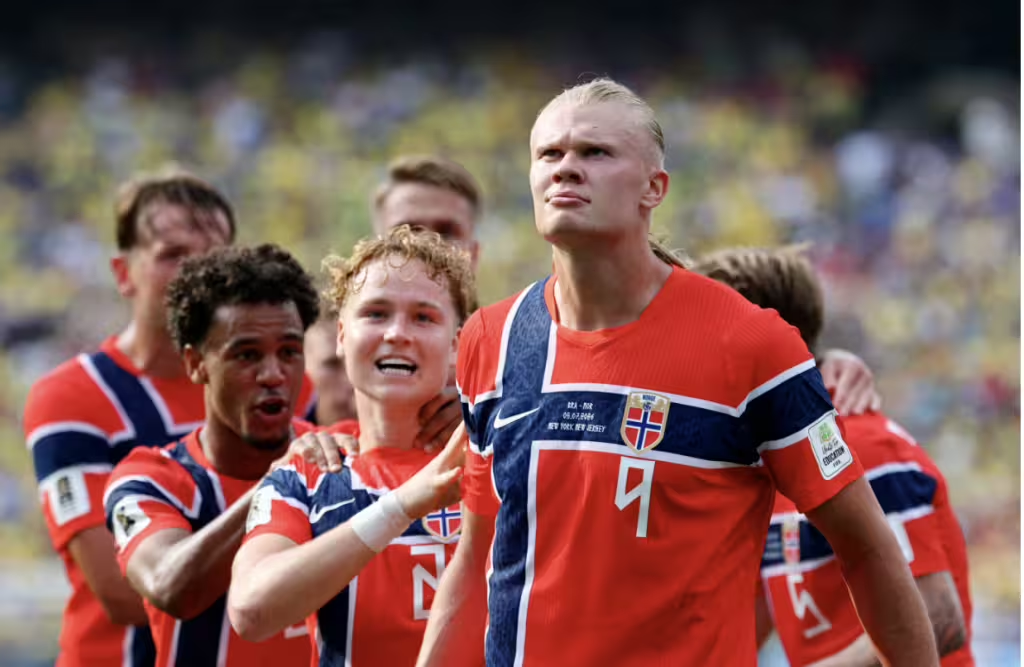
Haaland came out of a small Norwegian town that does not treat youth sports as an early race for trophies, but as an open space for as many children as possible, for as long as possible. In that model, match results were not the priority, and early sorting was not the defining standard. The focus was on enjoyment, continuity and player development without burning children out too young.
That path produced a generation that stayed in the game instead of dropping out early. From one group at Bryne, most of the players continued into adulthood, while several reached the professional level and youth national teams. Haaland was the biggest exception in the final outcome, but not in the environment that shaped him.
The Norwegian model bets on gradual development rather than acceleration, on multi-sport participation before specialization, and on local, easy-to-access infrastructure instead of expensive travel and constant pressure. In that sense, Haaland’s story is as much about a successful sporting environment as it is about a singular striker.
Details
- Participation: The Norwegian system prioritizes keeping as many children as possible in sport for as long as possible.
- Development: Children are not sorted too early by talent and are not pushed into a win-at-all-costs culture at a young age.
- Specialization: Players try multiple sports before committing to one, widening their physical and technical base.
- Cost: The local club was open and low-cost, with year-round infrastructure that was accessible and easy to use.
- Outcome: That path helped produce a world-class player like Haaland without relying on the intense pressure that defines many youth systems elsewhere.
Between the lines
The point is not that every child in this system will become Haaland. It is that an environment that reduces pressure and extends the development window may be smarter than one that hunts for a star early and loses everyone else along the way.
What’s next
The broader question is whether other countries will read Norway’s experience as a model that can be adapted, rather than as a local story tied only to Haaland. If Norway keeps advancing, interest will grow in whether this success belongs to one extraordinary generation, or to a sporting philosophy that can keep producing results.