
The latest
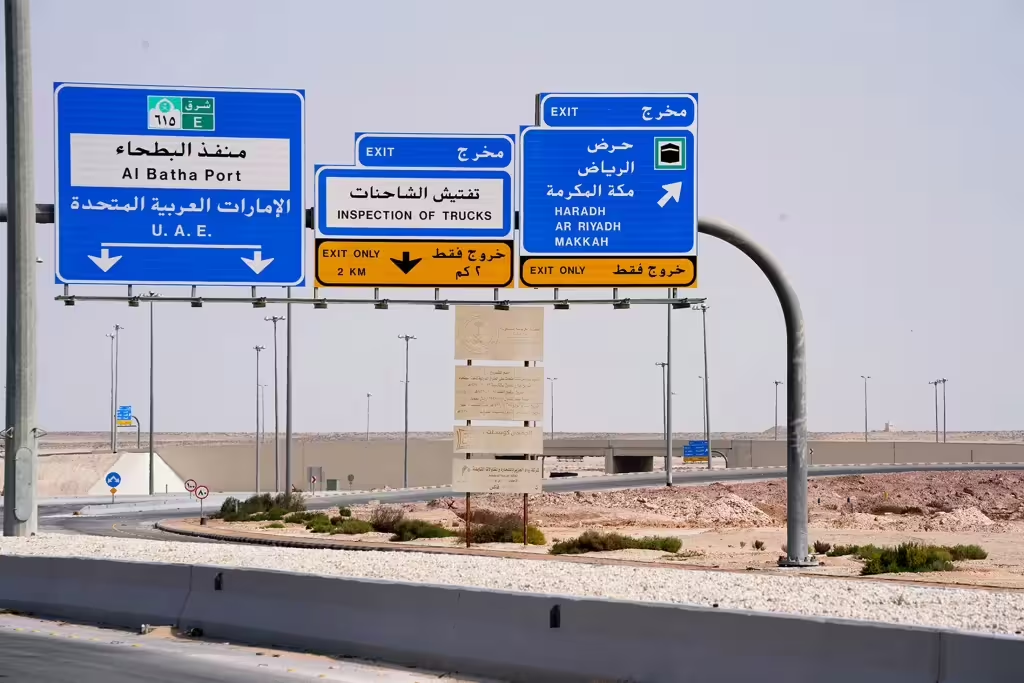
Companies operating between Saudi Arabia and the United Arab Emirates have reported recurring delays affecting both freight shipments and financial transfers, according to Semafor and industry sources. Saudi Arabia’s Zakat, Tax and Customs Authority, however, said trade flows remain normal and that it has received no complaints about customs-related delays.
Details
- Border delays: Sources told Semafor that some trucks have been held for several days—and in some cases more than a week—affecting shipments of construction materials, furniture, spare parts and fresh flowers.
- Payment issues: According to informed sources, some businesses have experienced delays in transferring funds from Saudi Arabia to the UAE, prompting companies to route payments through third countries or transport cash directly.
- Saudi response: Saudi Arabia’s Zakat, Tax and Customs Authority denied any disruption to customs procedures, saying cargo continues to move normally while new measures have been introduced to improve efficiency at border crossings.
- Economic rivalry: The developments come as Riyadh and Abu Dhabi compete more aggressively for regional investment and corporate headquarters, following Saudi policies aimed at attracting multinational firms and earlier disagreements over trade, oil policy and regional issues.
- Alternative routes: Sources said some companies have begun restructuring supply chains and increasing reliance on Red Sea shipping routes to reduce dependence on corridors linked to the Strait of Hormuz.
Background
Economic relations between Saudi Arabia and the UAE have faced periodic strains in recent years, including disagreements within OPEC+ in 2021, Saudi changes to import rules of origin, and Riyadh’s requirement that multinational companies establish regional headquarters in the kingdom to qualify for government contracts. Despite strong bilateral trade, both countries are increasingly competing to become the Gulf’s leading commercial and logistics hub.
What to watch
Markets will be watching whether the reported border delays ease following recent customs measures, and whether regulators or banks provide further clarification on cross-border payment issues, given their potential impact on supply chains and investment between the Gulf’s two largest economies.