The latest
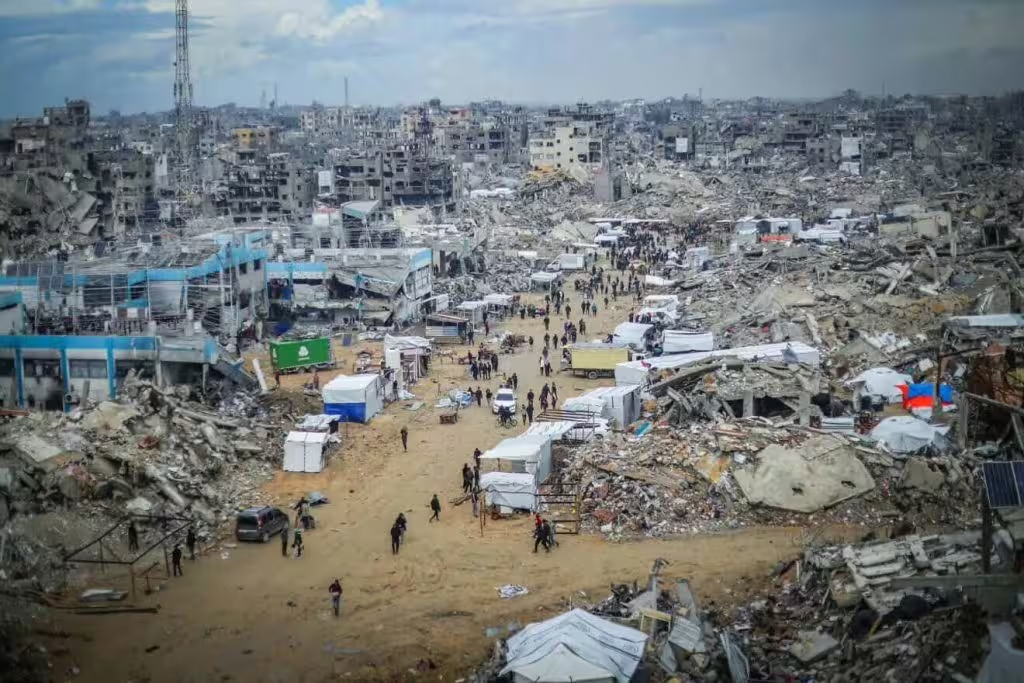
The Peace Council, the U.S.-backed body overseeing plans for Gaza’s post-war transition, is preparing to launch a pilot humanitarian housing project in Rafah despite the ongoing deadlock over Hamas disarmament. However, implementation still depends on Israeli approval, the deployment of an international stabilization force, and the participation of a Palestinian technocratic committee.
Details
- Project concept: The proposal envisions a secure humanitarian zone providing temporary housing, aid, and essential services for tens of thousands of Palestinians under the administration of a Palestinian technocratic committee.
- Security arrangements: Israeli forces would withdraw from the designated area, with an international stabilization force securing its perimeter while Palestinian officials screen civilians entering the zone.
- Key obstacles: An Israeli official said no military withdrawal would take place before Hamas agrees to disarm, while legal and political hurdles continue to delay the deployment of the international force.
- Concerns raised: Some informed sources and humanitarian figures warn the zone could effectively partition Gaza or restrict civilian movement. The Peace Council insists residents would be free to enter and leave and that Israel would not directly administer the area.
Background
The Peace Council was established as part of the U.S. plan for post-war Gaza. The broader proposal calls for a transitional Palestinian technocratic administration, an international stabilization force, expanded humanitarian assistance, and reconstruction alongside the removal of Hamas from governing the territory. Progress has largely stalled because of disagreements over disarmament and security arrangements.
What to watch
Attention now focuses on whether Israel will approve the pilot project, whether participating countries can deploy the planned stabilization force, and whether the Palestinian technocratic committee will agree to enter Gaza before a final agreement on Hamas disarmament is reached.