The latest
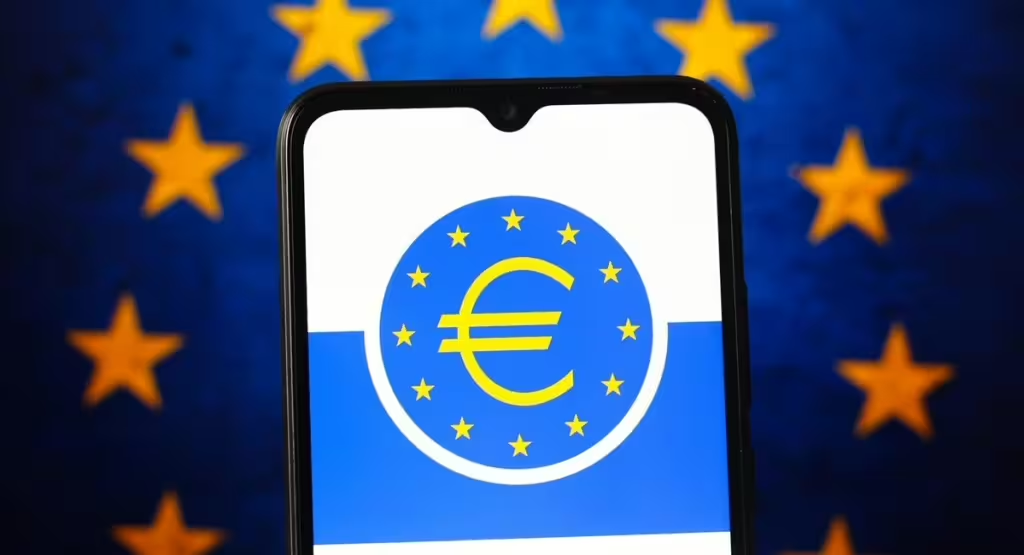
ECB President Christine Lagarde rejected claims that the digital euro is designed to replace cash or allow the central bank to monitor people’s payments, as EU lawmakers moved the project into its next stage.
The European Parliament approved its negotiating mandate after months of stalled talks, allowing discussions with member states to begin. EU officials hope to reach a final agreement by the end of 2026, with the European Central Bank aiming for a possible launch in 2029 if the legislation is adopted.
Lagarde said the digital euro would bring public money into the digital age while keeping cash as legal tender. She also linked the project to Europe’s push for more control over its payment systems, arguing that the bloc still relies too heavily on foreign-owned networks.
Details
- Cash guarantee: Lagarde said the digital euro would sit alongside banknotes and coins, not replace them. She said both cash and the digital euro would be legal tender, and added that the ECB will unveil a new banknote strategy later this year.
- Privacy pledge: Lagarde rejected claims that the digital euro is intended to trace citizens’ payments. EU officials also argue the system would include strong privacy protections, including an offline mode designed to offer cash-like confidentiality.
- Parliament vote: The European Parliament approved its negotiating mandate by 416 votes to 169, with 22 abstentions. The vote allows talks with member states to move forward after months of delays, with negotiators aiming for a final deal by the end of 2026.
- Strategic goal: Lagarde said Europe needs its own payment infrastructure because many card payments still depend on foreign-owned networks. She cited ECB data showing about 60% of card payments rely on infrastructure under foreign capital, mostly from the US, making the digital euro part of a wider push for European payment sovereignty.
- How it would work: A digital euro would have the same value as cash and could be used in shops, online or between individuals through cards, apps or phones. Basic services are expected to be free, and officials say it would be an additional payment option rather than a requirement.
- Bank safeguards: The proposal is expected to include limits on how many digital euros people can hold. That is meant to prevent large shifts of money out of commercial bank deposits, especially during periods of financial stress.
What to watch
- EU negotiators will now try to reach a final deal by the end of 2026, with the ECB aiming for a possible digital euro launch in 2029 if the legislation passes.
- The bigger test is whether officials can convince the public, banks and sceptical lawmakers that the digital euro will protect privacy, preserve cash and avoid destabilising bank deposits.