The latest
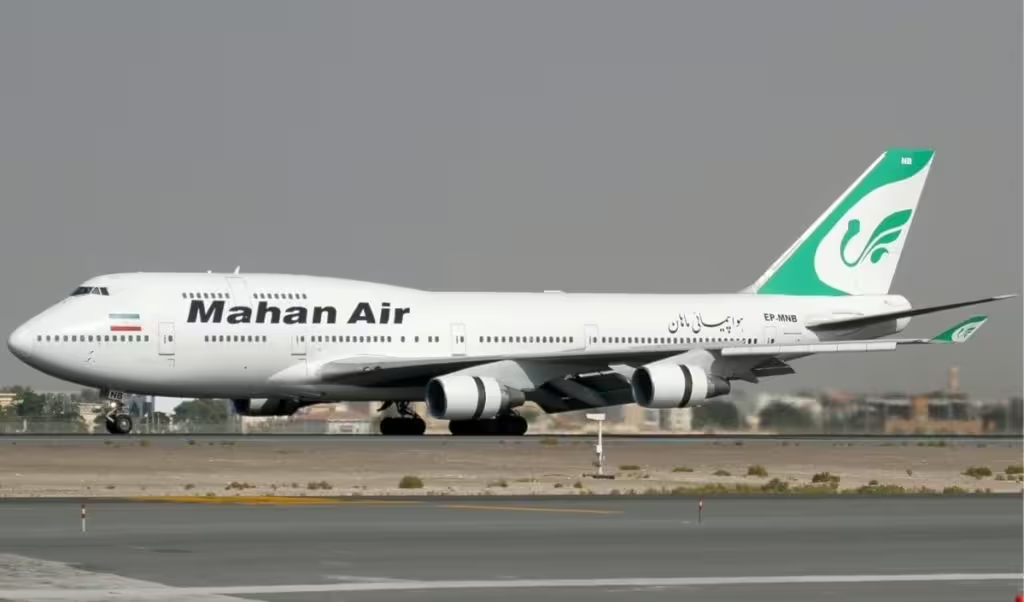
An Iranian aircraft’s landing at Sanaa International Airport in early July has renewed scrutiny of Saudi Arabia’s evolving Yemen policy. An analysis published by The Jerusalem Post argued that the flight reflects the erosion of Riyadh’s deterrence strategy developed during the Yemen war, claiming it provides Iran with a direct air corridor to Houthi-controlled territory. Meanwhile, Yemen’s internationally recognized government has condemned the flights as a violation of its sovereignty, while the Houthis insist they will continue despite Saudi warnings.
Details
• The flight: An Iranian aircraft arrived in Sanaa on July 3 before departing for Tehran with a Houthi delegation attending the funeral ceremonies of Ali Khamenei, according to Houthi media and international reports.
• Jerusalem Post’s view: The newspaper argues that Riyadh softened its military approach to safeguard its Vision 2030 projects, allowing Tehran to restore a direct channel with the Houthis.
• Yemeni position: Yemen’s Presidential Leadership Council described the flights as a blatant violation of national sovereignty and urged the international community to prevent their use in supporting the Houthis.
• Houthi response: The Houthis claimed they had thwarted a Saudi attempt to block the aircraft’s landing and threatened to target Saudi airports and interests if similar actions were repeated. Saudi Arabia has rejected those claims and said it remains prepared to respond to any threat.
• Regional impact: Analysts warn that the renewed flights could facilitate the movement of personnel and supplies between Iran and the Houthis at a time when the group’s attacks on Red Sea shipping continue to raise international concern.
Background
Saudi Arabia led a military coalition that intervened in Yemen in 2015 in support of the internationally recognized government after the Houthis seized Sanaa. Large-scale fighting has eased since the UN-brokered truce in 2022, while Riyadh and Tehran restored diplomatic ties through Chinese mediation in 2023 without reaching a comprehensive settlement to the conflict.
What to watch
Attention will focus on whether direct flights between Tehran and Sanaa become a regular route and how Saudi Arabia, Yemen’s government and the international community respond, as tensions persist in the Red Sea alongside renewed efforts to revive the political process.