The latest
The United States and Iran exchanged fire again Wednesday night after President Donald Trump said the ceasefire with Tehran was over. U.S. forces hit missile, drone and military sites near the Strait of Hormuz, while Iran fired on Kuwait and Bahrain, raising the risk of a wider Gulf escalation.
Details
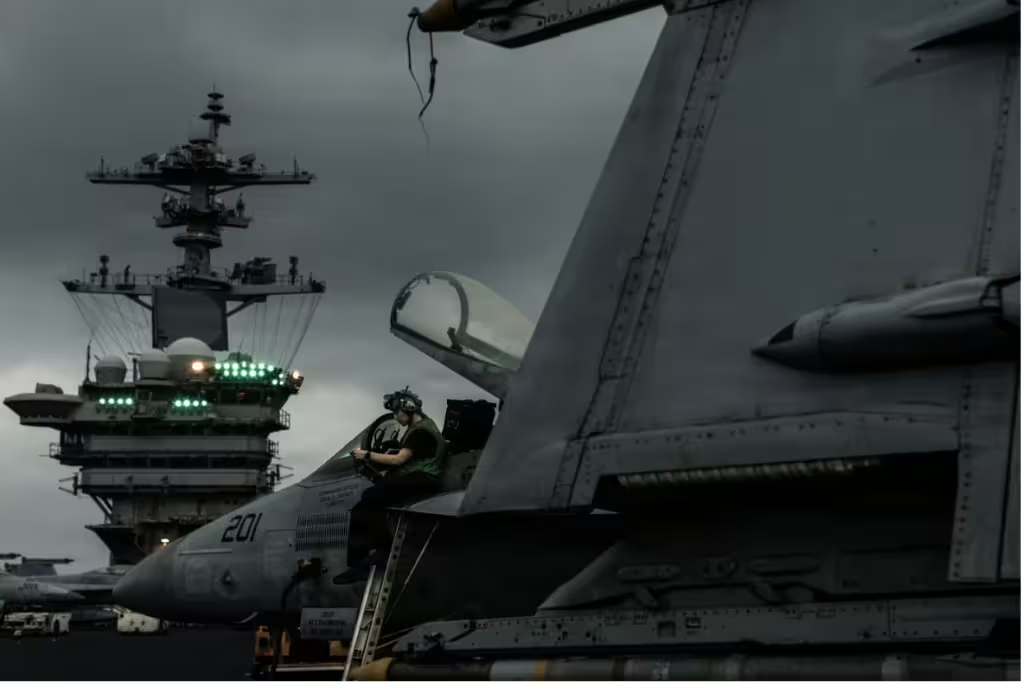
• U.S. strikes: U.S. Central Command said American forces hit 90 Iranian military targets to weaken Tehran’s ability to threaten commercial shipping in Hormuz.
• Target list: The strikes included air defense systems, coastal surveillance assets, naval capabilities and logistics infrastructure.
• Military routes: U.S. forces also struck bridges that officials said Iran’s military used to move missiles, drones, parts and other materiel.
• Iran’s response: Iran said it struck U.S. bases in Kuwait and Bahrain, while Kuwait said its air defenses were confronting missile and drone attacks.
• Trump’s warning: Trump said the strikes were retaliation for attacks on commercial vessels and warned that any repeat would make the U.S. response “much worse.”
Background
The escalation began after Iran launched missiles and drones at 3 ships transiting the Strait of Hormuz, including an LNG tanker. The U.S. answered with strikes near the waterway and revoked a license allowing Iran to sell oil on the open market, removing a key benefit of the interim peace deal.
Between the lines
The fight is no longer only about military targets. It is about control of Hormuz, oil exports, Gulf bases and whether the U.S.-Iran truce can survive after both sides accuse the other of breaking it.
What to watch
The next tests are the scale of Iranian follow-up attacks, damage assessments from the U.S. strikes, Gulf security measures in Kuwait and Bahrain, and whether any negotiating channel remains open after Trump’s declaration.