The latest
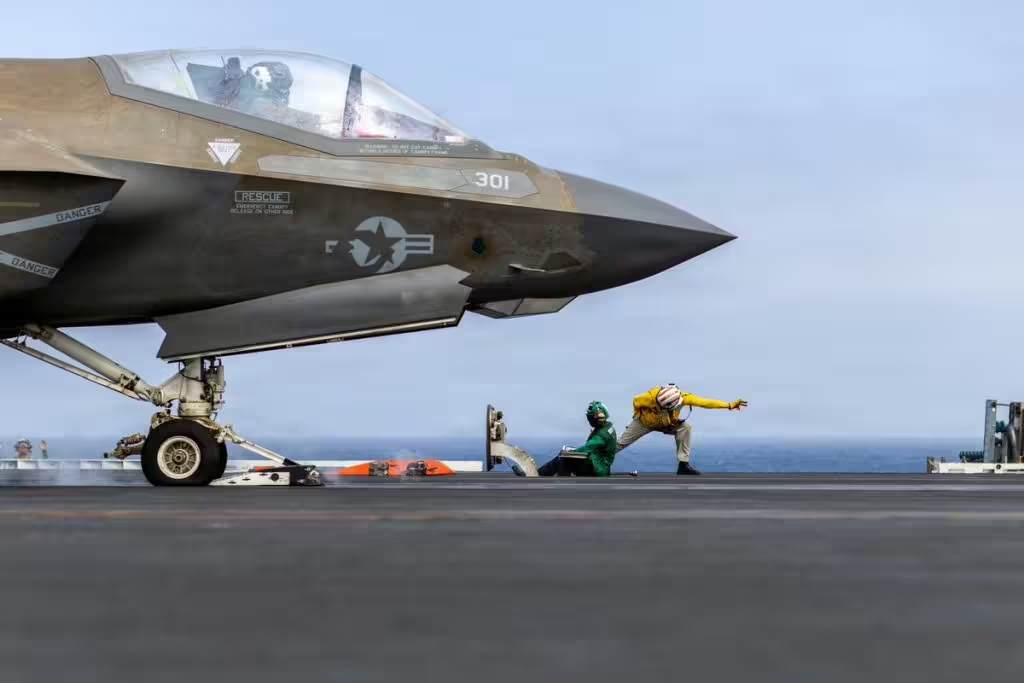
The U.S.-Iran confrontation entered a more dangerous phase after U.S. Central Command (CENTCOM) announced strikes on more than 80 targets inside Iran, saying the operation was in response to attacks on commercial vessels transiting the Strait of Hormuz. Tehran vowed retaliation, while oil prices surged on fears over the security of Gulf shipping.
Details
- U.S. strikes: CENTCOM said it targeted air defense systems, coastal radar sites, command-and-control facilities, anti-ship missile capabilities, and more than 60 Islamic Revolutionary Guard Corps (IRGC) fast boats.
- Iranian response: Air raid sirens sounded in Bahrain and Kuwait as Iran’s Islamic Revolutionary Guard Corps (IRGC) claimed it had struck 85 U.S. military sites in the two countries in response to what it called “U.S. violations of the ceasefire.” IRGC spokesman Hossein Mahabi also said the force’s air defenses detected and shot down a U.S. MQ-9 drone over the Hormuz area in Bushehr Province.
- Oil sanctions: A U.S. official announced the cancellation of the authorization allowing Iranian oil sales following the tanker attacks. Oil prices climbed about 5% amid concerns over potential supply disruptions.
- Iran’s position: Iran’s Khatam al-Anbiya Headquarters described the U.S. strikes as a “blatant act of aggression” and warned of a “crushing response,” while Parliament Speaker Mohammad Bagher Ghalibaf said Iran “will not surrender.”
- Hegseth’s visit: U.S. Defense Secretary Pete Hegseth is expected to arrive in Israel for meetings with Prime Minister Benjamin Netanyahu and Defense Minister Israel Katz as regional tensions continue to escalate.
Background
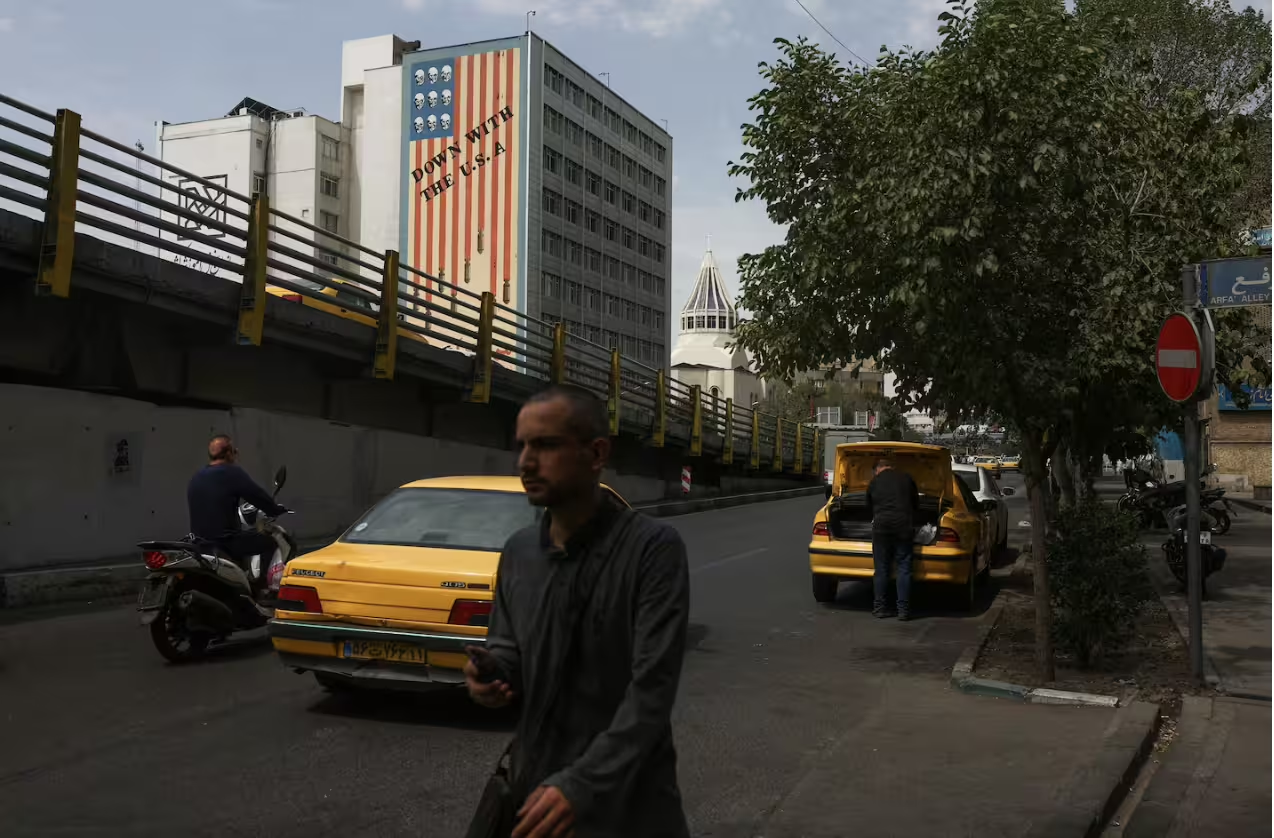
Around 20% of the world’s seaborne oil trade passes through the Strait of Hormuz, making any disruption there an immediate concern for global energy markets. The latest escalation follows a series of attacks on commercial vessels and coincides with tighter U.S. sanctions on Iranian oil exports.
Between the lines
The U.S. strikes signal a tougher military posture aimed at protecting international shipping, while Iran is seeking to demonstrate its deterrence capabilities by targeting U.S. military assets. The exchange increases the likelihood of a wider confrontation if both sides continue retaliatory operations.
What to watch
Markets and regional governments will closely monitor Iran’s next military moves, the security of shipping through the Strait of Hormuz, the outcome of Hegseth’s meetings in Israel, and any additional U.S. measures to protect regional energy routes.