The latest
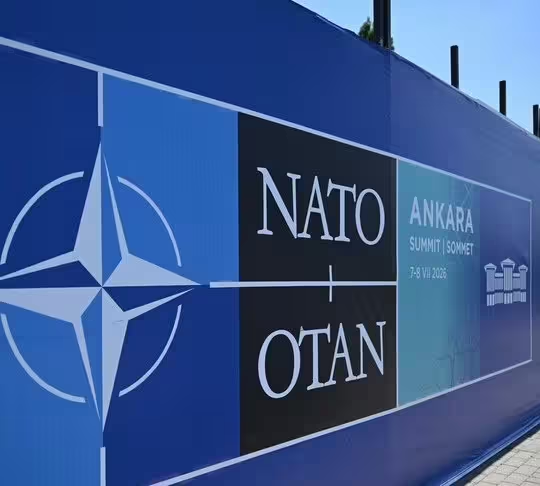
NATO opened its summit in Ankara by announcing a series of multibillion-dollar defense contracts, including new airborne surveillance and aerial refueling programs, as allies seek to demonstrate stronger military commitments in response to President Donald Trump’s demands for higher defense spending.
Details
• Defense contracts: Secretary General Mark Rutte said companies on both sides of the Atlantic would sign contracts worth “literally billions of dollars,” while a NATO diplomat estimated their combined value at more than $50 billion.
• Saab agreement: NATO confirmed an order for 10 Saab GlobalEye aircraft to replace its aging AWACS fleet under a modernization program first announced in 2023.
• Airbus and Canada: Airbus secured an additional A330 MRTT tanker aircraft contract, while Canada selected a German shipbuilder to construct its next-generation submarine fleet as part of deeper defense cooperation with European allies.
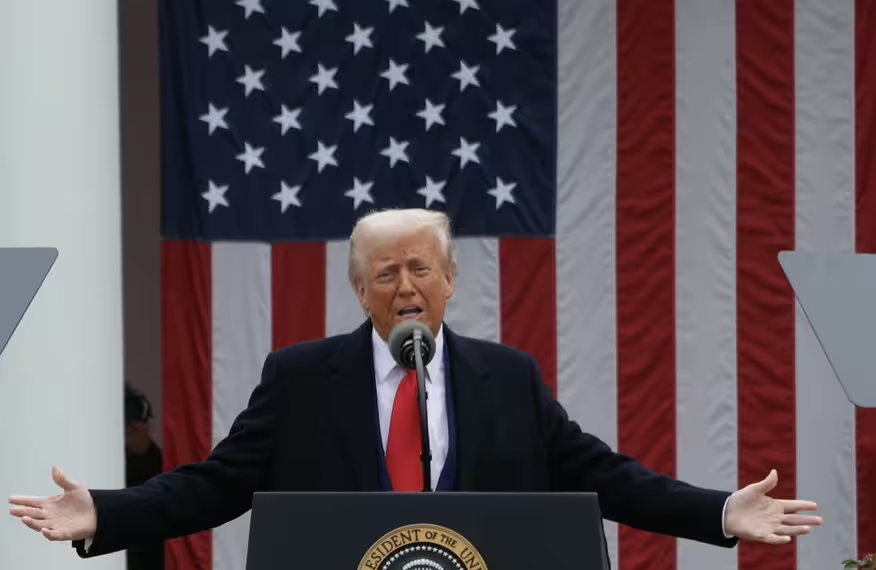
• Trump’s pressure: Trump continued criticizing European allies for moving too slowly on defense spending and voiced frustration over restrictions some countries placed on the use of U.S. bases during operations against Iran.
• Ukraine and Russia: European leaders aim to demonstrate greater responsibility for continental defense while committing at least €70 billion annually in military support for Ukraine during 2026 and 2027.
Background
Since Trump’s return to the White House, Washington has intensified pressure on NATO members to raise defense spending to 5% of GDP. At the same time, the United States has begun reducing some of the military assets dedicated to Europe, prompting allies to accelerate defense production and expand industrial capacity. At the 2025 Hague Summit, members endorsed the new spending target, while Europe assumed a larger share of military assistance for Ukraine. Rutte has promoted the concept of “NATO 3.0,” emphasizing faster defense production, greater European responsibility, and continued U.S. strategic backing.
What to watch
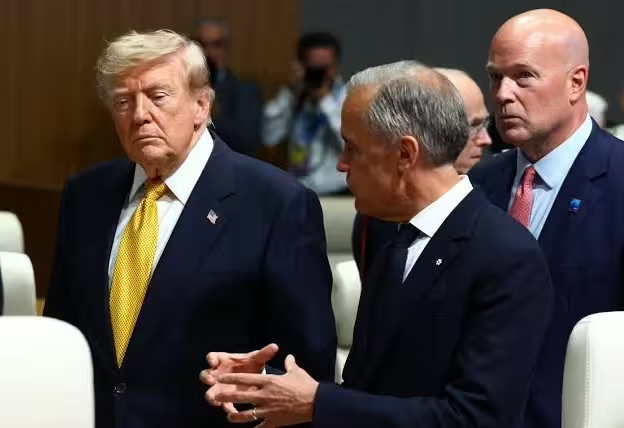
Attention will focus on Trump’s meetings with allied leaders, whether the summit can ease tensions over burden-sharing, and any decisions on future military support for Ukraine and the long-term U.S. military posture in Europe.