The Story
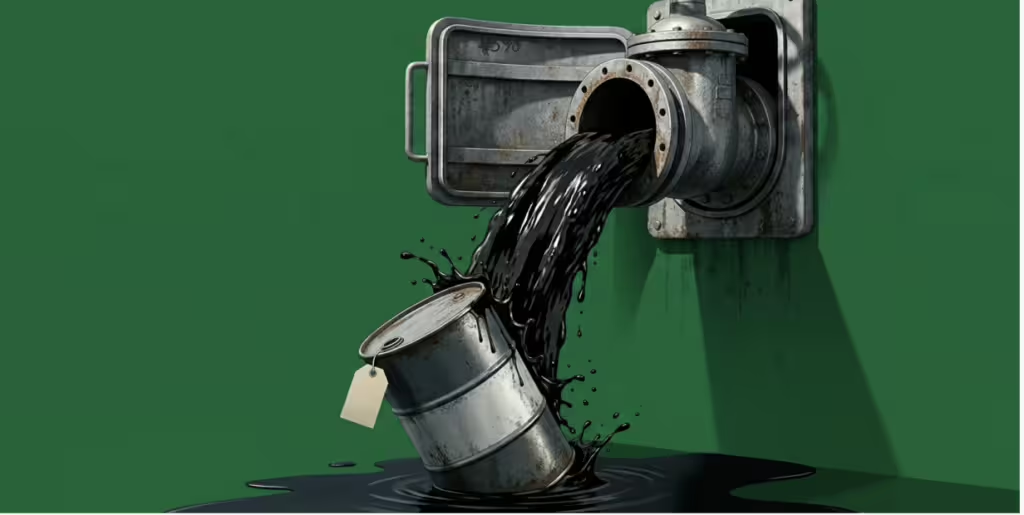
Saudi Arabia has made its largest monthly reduction in official oil selling prices in more than two decades, a move that reflects the rapid shift in global oil markets after geopolitical risks eased and supplies returned.
Saudi Aramco cut the August price of Arab Light crude for Asia by $11 a barrel, placing it $1.50 below the Oman-Dubai benchmark. It is the first time the kingdom has offered the grade at a discount since the 2020 oil price war.
Details
- Largest cut since 2000: The reduction is the biggest monthly drop in Aramco’s official selling prices since modern records began at the start of the century.
- Hormuz reopens: The move followed the resumption of Gulf oil flows through the Strait of Hormuz after the interim U.S.-Iran deal, which quickly added supply to the global market.
- Pressure on prices: Brent crude erased all the gains it had made during the conflict, while physical crude cargoes have traded at discounts not seen since the Covid-19 pandemic.
- Asian competition: Asian buyers said that even after the Saudi cut, Arab Light remains more expensive than some regional spot supplies, which could force Gulf producers to lower prices further to protect market share.
- Europe and the U.S.: The cuts were not limited to Asia. Aramco lowered all grades for Europe by $15 a barrel and reduced prices for U.S. buyers by $8 a barrel.
Why now?
Analysts say the move does not necessarily signal a new price war, but rather a messy normalization of the oil market after the reopening of Hormuz. During the war, large volumes of crude were trapped inside the Gulf. Once exports resumed, extra barrels entered the market just as Chinese demand remained weaker than expected, creating a temporary supply overhang.
Ahmed Mehdi, an oil analyst at Renaissance Energy Advisors, said prices need to become more competitive to revive Chinese buying interest, adding that the reduction reflects excess supply more than the start of a price war.
Background
Saudi Arabia has long acted as the swing producer in global oil markets, raising or cutting output to help stabilize prices. Still, it has entered two major price wars in recent memory, in 2015 and 2020. Today, as OPEC+ gradually lifts production and oil flows through Hormuz return, Riyadh faces a familiar challenge: defending market share without destabilizing global prices.