
The latest
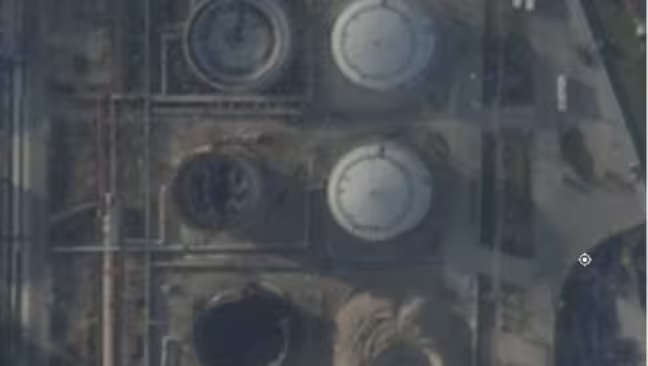
Ukraine is hitting Russian energy infrastructure at an unprecedented pace, with a Financial Times analysis showing that Kyiv’s intensified drone campaign has helped trigger Russia’s worst fuel crisis in decades.
Details
• Record month: Rochan Consulting data showed Russian refineries were hit 16 times in May, the highest monthly total on record.
• Sharp escalation: The Financial Times reported that Russian refineries have been struck at least 194 times since the start of 2026.
• Fuel crisis: The paper said more than half of Russia’s regions have imposed strict limits on fuel sales.
• US support: Senior Ukrainian officials said American intelligence assistance helped Kyiv map drone routes and avoid air defenses.
• Air-defense strain: Russia’s Defense Ministry said it intercepted 63,933 Ukrainian drones in the first 6 months of 2026.
Background
Kyiv and Moscow have launched record volumes of drones and missiles this year, pushing long-range warfare to its highest level since Russia’s full-scale invasion began in February 2022.
Between the lines
Ukraine’s campaign against Russian energy is no longer symbolic. The Financial Times presents it as a shift in the war: from a narrower effort against refineries into a broader interdiction campaign targeting energy, logistics, industry and export systems at once.
The political effect may be as important as the military one. Fuel queues and sales restrictions puncture the Kremlin’s carefully maintained image that normal life inside Russia can continue while the war stays distant.
Ruslan Pukhov argues that Putin made a strategic mistake by assuming time was working only in Russia’s favor. In that view, the long war gave Ukraine enough time to develop mass production of deep-strike drones, turning them into a tool of political attrition as well as military pressure.
But escalation does not mean Moscow is ready to concede. According to the Financial Times, Putin remains committed to maximalist goals, while Ukrainian officials believe US-brokered trilateral peace talks are unlikely to resume before the end of the summer.
What to watch
The key tests are Ukraine’s 40-day “influence operation,” Russia’s ability to defend its refineries, the battle for Donetsk, and whether fuel shortages begin to affect Putin’s negotiating calculus.