
The latest
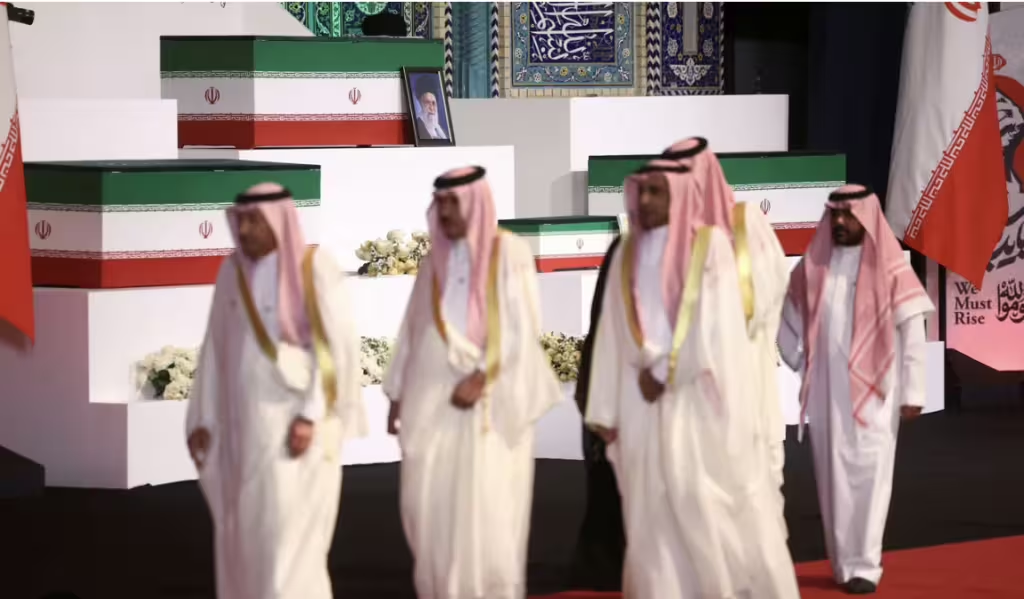
The presence of Arab delegations at Ali Khamenei’s funeral turned a mourning ceremony into a political test, after Iran was accused of targeting Gulf states following the US-Israeli attack on it, then expanding pressure through the Strait of Hormuz and its regional proxies.
Details
• First wave: After the February 28 attack, Iran targeted Gulf states with ballistic missiles and drones launched at civilian sites and infrastructure.
• Presidential apology: Masoud Pezeshkian offered a de-escalatory message to neighboring states, but the Islamic Revolutionary Guard Corps later overrode that tone.
• Hormuz pressure: Iran used the Strait of Hormuz as leverage, increasing risks to trade, energy flows and maritime security.
• Regional proxies: Iranian pressure expanded through proxies in Iraq and Lebanon, shifting part of the war’s cost onto additional Arab arenas.
• Funeral attendance: Arab figures joined Khamenei’s funeral, including representatives from Egypt, Qatar, Lebanon and Saudi Arabia. Iraq’s president attended, as did the Kurdistan Region’s prime minister.
Between the lines
A Gulf official told +ontime: “In politics, the first distinction begins with defining friend and enemy. When a state strikes cities, ports and infrastructure, then receives high-level protocol attendance at a funeral, de-escalation starts to look like the erasure of political memory.”
The official added: “We support peace and preventive security in the region. But calling for peace does not mean reducing the cost of blatant aggression. Negotiation is rational when it ties calm to a full halt in threats and shows the adversary the strength of deterrence, not when aggression is turned into a stage for diplomatic discipline.”
Iran, the official said, is a state led by the Islamic Revolutionary Guard Corps, which is designated as a terrorist organization by the United States, while its institutions and networks face broad Western sanctions. That point, the official argued, cannot be separated from the state’s security behavior.
What to watch
The test is whether Arab states tie any future de-escalation to an end to attacks, control over proxies and the reopening of the Strait of Hormuz — or allow Tehran to separate aggression from protocol on its own terms.