Details
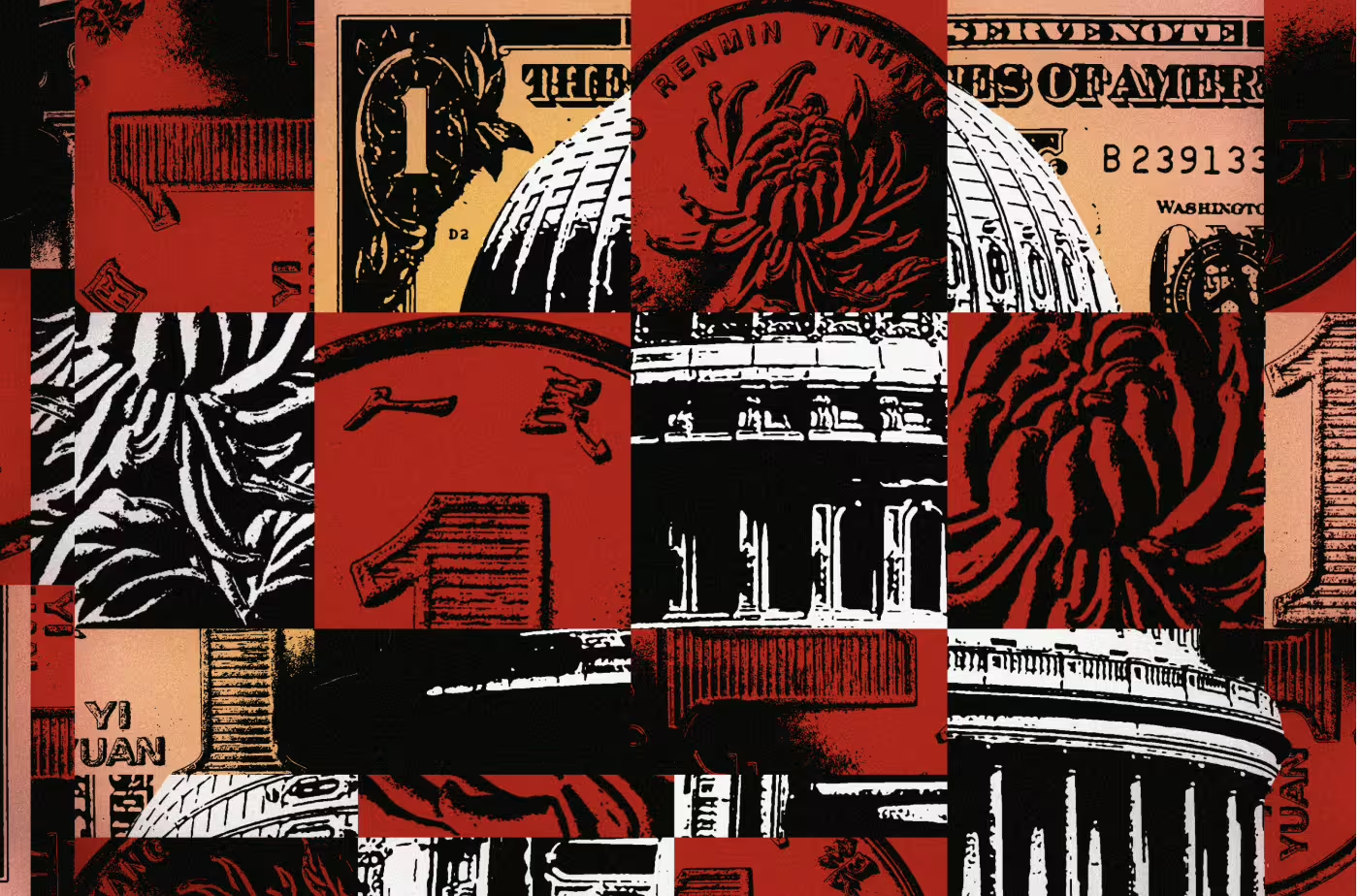
- The New York Times reported that the United States has resumed some air shipments of dollars to Iraq after suspending them in April to pressure Baghdad over its ties to Iran.
- The paper cited two aides to Prime Minister Ali al-Zaidi as saying the shipments had resumed. Government spokesman Haider al-Aboudi said the “problem has been resolved.”
- The U.S. move was unusual because Washington was not withholding American aid. It was delaying access to Iraq’s own oil revenues, held as dollar reserves at the Federal Reserve Bank of New York.
- The suspension came at a sensitive political moment, as Iraq was choosing a new prime minister and Washington was trying to block candidates it viewed as close to Iran.
- The pressure was not only financial. An Iraqi official told the paper that U.S. cooperation and funding for some Iraqi security services remain suspended.
- That means Washington has eased pressure on the dollar market, but kept security and political leverage over al-Zaidi’s government.
- Since taking office in late April, al-Zaidi has tried to send signals to Washington. His clearest move was ordering all militias to come under direct state authority.
- That order hits Iraq’s hardest internal problem: Iran-linked factions that operate largely outside full government control, and have repeatedly attacked U.S. targets.
- Kataib Hezbollah remains the biggest test, after rejecting past efforts to bring armed factions under state control and being linked to attacks on U.S. targets and high-profile kidnappings.
- The return of dollar shipments also comes as al-Zaidi launches a major anti-corruption campaign targeting current and former officials, including members of parliament.
- Iraq’s state news agency said authorities arrested 47 people on Sunday, with operations continuing against others suspected of corruption.
- The timing matters. Washington wants to see a government capable of controlling money flows, curbing militias and stopping dollars from leaking to Iran-linked or armed networks.
- Al-Zaidi, meanwhile, needs dollars as much as political cover. Iraq’s economy remains heavily cash-based, and a prolonged suspension would have added pressure on his government before it fully consolidated power.
- That makes the resumption look like an undeclared test deal: Washington is restoring some financial oxygen to Iraq, but keeping the line tight.
- The story is not only that the dollar is back. The story is that Washington is using the dollar to measure Baghdad’s direction: toward the state, or back into the old balance of influence.
What to watch
The key indicator will be whether al-Zaidi can enforce his order to bring militias under state authority. If he turns it into reality, he could win broader U.S. support. If the order stays on paper, Washington may quickly return to pressure — and the dollar could again become a political weapon in its relationship with Baghdad.
Sources