Details
Saudi Arabia’s disagreement with Washington has grown beyond tactical differences over the Iran conflict into a broader divide over regional security, according to The New York Times, which cited current and former U.S. officials.
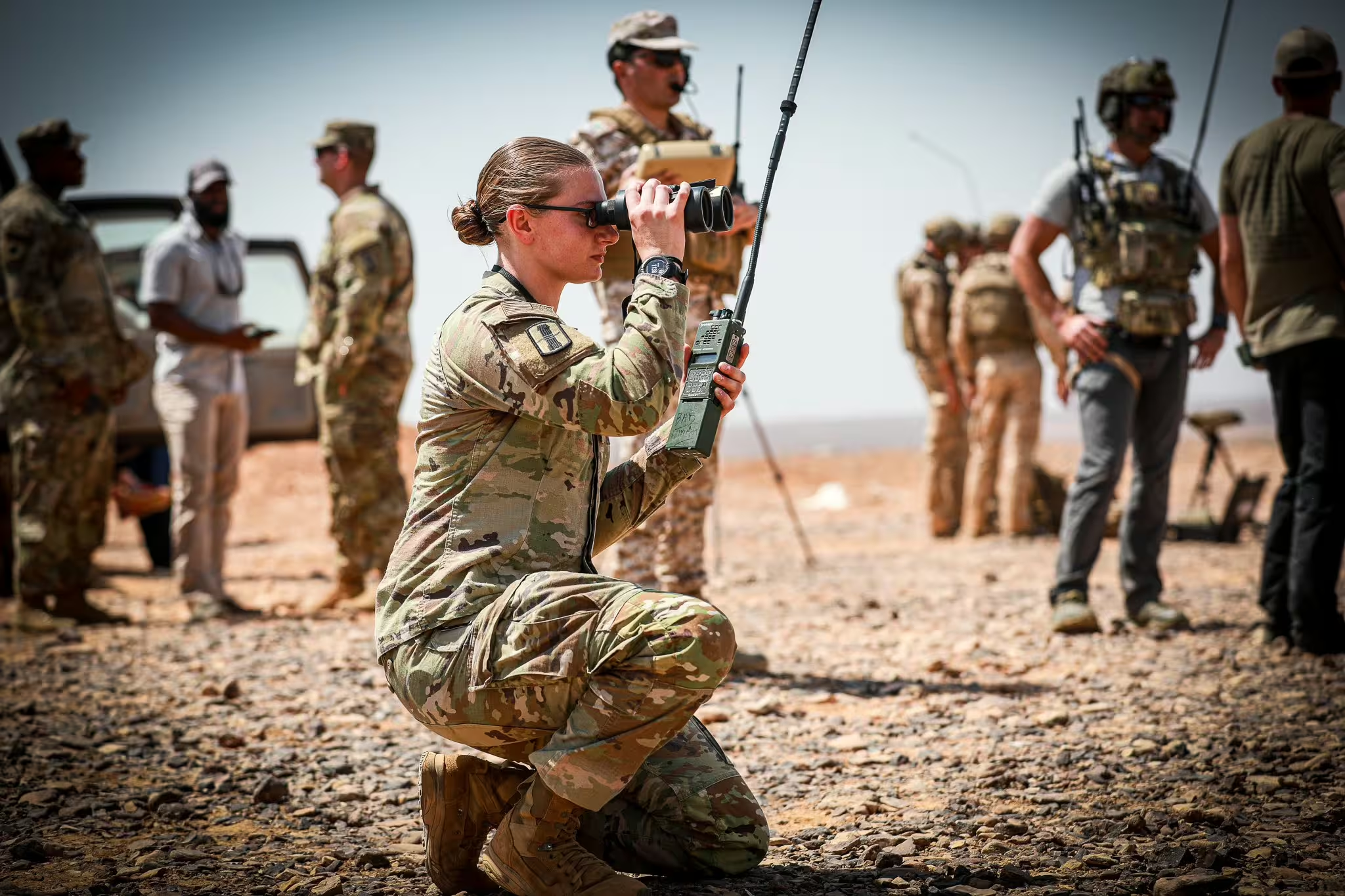
The report said the Pentagon launched “Project Liberty” to protect commercial shipping in the Strait of Hormuz after maritime traffic was disrupted during the war. Saudi Arabia, however, refused to allow U.S. aircraft to use its airspace, arguing that the operation could collapse the ceasefire and reignite the conflict.
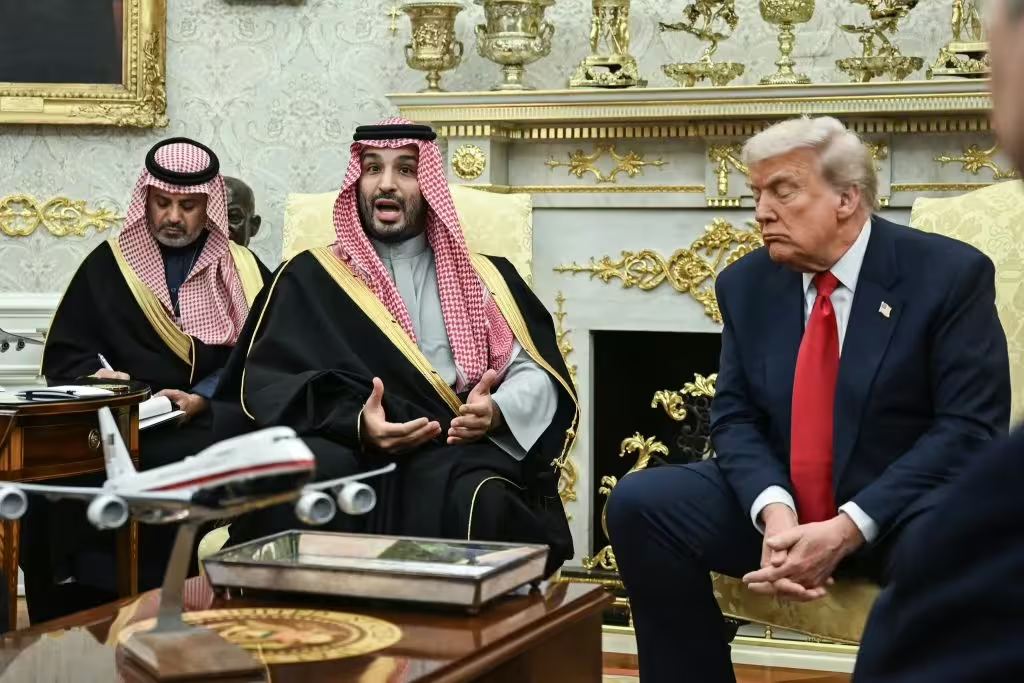
According to the report, the decision triggered urgent calls between President Trump and Crown Prince Mohammed bin Salman. Vice President JD Vance, special envoy Steve Witkoff, Jared Kushner and Secretary of State Marco Rubio also joined efforts to persuade the Saudi leadership.
The crown prince reportedly held his ground, forcing the Trump administration to scrap the operation within two days. The report described the episode as one of the clearest signs of growing friction between Washington and Riyadh during the conflict.
The report also said Saudi officials have become increasingly skeptical of Washington’s ability to manage regional crises, pointing to the U.S. decision not to retaliate after the 2019 attack on Saudi Aramco facilities as a lasting turning point in the kingdom’s security calculations.
White House spokeswoman Anna Kelly rejected suggestions of a rift, saying President Trump maintains an “excellent” relationship with Saudi Arabia and listens carefully to regional partners before making decisions based on U.S. national security interests.
Why Saudi Arabia Changed Course
Since restoring diplomatic relations with Iran through Chinese mediation in 2023, Saudi Arabia has pursued a strategy centered on de-escalation while focusing on the economic transformation outlined in Vision 2030.
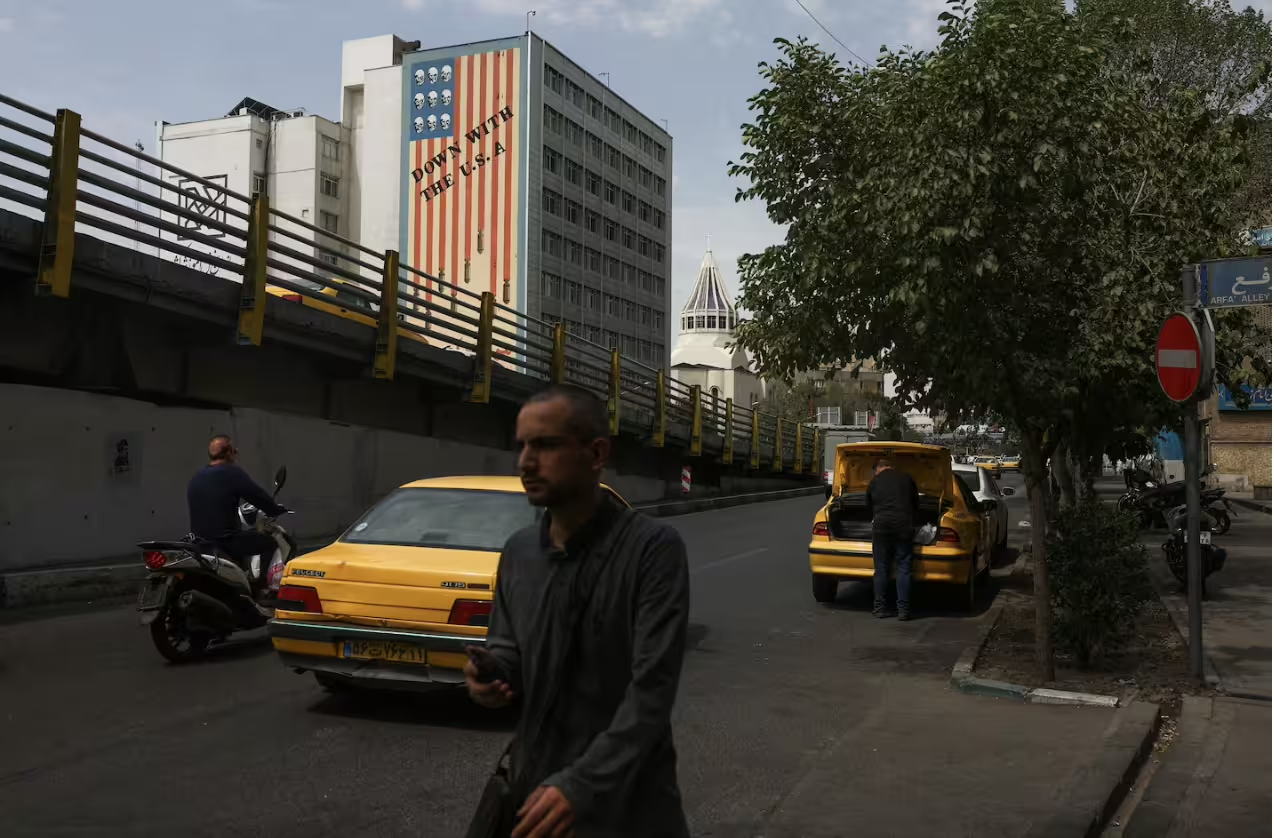
According to the report, Riyadh sees Iran’s missile arsenal, regional proxy network and ability to threaten shipping through the Strait of Hormuz as more immediate security concerns than the nuclear issue alone. That has encouraged Saudi leaders to maintain direct dialogue with Tehran rather than support another military confrontation.
The kingdom has also expanded ties with China and Pakistan, reflecting a broader effort to diversify its strategic partnerships and reduce its dependence on Washington.
Rubio’s Gulf Tour Raised More Questions
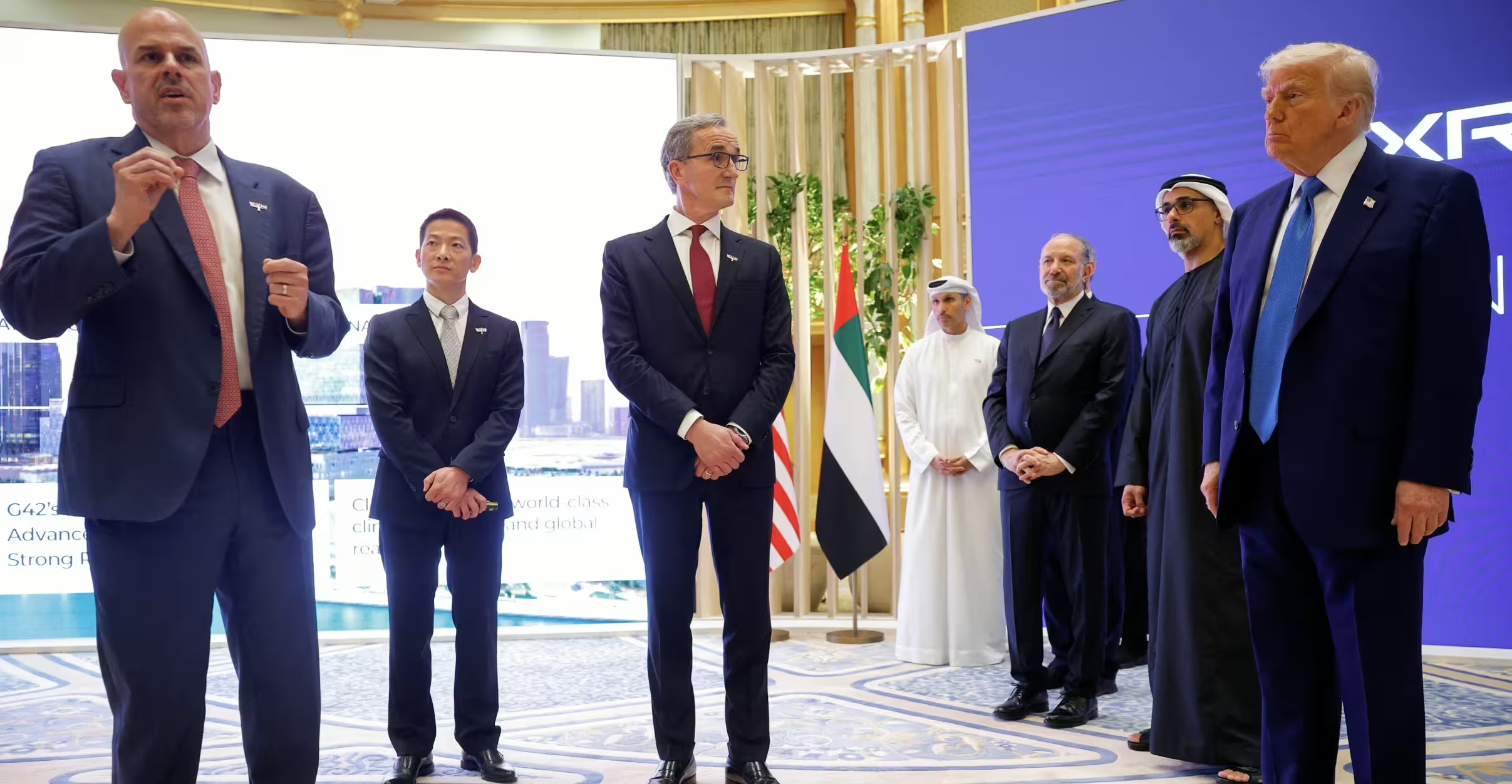
The report said Secretary of State Marco Rubio’s decision to visit Bahrain, Kuwait and the United Arab Emirates without making Saudi Arabia a stop on his Gulf tour reinforced perceptions of political strain, even though he later met Saudi Foreign Minister Prince Faisal bin Farhan during a regional gathering.
Rubio nevertheless insisted that the U.S.-Gulf partnership had “passed the test,” despite growing doubts in Riyadh about Washington’s long-term security commitments.
Cooperation Continues, but on New Terms
Despite the tensions, the two countries continue to cooperate on several strategic priorities, including a Saudi civilian nuclear program, major defense deals and plans to develop alternative trade routes that would reduce reliance on the Strait of Hormuz.
The report suggests, however, that Saudi Arabia is increasingly willing to pursue independent policies whenever it believes U.S. decisions could undermine its own security or regional stability.
Background
The 2019 Iranian attack on Saudi Aramco facilities marked a turning point in Saudi perceptions of the U.S. security umbrella after the Trump administration chose not to respond militarily.
Since then, Riyadh has diversified its international partnerships and restored diplomatic ties with Iran in 2023 through Chinese mediation, signaling a major shift in its regional strategy.
The recent Israel-Iran war also underscored the vulnerability of shipping through the Strait of Hormuz, a chokepoint that carries roughly one-fifth of global oil supplies, prompting Gulf states to seek more independent security arrangements.
What to Watch
If U.S.-Iran negotiations produce a more durable agreement, Saudi Arabia is likely to continue backing diplomatic efforts that reduce the risk of another regional war.
If the ceasefire collapses, however, Washington may find that its closest Gulf partner is no longer willing to provide unconditional military support as it once did.
Sources: The New York Times, Yedioth Ahronoth, Reuters.