News
The United States and Iran are heading to Doha this week with conflicting narratives over the nature of the expected talks, days after a limited exchange of strikes threatened the fragile cease-fire between the two sides.
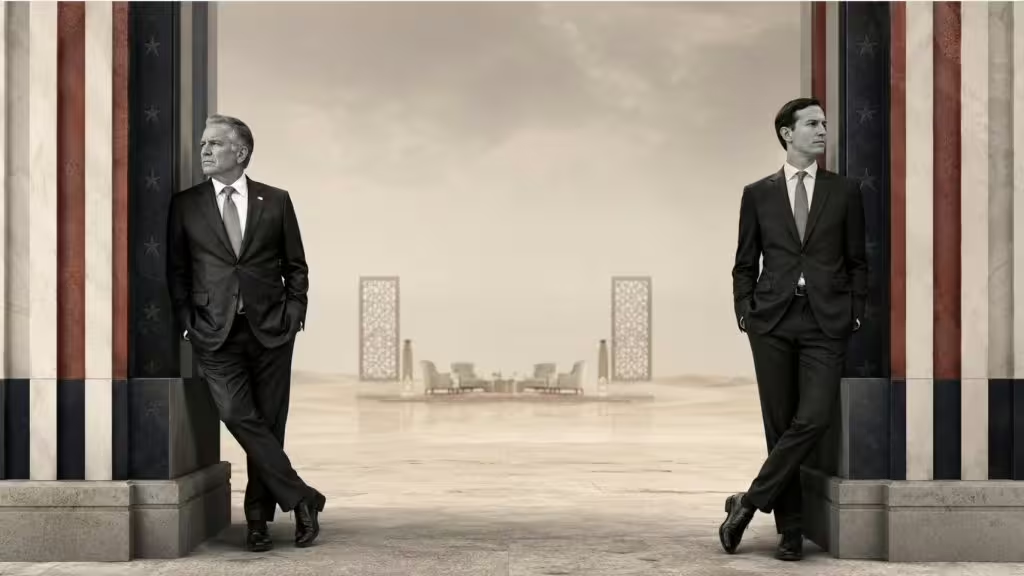
President Donald Trump said U.S. and Iranian officials would hold talks in Qatar on Tuesday at Tehran’s request. White House press secretary Karoline Leavitt said Steve Witkoff and Jared Kushner would travel to Doha for the sessions.
Tehran denied that any direct meeting would take place. Iranian Deputy Foreign Minister Kazem Gharibabadi said an Iranian delegation would be in Doha over the next two days, but would meet only with Qatari mediators to follow up on U.S. commitments under the cease-fire memorandum.
Details
- The first dispute is over the format of the talks: Washington is presenting them as U.S.-Iranian discussions, while Tehran says any contact will go through Qatar.
- The deeper dispute is over the substance of a permanent deal, especially the future of Iran’s nuclear program and its stockpile of highly enriched uranium.
- Iran is now focused on the Strait of Hormuz card, after proving during the war that it can disrupt navigation at relatively low cost through drones, mines, and maritime threats.
- Gharibabadi said Iran cannot accept any alternative route through the strait, referring to the passage announced by Oman and the International Maritime Organization to avoid Iranian waters.
- Tehran warned that vessels using routes not approved by Iran would bear responsibility for any incident, saying it would oppose and try to prevent those passages.
- The latest escalation began after a cargo ship using the new route was attacked, followed by U.S. accusations that Iran was behind another strike in the strait.
- The U.S. military carried out strikes it described as retaliation for Iranian attacks, while Tehran said it responded by targeting U.S. positions in Bahrain and Kuwait.
- Shipping through the Strait of Hormuz fell over the weekend as some shipowners judged the waterway too risky to cross.
- Crude prices remain below their wartime peak, but gasoline and diesel prices are still elevated because of supply disruptions and damage to parts of the energy infrastructure.
- Trump wants gasoline prices down quickly, but Iran has little obvious incentive to give up its new leverage in Hormuz without a major political or economic return.
What’s Next
The Doha talks, if they happen, will not be just a diplomatic test between Washington and Tehran. The real test is in the Strait of Hormuz.
If Iran accepts alternative routes, it gives up the strongest pressure card it gained from the war. If it refuses, shipping remains exposed, and the cease-fire will stay vulnerable to the next incident at sea.
Sources
White House statements, Iranian state television.