The latest
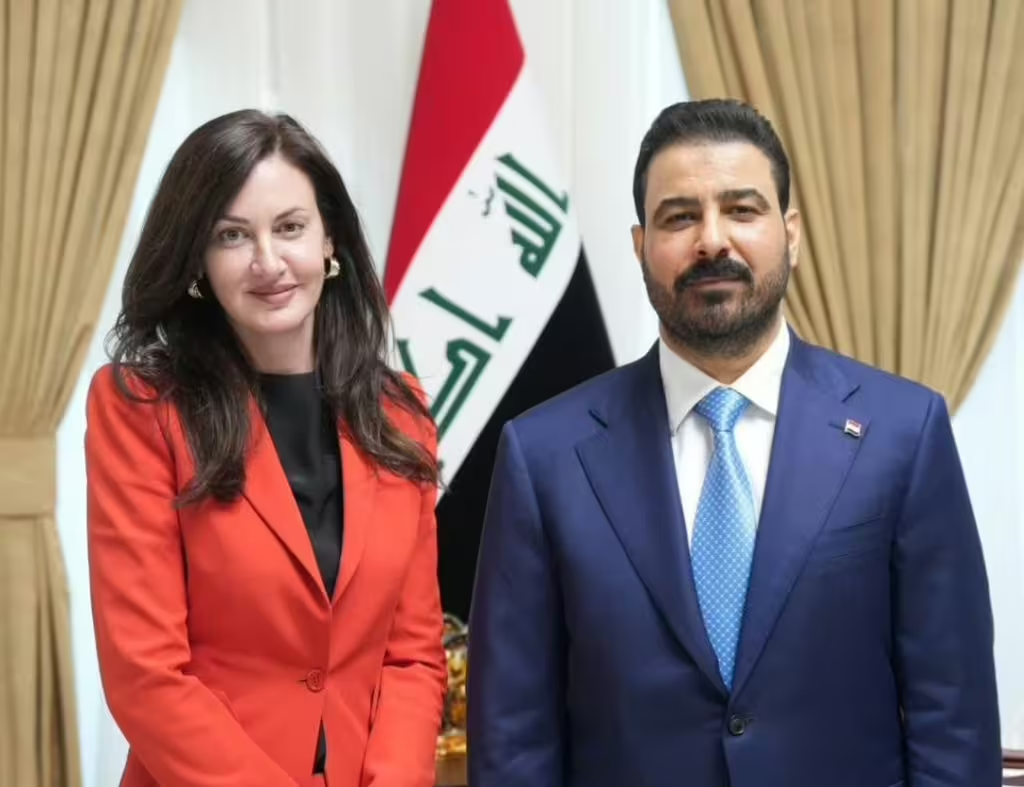
Iraqi Prime Minister Ali al-Zaidi has opened debate on two of the country’s most contentious files, saying his government would consider suspending Iraq’s membership in OPEC if current production restrictions continue, while also committing to disarm militias before the end of September.
Speaking to journalist Hadley Gamble, al-Zaidi said Iraq should be allowed to fully utilize its oil production capacity, arguing that continued limits could force Baghdad to reconsider its position within the oil producers’ group.
He also said his government aims to eliminate weapons outside state control by September 30, a deadline that coincides with the planned withdrawal of the last U.S. troops from Iraq.
Details
• Al-Zaidi said U.S. companies would receive priority access to investment opportunities in Iraq.
• He said Baghdad is prepared to allocate 500,000 barrels of oil per day to help replenish the U.S. Strategic Petroleum Reserve.
• The prime minister pledged to continue a broad anti-corruption campaign, describing corruption as one of Iraq’s biggest economic and political challenges.
• The comments come ahead of an expected visit to Washington, where Iraq hopes to attract new U.S. investment and deepen economic cooperation.
Background
Iraq has long argued that OPEC production quotas do not reflect its full output potential, particularly after years of investment in its oil sector. Because the country’s economy remains heavily dependent on oil revenue, production limits carry significant political and economic consequences.
The militia issue remains one of the most difficult challenges facing any Iraqi government. Successive administrations have pledged to bring all weapons under state control, but powerful armed groups continue to wield substantial political and security influence.
Analysts say progress on the militia file will be closely watched in Washington and Gulf capitals as a key test of Baghdad’s ability to strengthen state authority and attract larger foreign investments.
What to watch
Any move by Baghdad to challenge OPEC’s quota system would mark one of the most significant shifts in Iraqi oil policy in years. At the same time, al-Zaidi’s pledge to disarm militias within months will be an early test of whether his government can translate ambitious promises into action.