The latest
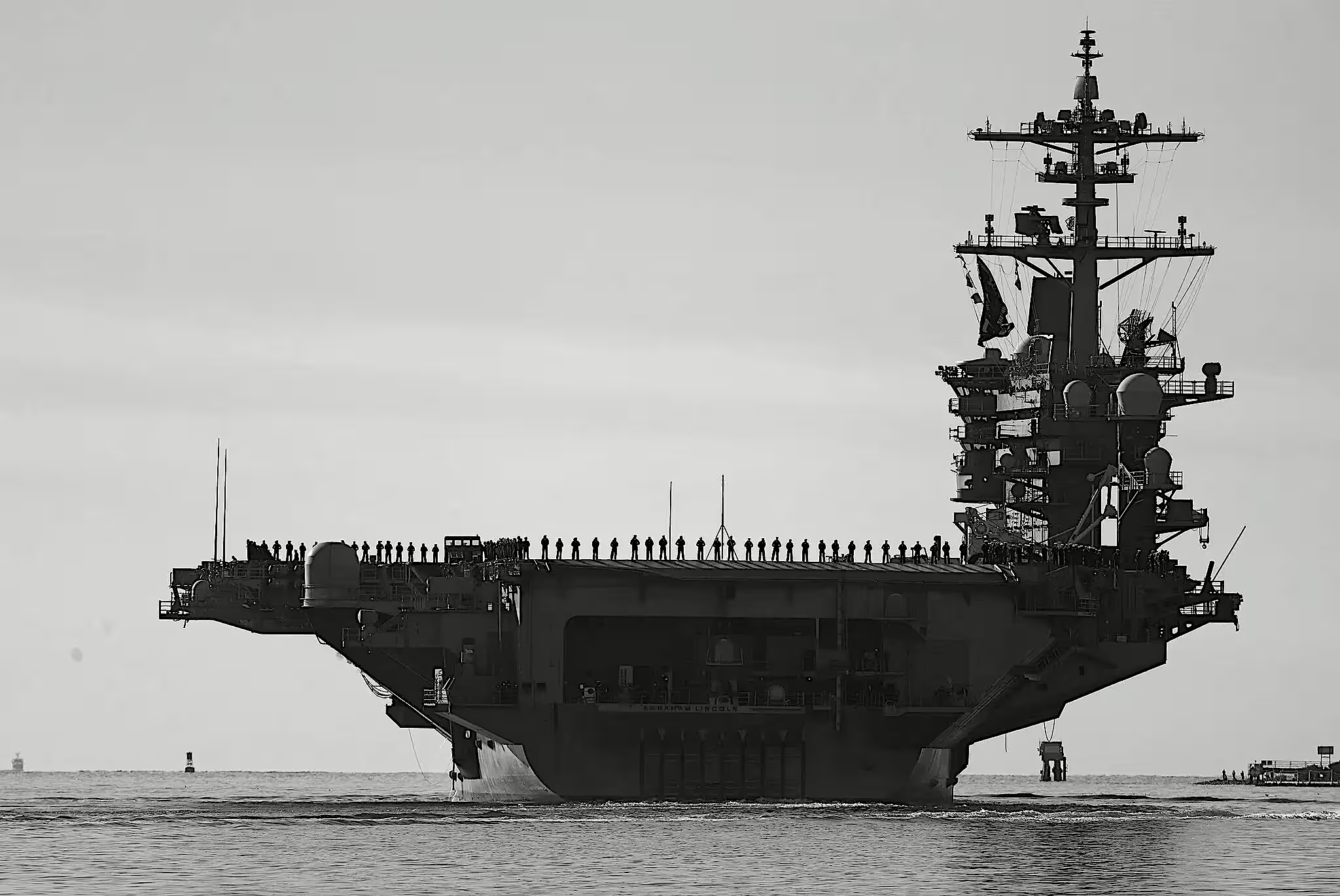
The confrontation between Washington and Tehran entered a new phase early Wednesday after U.S. Central Command (CENTCOM) announced what it described as self-defense strikes against Iran.
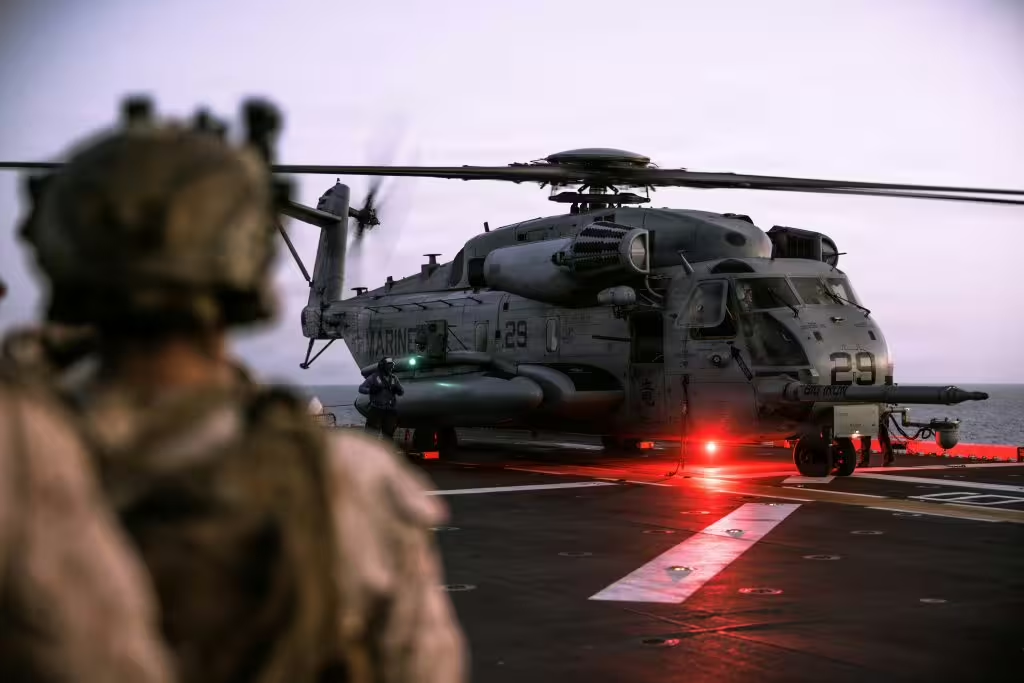
CENTCOM said the operation was ordered directly by President Donald Trump and was a proportional response to what it called an unprovoked Iranian attack that downed a U.S. Apache helicopter over the Strait of Hormuz.
Speaking to ABC News correspondent Jonathan Karl, Trump said the helicopter incident required a response.
“They shot down our helicopter, and we’re responding,” Trump said. “I think the response has to be very strong.”
Details
• Reports from Iran described explosions in Hormozgan province, Bandar Abbas, near Sirik port, and on Qeshm Island.
• Fox News correspondent Jennifer Griffin reported that U.S. strikes targeted radar systems and air-defense installations around the Strait of Hormuz.
• A senior U.S. official later said Washington struck roughly 20 Iranian military sites overnight.
• CENTCOM said the operation involved precision-guided munitions launched by U.S. Air Force and Navy aircraft against air-defense and radar facilities.
Iran’s Islamic Revolutionary Guard Corps (IRGC) announced retaliatory operations shortly afterward.
The IRGC said it targeted the U.S. Fifth Fleet in Bahrain with drones and launched long-range missiles at U.S. positions linked to Azraq Air Base in Jordan.
Iranian state-affiliated media claimed the attacks targeted F-35 shelters and command centers.
A senior U.S. official told Reuters that American and allied defenses intercepted nearly all Iranian missiles and drones. The official said there were no reports of casualties or major damage.
Jordan and Gulf states on alert
• Bahrain and Kuwait activated air-defense systems following the Iranian response.
• Jordan said it intercepted five missiles launched toward Azraq Air Base.
• The Jordanian Armed Forces said falling debris caused no injuries or material damage and stressed that Jordan would not allow violations of its airspace.
At the same time, Iranian media reported the downing of a U.S. MQ-9 drone over Bushehr province, while regional reports indicated heightened alert levels at U.S. military facilities in Qatar, the UAE, Bahrain, and Kuwait.
Mixed signals from Tehran and Washington
Despite the exchange of strikes, political messaging suggested neither side had fully abandoned de-escalation.
Iranian Foreign Minister Abbas Araghchi said foreign military forces near Iran remain a source of instability and warned that security would require their departure from the region.
At the same time, Iranian media quoted Foreign Ministry officials as saying the Apache incident was “not intentional,” a statement widely viewed as an attempt to contain the crisis.
Trump later softened his rhetoric in comments to The Wall Street Journal, describing the helicopter incident as “not a big deal” and saying the pilot was safe. He also vowed to maintain economic pressure on Iran.
What to watch
Behind the military confrontation, diplomatic contacts appear to remain active. According to The New York Times, Trump administration officials are still discussing four core nuclear issues with Tehran as part of a framework that U.S. officials believe could freeze Iran’s nuclear program for roughly 15 years.
The key question now is whether the latest exchange pushes both sides toward a broader regional conflict or accelerates efforts to reach a political settlement.