The latest
Oman is facing the toughest test of its quiet diplomacy in decades.
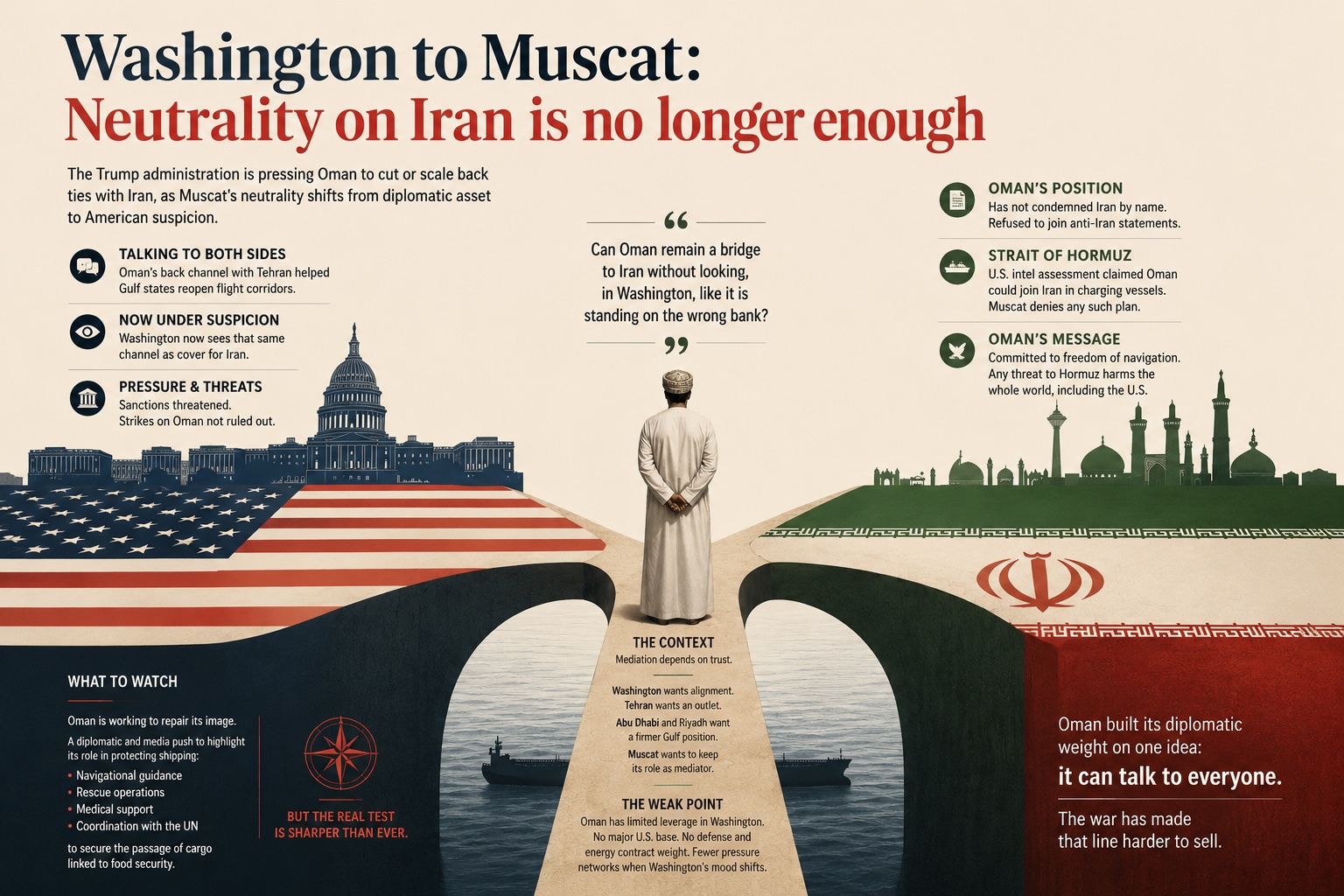
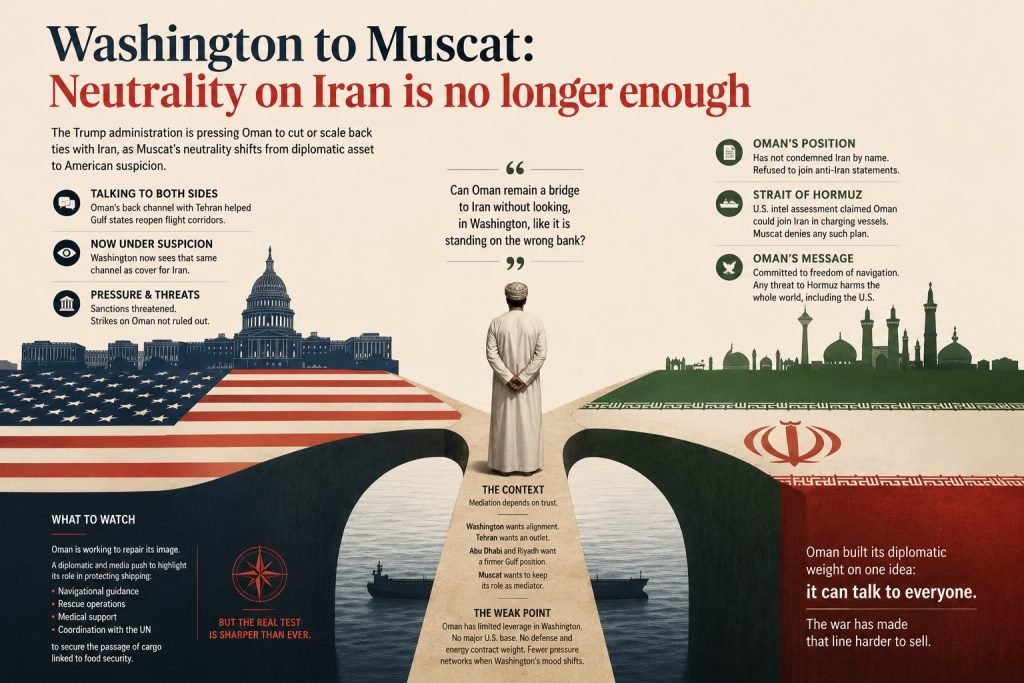
According to the Wall Street Journal, the Trump administration is pressing Muscat to choose a side and cut ties with Iran, after Washington began viewing Omani neutrality less as a diplomatic bridge and more as political cover for Tehran.
The pressure is no longer just diplomatic. Washington is threatening sanctions, and Trump has said he could order strikes on Oman if it joins an Iranian plan to charge vessels passing through the Strait of Hormuz. Muscat denies any such plan exists.
Details
• At the start of the war, an Omani back channel with Tehran helped Gulf states reopen flight corridors.
• Three months later, Washington now sees that same channel as evidence of Muscat leaning toward Tehran.
• Oman has not condemned Iran by name after attacks in the Strait of Hormuz or after missile and drone strikes across the region.
• That position has angered Washington and unsettled the UAE and Saudi Arabia.
• Muscat has refused to sign Gulf and U.S.-backed statements condemning Tehran.
• In May, Oman was the only Gulf state that did not sign an Emirati-led statement against Iran’s proposed tolls in the Strait of Hormuz.
• U.S. Treasury Secretary Scott Bessent threatened Oman with sanctions, then said Oman’s ambassador in Washington had assured him there was no tolling plan.
• Oman says it remains committed to freedom of navigation and that any threat to Hormuz would harm the whole world, including the United States.
Context
Oman built its diplomatic weight on one flexible idea: it can talk to everyone.
The war has made that line harder to sell.
Washington wants alignment.
Tehran wants an outlet.
Abu Dhabi and Riyadh want a firmer Gulf position.
Muscat wants to keep its role as mediator.
But mediation depends on trust. Oman is beginning to lose that trust in Washington and among some Gulf neighbors, without securing full protection from Iran.
Oman’s weak point
Oman has limited leverage in Washington.
It does not host a major U.S. base.
It does not have the defense and energy contract weight that gives some of its Gulf neighbors deeper access to American power circles.
So when Washington’s mood shifts, Muscat has fewer pressure networks to defend it.
What to watch
Oman is working to repair its image.
According to the report, Muscat is considering a diplomatic and media push to highlight its role in protecting shipping: navigational guidance, rescue operations, medical support and coordination with the United Nations to secure the passage of cargo linked to food security.
But the real test is sharper:
Can Oman remain a bridge to Iran without looking, in Washington, like it is standing on the wrong bank?