The latest
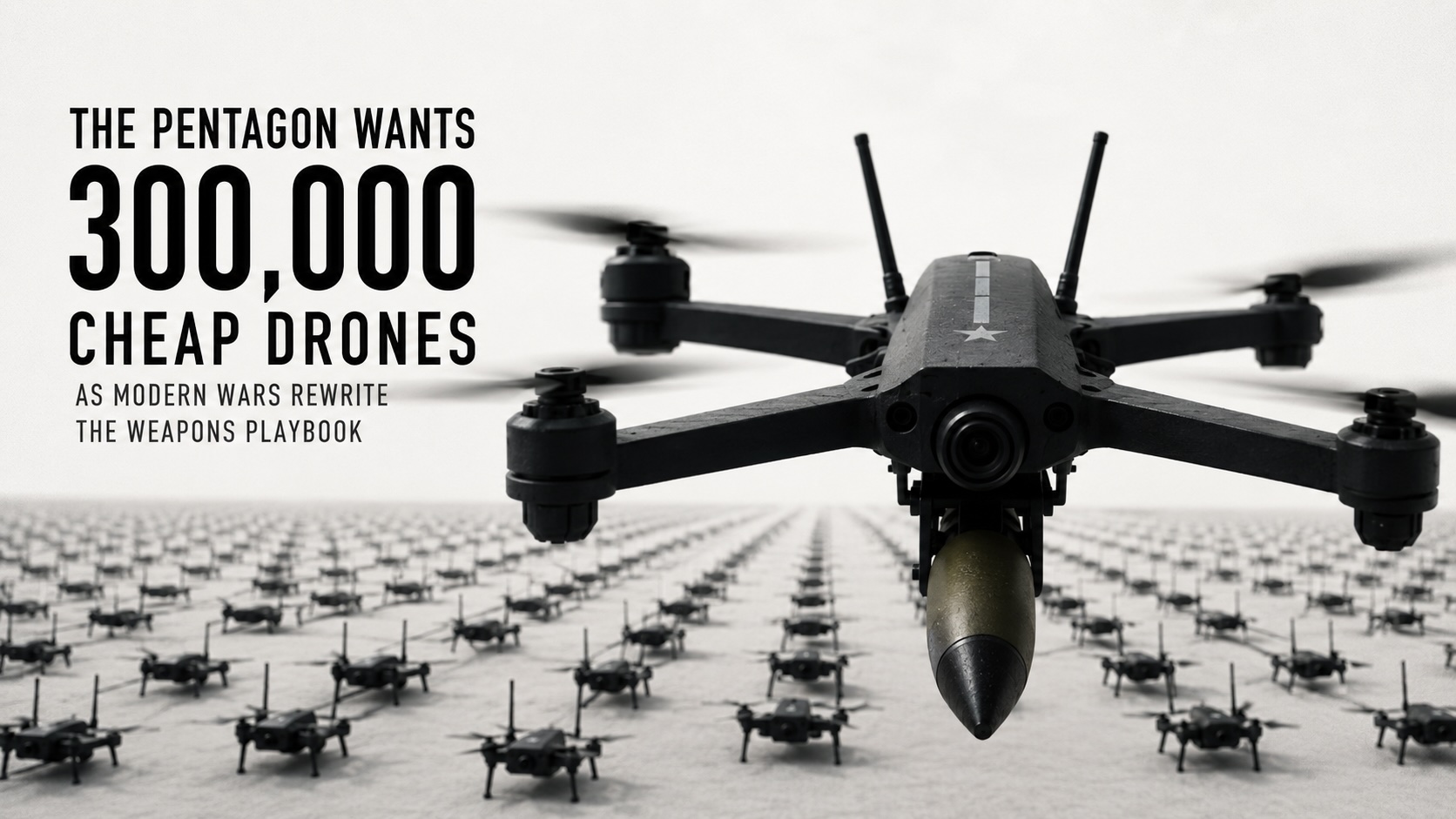
Washington is moving fast to close what officials now see as a major gap in the U.S. arsenal: cheap, expendable drones.
The lesson from Ukraine and Iran is clear. Small drones can hunt tanks, cross trench lines, strike targets beyond borders and harass ships near strategic waterways. They are cheaper than missiles, easier to replace and harder to ignore.
The Pentagon is not only turning to traditional defense giants. It is also looking at a new class of suppliers: former hobbyists, drone racers, light-show operators and small tech firms that once used drones for golf-course mapping or entertainment.
The bet is simple: the next war may not be shaped only by stealth jets and expensive missiles. It may also be shaped by large numbers of cheap drones that can be lost without strategic pain.
Details
• The Pentagon launched Drone Dominance to identify companies that can produce small, cheap and easy-to-use attack drones at scale.
• The first contracts total $1.1 billion, with a target of roughly 300,000 drones.
• The next defense budget seeks $54.6 billion to expand the U.S. military’s drone-warfare capacity.
• Some of the drones cost about $5,000 each and are designed to be “attritable,” meaning they can be destroyed without major concern.
• Neros, founded by former drone-racing champion Soren Monroe-Anderson, has become one of the leading contenders.
• Skycutter, a British firm partnered with a battle-tested Ukrainian manufacturer, took the top spot in the first round.
• The contest tests more than performance. Companies must show they can train troops quickly, hit small targets, fly several miles and manufacture thousands of units.
• One trial gave companies two hours to teach military pilots how to use their systems before sending the drones into test missions.
Why it matters
This is not just a procurement story. It is a shift in U.S. weapons thinking.
For decades, Washington built its military edge around expensive, complex and highly capable systems. Ukraine and Iran exposed another truth: cheap weapons, used in large numbers, can change the battlefield.
A small drone does not need a runway. It does not need a pilot. It does not need years of production. It can scout, strike, swarm or dive into a target.
That is why the Pentagon is trying to pull innovation from outside the traditional defense industry. It wants companies that move faster, build cheaper and think more like tech start-ups than old weapons contractors.
But the plan has limits.
Some experts question whether Ukraine’s drone model can be copied directly by the U.S. military. Ukraine’s war is fought across slow-moving front lines, where drone teams can set up and operate from fixed positions. American forces may fight far from home, on the move and across much larger theaters.
The hard question is practical: who carries hundreds of thousands of drones, where are they stored, and how are they used in a fast-moving campaign?
What to watch
The next rounds of Drone Dominance will show which companies can move from hobbyist culture to real defense production.
If the program works, Washington could enter a new kind of arms race: not for the most expensive platform, but for the cheapest drone that can be produced at scale.
The message from recent wars is blunt. Big weapons still matter. But they are no longer enough.