
News
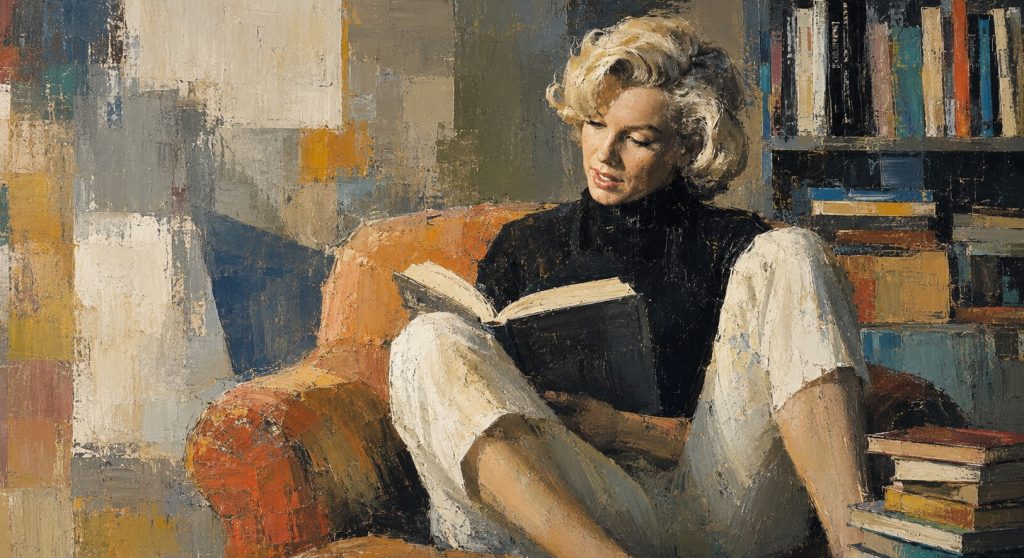
Ahead of the 100th anniversary of Marilyn Monroe’s birth on June 1, her most famous image as a reader returns to the foreground: the Hollywood star seated with James Joyce’s “Ulysses” in her hands, one of the most complex novels of the 20th century.
The photograph, taken by Eve Arnold in 1955, was not staged as empty decoration. According to Arnold, Monroe kept the novel in her car, had been reading it for a long time, loved its sound, and tried to understand it by reading it aloud.
Details:
• A New York Times review of “Marilyn and Her Books” says Monroe owned more than 400 books, carrying them with her from one home to another.
• Her library included works by Thomas Wolfe, Dostoevsky, Kahlil Gibran, Martin Buber, and books on Russian literature, philosophy, religion, and poetry.
• Monroe was deeply sensitive about not completing high school, so she studied world literature in an adult program at the University of California.
• She once summed up her relationship with reading: “If you are ignorant, books won’t laugh at you.”
• She read like someone trying to repair her image before herself first, not only before the press.
• Arthur Miller later wrote that he had rarely known her to finish books, but his remark also reveals something deeper: Monroe wanted from literature a naked truth, and a rare artistic game, especially when it came to pain and violence.
• Eve Arnold said Monroe found “Ulysses” difficult, but loved its sound and tried to understand it through reading aloud. That alone shatters the cheap caricature of her as a shallow star.
• The writer Edith Sitwell described her, in moments of stillness, as looking like “a beautiful ghost” with a prophetic, tragic face.
• Actor George Sanders said of her: “She was somebody in a play not yet written.”
What Next?
In her centenary, Marilyn Monroe seems less like the image consumed by the 20th century, and more like a woman who tried to survive that image. She read because she wanted to become something else: not a body displayed on screen and magazine covers, and not a ready-made myth, but a mind searching for its place amid the noise of fame and the loneliness of eternal anxiety.